

)
People have been obsessed with "glass skin," which is a meticulous, ten-step ritual designed to make the face look as reflective as a mirror. It is beautiful, yes, but it is also high-maintenance and, frankly, superficial. As the industry moves forward, the narrative has undergone a radical change where people are becoming more interested in what science has to offer when it comes to personalized skincare. People are no longer content with a surface glow that washes off at night, they want ever-lasting beauty. The pivot is clear: the world is moving from the aesthetic-heavy K-Beauty era to the age of biotech longevity.
The focus is on efficiency being the new luxury as people struggle to make time for extensive skincare routines. The modern consumer, driven by a deeper understanding of 'skinspan' which is a concept recently formalised in the Journal of Cosmetic Dermatology (2026) is trading cluttered vanities for streamlined, high-performance formulas. Why spend forty minutes layering five different essences when one 'smart' biotech serum can communicate directly with your cells?
This shift isn't just about saving time; it's about biological optimisation. Research in Frontiers in Ageing (2025) suggests that people are entering an era of longevity skincare products where the goal is no longer just to look dewy but to ensure skin cells are functioning at their peak regenerative capacity. Skincare is healthcare, and the lab is the new garden. Here is what the different types of biotech skincare techniques have provided for people seeking targeted skincare.
Biotech Skincare And How It Is Used
Algae: The Ocean's Regenerative Powerhouse
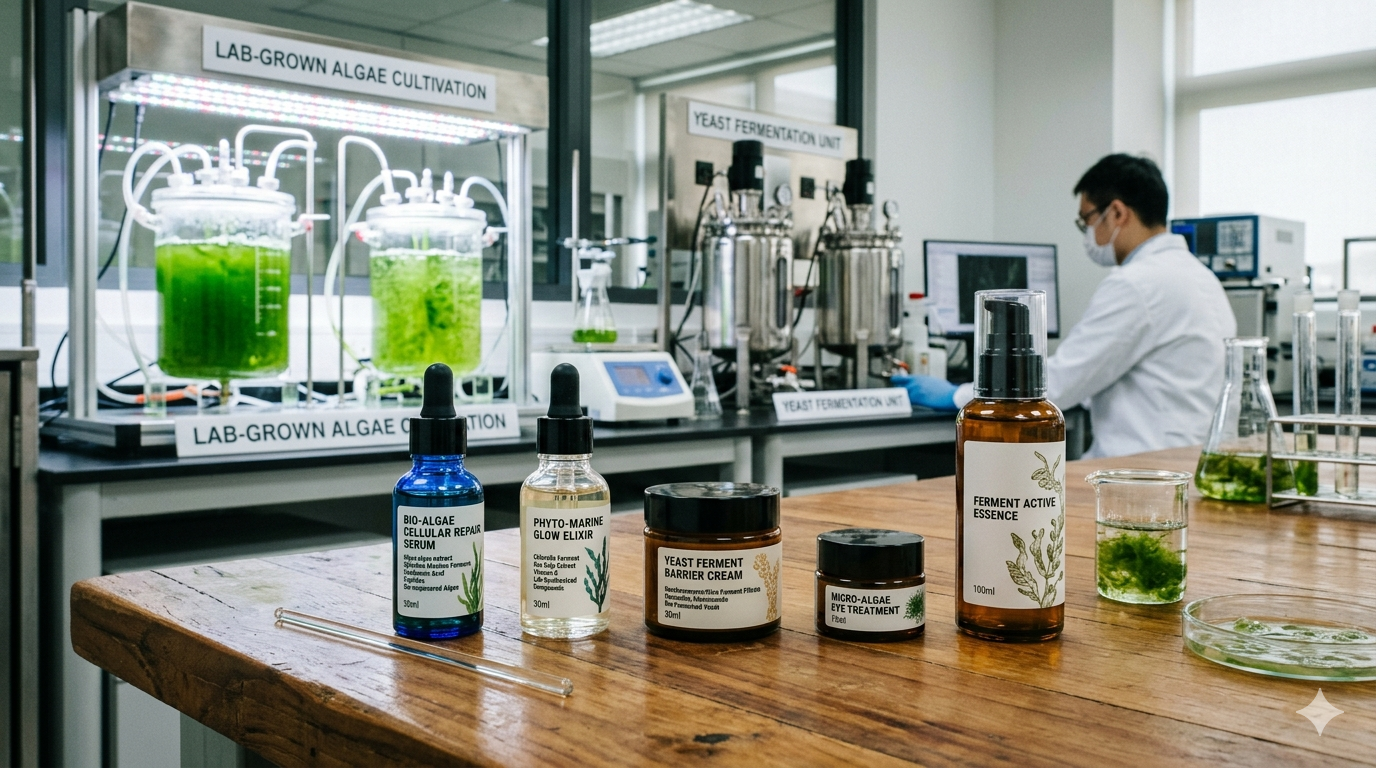
Supreme skincare is no longer found in a botanical garden but in a bioreactor. Leading the charge is algae, a group of organisms that have survived billions of years of extreme UV radiation. Here are the different types of algae that could offer skincare benefits:
- Red Algae: The ultimate architect. According to a 2025 review in MDPI Marine Drugs, red algae-derived peptides go beyond moisture, providing essential amino acids that support the skin's natural collagen matrix.
- Brown Algae: For the urban dweller, this is a biological shield. It protects against heavy metals and particulate matter found in city pollution.
- The Biotech Edge: While "wild-harvested" once sounded premium, 2026 consumers prioritise lab-grown algae. Cultivating these in controlled environments ensures zero heavy-metal contamination and a higher concentration of active metabolites than ocean-grown counterparts.
Yeast Ferments: The Barrier Architects
If algae is the protector, yeast fermentation is the builder. People have moved past simple rice water; today, precision fermentation allows us to use yeast as "micro-factories" to produce bioidentical ceramides.
A landmark study in the Journal of Investigative Dermatology (2026) highlights how these ferments "programme" the skin's microbiome to remain resilient against external stressors. The real breakthrough is bioavailability. Biotech-engineered yeast particles are small enough to penetrate the deeper layers instantly, repairing the barrier from the inside out.
Also Read: K-Beauty Glass Skin Trend: Why It May Be Harmful For Indian Skin
Safety And Health: What You Need to Know
Higher potency comes with higher responsibility. As noted in the International Journal of Molecular Sciences (2025), "bioidentical" does not always mean "risk-free".
The positive side of biotech skincare is the clinical purity. Because these ingredients are lab-grown, the risk of natural allergens (like pollen or pesticide residue) is virtually eliminated.
Also Read: Follow This Dermatologist-Recommended 3 Step Night Routine For Healthy And Glowing Skin
The Risks Involved With Biotech Skincare
- Bio-Overload: These serums are incredibly "active". Those with sensitive skin may experience redness or "activity-induced" irritation.
- The "Unknown" Factor: Scientists are still observing the decadal effects of daily use of certain synthetic peptides and growth factors.
- Regulatory Gap: Always look for brands that offer third-party clinical testing to ensure the "biotech" label isn't just marketing fluff.
The transition from "surface glow" to "cellular health" marks a maturing of the beauty industry. If you want long-term skin longevity, it's time to integrate ingredients that speak the language of your cells. But already consider your inividual skin type and how your skin may react to new skincare routines. Consult a dermalogist for the right and safe approach if you plan to use biotech skincare techniques to improve your skin health.
Disclaimer: This content, including advice, provides generic information only. It is in no way a substitute for a qualified medical opinion. Always consult a specialist or your own doctor for more information. NDTV does not claim responsibility for this information.