






Make In India Completes 12 Years: Twelve years ago, the Modi government made a bold promise. India would become the world's factory. Manufacturing would power jobs, exports, and growth. The name of that promise was "Make in India".
On September 25, 2026, the initiative turned twelve. Prime Minister Narendra Modi marked the day by pointing to growth in domestic manufacturing, investment and exports across sectors. Commerce Minister Piyush Goyal went further, framing the real win as confidence -- the belief among founders and manufacturers that India can make, innovate, and compete with the world.
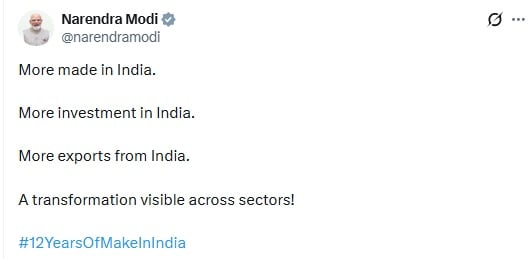
Make In India: What Worked
Start with electronics, the scheme's poster child. Electronics production jumped from around Rs 1.9 lakh crore in 2014-15 to nearly Rs 13.11 lakh crore in 2025-26. Mobile phone production alone rose from roughly Rs 18,000 crore to Rs 6.27 lakh crore in the same window. India went from importing almost every phone it used to making nearly all of them at home.
Also Read | Layoffs Are Rising In Tech, But These Skills Are Helping People Unlock Better Pay
Production Linked Incentive schemes deserve real credit here. By March 2026, PLI had pulled in about Rs 2.40 lakh crore in actual investment, generated roughly Rs 23.8 lakh crore in production and sales, driven exports worth around Rs 15.2 lakh crore, and supported more than 14.6 lakh direct and indirect jobs.
Foreign capital followed. India drew a cumulative $843 billion in FDI between 2014-15 and 2025-26 -- a 169 per cent jump over the previous twelve years -- including a record $94.53 billion in 2025-26 alone. Startups multiplied too. More than 2.23 lakh startups were recognised as of March 2026, having created over 23.36 lakh jobs, with a record 55,200 new startups added in FY26 alone.
Industry voices back this up. Aditya Khemka, Managing Director of CP PLUS, told NDTV that the last twelve years have taken Indian tech firms from making for the local market to building for the world. His company's Kadapa plant now turns out over 2.5 million surveillance devices a month. Rajeev Singh of BenQ India describes a similar shift -- from chasing cost and compliance to building capability and resilience, with the company's India-made share of its interactive panel business set to nearly double in two years.
Rahul Garg of Moglix puts it simply: electronics output has grown nearly sevenfold in a decade, and India now counts over 2.3 lakh recognised startups, with almost half coming from smaller Tier-2 and Tier-3 towns.

Photo Credit: PM Modi's post on X
Make In India: What Didn't
The scheme's founding promise was to lift manufacturing to 25 per cent of GDP by 2022, later pushed to 2025.
That never happened.
Despite strong FDI growth and export gains in select sectors, manufacturing's actual share of GDP has hovered around 13-17 per cent, far short of the 25 per cent target. Congress President Mallikarjun Kharge has been blunt about this, pointing out that manufacturing's share of GDP hit an all-time low of 12.83 per cent in 2023, down from 15.25 per cent a decade earlier, and noting several PLI-covered sectors, including solar modules and specialty steel, have underdelivered.
Jobs are the sorer point. The share of the workforce employed in manufacturing slipped from 12.6 per cent in 2011-12 to 10.9 per cent in 2020-21, recovering only slightly to 11.6 per cent the following year. That's a long way from the 100 million new manufacturing jobs once promised.
Congress used the 12th anniversary to press this point hard. Party general secretary Jairam Ramesh said the scheme has "significantly belied hopes and expectations," arguing the hoped-for private investment boom never materialised and broad-based job growth is still missing. He also flagged that manufacturing growth, measured by both Gross Value Added and the Index of Industrial Production, has generally trailed overall economic growth over the 12 years -- meaning the sector hasn't grown any faster because of the scheme, at least not by these measures.
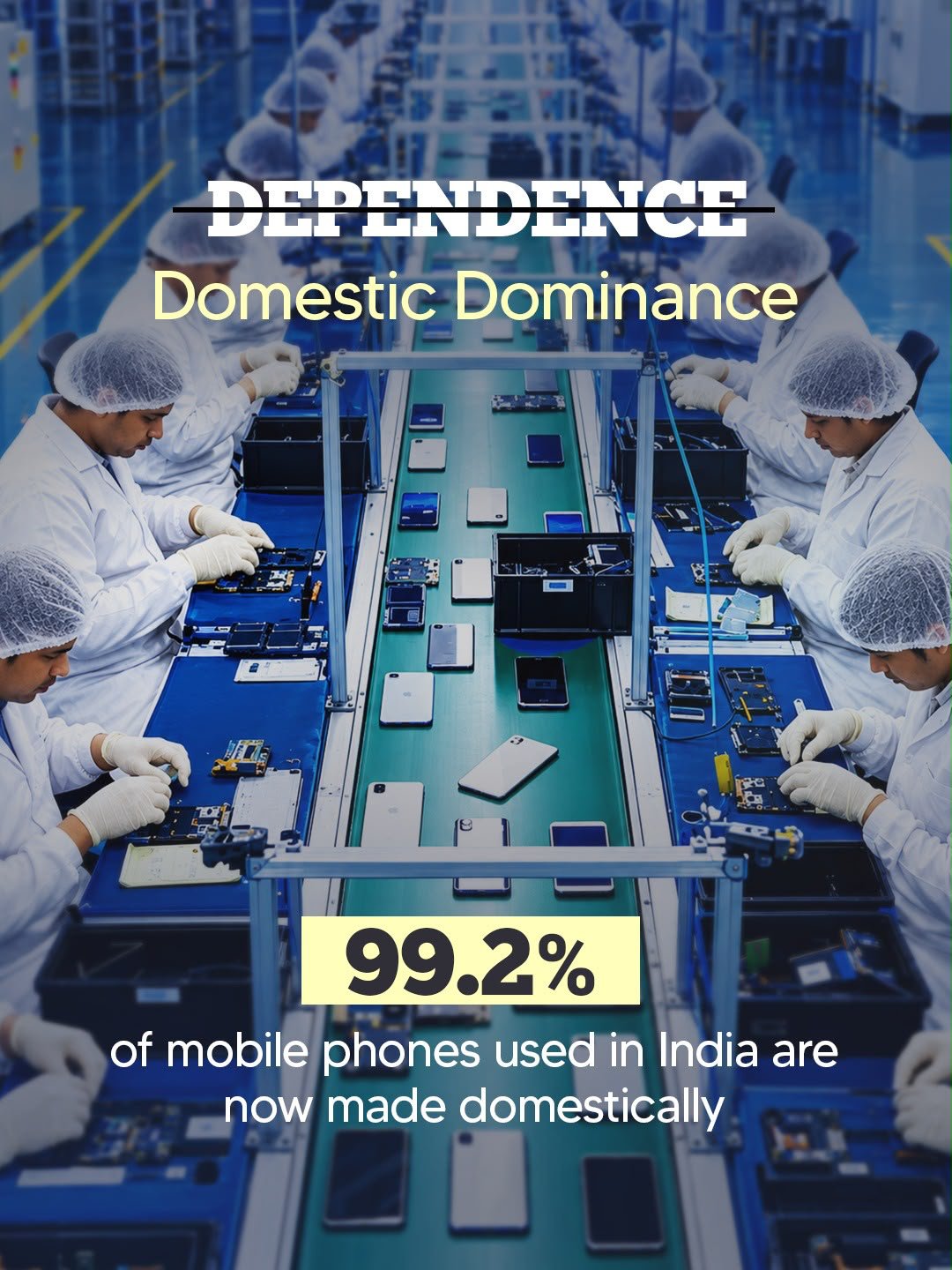
Photo Credit: PM Modi's post on X
Make In India: What Needs More Work
Twelve years in, Make in India has clearly changed how India makes phones and electronics. It hasn't yet changed how India makes jobs, or how big manufacturing looms in the economy.
Policy analysts have flagged a few structural gaps -- too many sectors chased at once, heavy reliance on global demand and foreign capital, and weak follow-through on implementation. Fixing that means picking fewer sectors with real comparative advantage, building supplier depth rather than just final assembly, and closing the financing gap that keeps MSMEs from scaling.
Khemka says the next phase of "Make in India" should move past assembly -- deeper backward integration, homegrown R&D, tech that's actually designed in India, not just screwed together here. Singh wants "greater local engineering, innovation and value creation," not just higher localisation percentages.
Garg bats for timely, easy finance for startups and MSMEs, faster access to markets and procurement, and less noise, more building. "The world is going through a reset, and windows like this do not stay open for long. There will be noise along the way, but our focus should stay on one thing: Building Bharat," he added.
Track Latest News Live on NDTV.com and get news updates from India and around the world

