





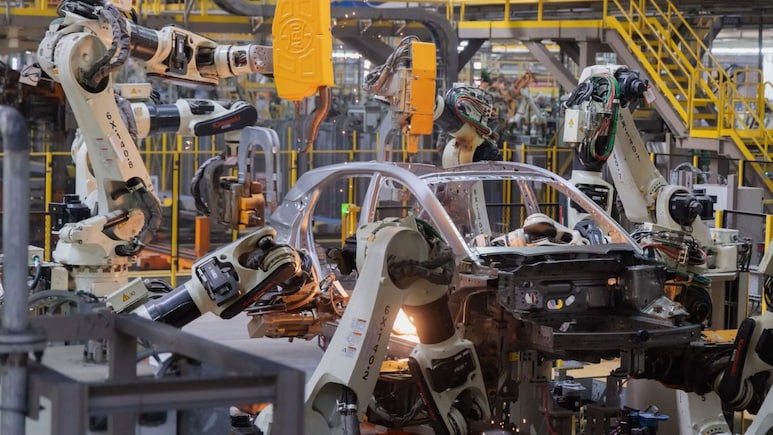
India's ambition to become a global manufacturing powerhouse is no longer just a policy slogan.
From electronics and defence to footwear and advanced engineering, industry leaders believe the country is standing at a critical turning point. Global companies are rethinking supply chains, investors are backing industrial businesses, and the government is doubling down on manufacturing through schemes such as Make in India, the Production Linked Incentive (PLI) programme, and the recently announced National Manufacturing Mission.
But while the opportunity is enormous, experts say India's path to becoming a true manufacturing giant will depend on how quickly it can solve four challenges -- skill gap, infrastructure, innovation, and supply chains.
Also Read | Layoffs Are Rising In Tech, But These Skills Are Helping People Unlock Better Pay
A Defining Moment for Indian Manufacturing
According to Ankit Kedia, Founder and General Partner at Capital-A, India's manufacturing sector is at a "defining inflection point."
Kedia believes the country is no longer competing solely on low labour costs. Instead, it is steadily building capabilities across advanced manufacturing, defence, aerospace, electronics, industrial automation, energy systems, and deep technology.
"India's strengths lie in its engineering talent, entrepreneurial ecosystem and large domestic market," Kedia said, adding that the diversification of global supply chains away from China presents a major opportunity for the country.
Bharat Gite, Founder and CEO of Taural India, shares a similar view. He points out that India's long-term economic ambitions will be closely tied to the performance of its manufacturing sector.
According to Gite, policy interventions such as Make in India, PLI schemes and the National Manufacturing Mission are already helping strengthen domestic capabilities and attract investment. Manufacturing currently contributes around 17 per cent to India's GDP, while policymakers aim to raise that share to 25 per cent by 2035.
"The real opportunity lies in moving beyond assembly to owning a larger share of the value chain," Gite said.
China+1 Opens A Window of Opportunity
A recurring theme among industry leaders is the growing China+1 strategy being adopted by multinational companies.
Recent supply-chain disruptions and geopolitical uncertainties have pushed global firms to diversify manufacturing bases. India is increasingly emerging as a preferred destination.
Rajinder Jindal, Chairman, Asian Footwears and V-P Cifi, says Indian manufacturers have made significant progress over the past decade.
Drawing from his experience in the footwear industry, Jindal notes that Indian companies are no longer competing only on cost. They are increasingly delivering quality, innovation and scale.
"As global brands diversify their sourcing strategies, India is well-positioned to become a preferred manufacturing destination," Jindal said.
Kedia also argues that the next phase of export growth will not come from higher volumes alone. Instead, it will be driven by technology-led products that offer greater value addition.
That shift, experts say, will determine whether India can move up the global manufacturing ladder.
What India Must Do Next
While optimism is growing, industry leaders agree that becoming a manufacturing hub requires much more than building factories.
Kedia believes India must strengthen its entire industrial ecosystem, including supplier networks, logistics, testing facilities and technical talent. He also stresses the need to reduce friction between innovation and large-scale production.
Countries become manufacturing leaders when innovation and manufacturing evolve together, Kedia said.
Gite echoes that view. He argues that India must significantly increase investments in research and development, strengthen collaboration between industry and academia, and empower MSMEs that form the backbone of supply chains.
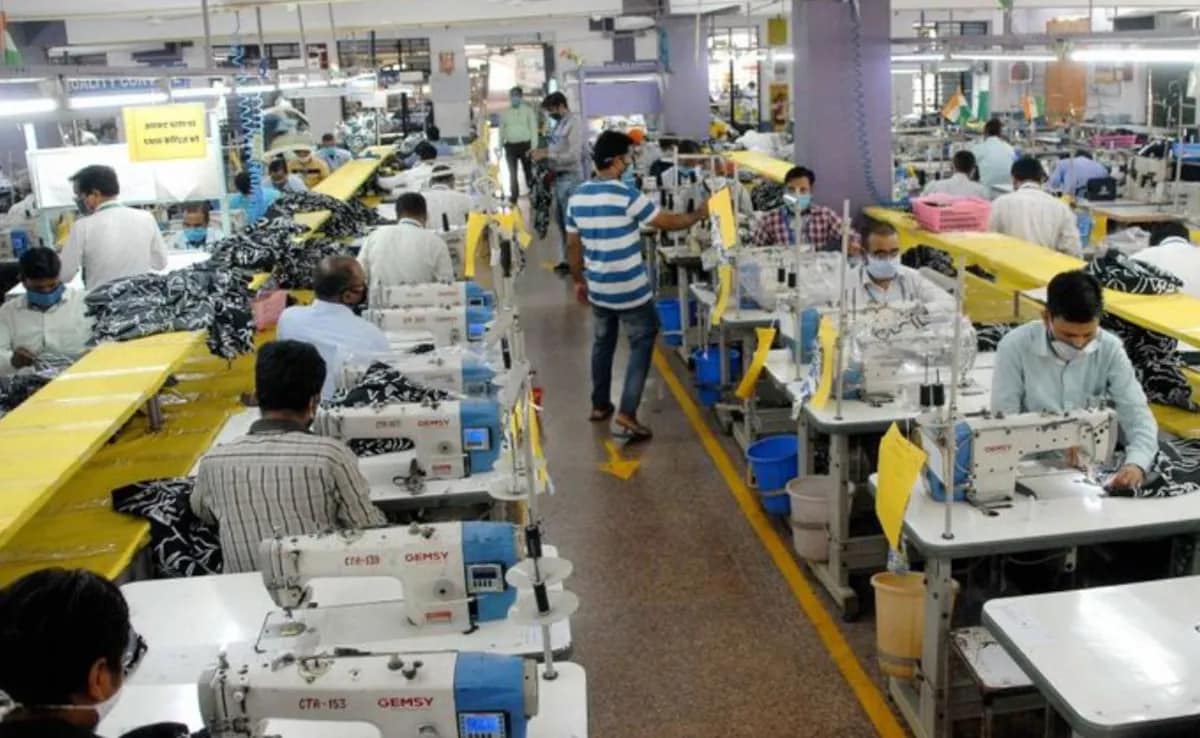
Manufacturing currently contributes around 17 per cent to India's GDP.
One area that deserves greater attention, according to Gite, is the development of Tier-2 and Tier-3 cities. Improved industrial corridors, freight infrastructure and logistics networks could transform these regions into the next engines of industrial growth.
At Taural India, Gite said the company has already expanded beyond Pune into Supa, Ahilyanagar, reflecting its belief that emerging industrial regions will play a major role in India's manufacturing future.
For Jindal, the focus must also remain on quality, automation and sustainability. In sectors such as footwear, he says consistent quality standards and faster turnaround times will help Indian manufacturers gain deeper trust in global markets.
Why Manufacturing Unicorns Are Still Rare
Despite India's startup boom, manufacturing unicorns remain relatively scarce. The reason, experts say, lies in the nature of the business itself.
Kedia explains that manufacturing companies require factories, machinery, certifications, supply chains and substantial working capital. Scaling such businesses is far more complex and capital-intensive than scaling software companies.
However, he argues that this should not be viewed negatively. Manufacturing firms often build stronger competitive advantages and generate long-term value.
Gite agrees. He says manufacturing success should not be measured solely through valuations.
Many industrial companies create value through exports, employment generation, technology development and industrial capability. Some may never achieve unicorn status, yet their economic impact can be far greater.
Jindal also believes the landscape is changing. With stronger policy support and growing investor interest, he expects the next decade to produce more globally competitive manufacturing unicorns.
The Regulatory Challenge Isn't Over Yet
Government initiatives have undoubtedly improved the ease of doing business. Gite credits reforms such as GST, digitised approvals, PM Gati Shakti and PLI schemes for creating a more supportive industrial environment.
However, execution remains a concern.
Kedia says entrepreneurs still spend significant time dealing with approvals, compliance requirements and operational clearances. Faster approvals, streamlined compliance systems and predictable regulations could accelerate industrial investments.
Jindal offers perhaps the most ground-level perspective. According to him, manufacturers often have to deal with multiple agencies ranging from labour departments and pollution boards to fire safety authorities and tax offices. "The problem isn't one big rule; it's too many small ones overlapping each other," Jindal said.
While recent labour reforms are a welcome step, he believes further simplification at the state level will be crucial for reducing everyday operational friction.
The Skills Gap Could Decide India's Future
If there is one issue all three experts repeatedly highlight, it is talent. Modern manufacturing is increasingly driven by robotics, automation, artificial intelligence and advanced engineering.
Kedia warns that while India has a strong engineering base, it still faces a shortage of industry-ready technical talent capable of operating advanced manufacturing systems at scale.
Gite describes talent and infrastructure as the two foundational pillars of manufacturing growth. He argues that India's demographic advantage will matter only if it can be converted into industry-ready skills.
Future manufacturing professionals, he says, will require engineering expertise, digital fluency, problem-solving abilities and the ability to work alongside intelligent systems.
Jindal sees the challenge firsthand in the footwear industry. India has a young workforce, he says, but many workers are not factory-ready when they enter the job market. Training programmes linked directly to employment opportunities tend to deliver far better outcomes. "The gap isn't a lack of willing youth. It's a lack of training tied to real factory jobs at scale," Jindal said.
Supply Chains And Self-Reliance
India's dependence on imported components remains another challenge.
Kedia says strategic localisation of critical technologies, advanced materials, electronics and industrial components will be important for long-term competitiveness.
The goal, he argues, should be to own larger portions of the value chain -- from design and materials to components and finished products.
Gite believes supply-chain resilience has become a strategic necessity following recent global disruptions. He advocates selective self-reliance in sectors such as defence, aerospace, marine and energy while remaining integrated with global trade networks.
Jindal points to the footwear sector as a practical example. Although India manufactures millions of shoes, many key components such as specialised soles, chemicals, hardware and machinery are still imported. That creates additional costs and exposes manufacturers to supply-chain disruptions.
The answer, he says, is not isolation but stronger domestic manufacturing of critical inputs.
The consensus among industry leaders is clear.
India has the ingredients needed to become a major global manufacturing hub. Policy support is improving. But success will depend on execution.
As Kedia argues, the winners of the next manufacturing era will be countries that successfully combine innovation, talent and infrastructure.
Gite believes the future belongs to nations that create value across the entire chain-from materials and design to engineering and production.
And for Jindal, the real test lies on factory floors across the country, where skills, infrastructure and operational efficiency will ultimately determine whether India's manufacturing dream becomes reality.
Track Latest News Live on NDTV.com and get news updates from India and around the world

