





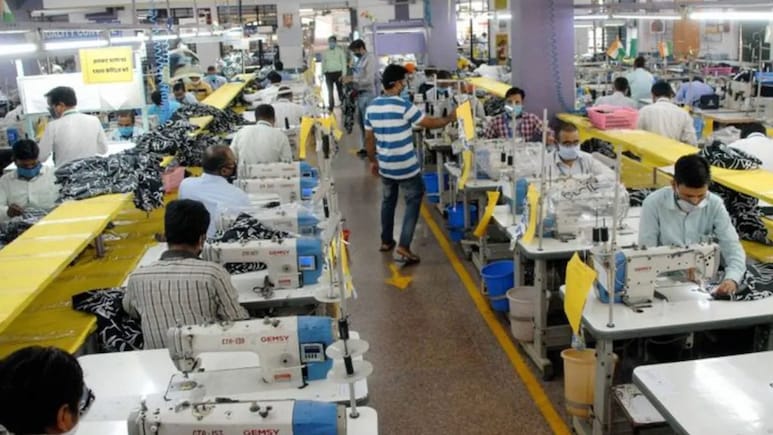
India's 8.7 crore MSMEs are often described as the backbone of the economy. But when it comes to exports, only a tiny fraction has managed to cross borders.
Out of more than 8.7 crore registered MSMEs in the country, only around 1.73 lakh are active exporters. Yet this small group contributes nearly 48.58 per cent of India's total exports.
The numbers tell a remarkable story. If less than 2 lakh businesses can account for almost half of India's exports, how much bigger could the country's export engine become if even a small percentage of the remaining MSMEs became export-ready?
Also Read | Layoffs Are Rising In Tech, But These Skills Are Helping People Unlock Better Pay
The question comes at a time when global trade is undergoing a major reset. Companies across the world are looking to diversify supply chains, reduce dependence on a handful of manufacturing hubs and explore new sourcing destinations. India is increasingly finding itself on that shortlist.
According to Muninder Verma, CEO of M1 NXT, the changing geopolitical landscape has opened a rare window of opportunity for Indian exporters. Trade tensions, tariff uncertainties and supply chain disruptions have encouraged global buyers to diversify sourcing, creating fresh opportunities for Indian MSMEs.
Verma points out that despite contributing nearly half of India's exports, MSMEs continue to face hurdles such as limited market access, delayed payments and restricted access to credit. These challenges, he says, often determine whether a business can accept its next export order or expand into a new market.
The government has also been pushing exports through initiatives such as Make in India, Production Linked Incentive (PLI) schemes and a growing network of Free Trade Agreements (FTAs). India has signed trade deals with countries including the UAE and Australia, while negotiations with the UK, European Union and several other partners continue as New Delhi looks to expand market access for domestic businesses.
For many exporters, however, policy support alone isn't enough.
Deepak Gandhi, Director and Business Head (Exports) at Drip Capital, says the biggest obstacle isn't the lack of international demand. Instead, many MSMEs struggle to identify reliable overseas buyers, access market intelligence, secure affordable finance and manage cross-border risks.
According to Gandhi, thousands of businesses are capable of winning export orders but fail to execute them because they run out of working capital, worry about payment security or find international logistics and compliance too complex. As global supply chains shift towards India, he believes improving access to finance, digital trade infrastructure, logistics and risk-management tools can bring millions of MSMEs into the formal export ecosystem.
India's export ambitions are significant. The government has repeatedly spoken about taking merchandise and services exports to $2 trillion by 2030, with MSMEs expected to play a central role in achieving that target. Official data also shows MSMEs contribute nearly 30% of India's GDP while employing more than 11 crore people, making their participation in global trade critical not just for exports but for employment and manufacturing as well.
Finance, though, is only one part of the puzzle.
Tejas Jain, CEO and Founder of BimaKavach, says export readiness also requires businesses to prepare for risks that are often ignored. A delayed shipment, damaged cargo or goods lost in transit can create severe financial stress for small exporters.
Insurance cannot eliminate those risks, Jain says, but it can absorb the financial impact and help businesses recover without derailing operations. Building this resilience, he argues, should become a key part of every MSME's export journey.
Experts also believe the export ecosystem must start much earlier.
Lakshmi Venkataraman Venkatesan, Founding and Managing Trustee of Bharatiya Yuva Shakti Trust (BYST), says India's long-term growth depends on supporting micro-enterprises from the very beginning. She stresses that young entrepreneurs need more than ambition-they require awareness, mentoring, skilling, affordable credit and sustained handholding to grow beyond subsistence businesses.
She points to initiatives such as the Prime Minister's One District One Product (ODOP) programme and the Andhra Pradesh government's One Family, One Entrepreneur model as examples of how local entrepreneurship can be nurtured and eventually scaled across the country.
The opportunity before India is clear.
Global companies are looking for new manufacturing partners. International buyers are exploring alternatives. India already has millions of businesses producing quality goods.
The missing link is helping more of them become export-ready.
If India can bridge the gaps in finance, market access, logistics, digital infrastructure, insurance and mentoring, the country's exporter base could expand dramatically. And if even a fraction of the remaining 8.7 crore MSMEs joins the global marketplace, India's export story could enter an entirely new chapter.
Track Latest News Live on NDTV.com and get news updates from India and around the world

