



Space Science Institute
-
{
- All
- News
- Videos
-

AIIMS Delhi Partners With ISRO For Space Medicine Research
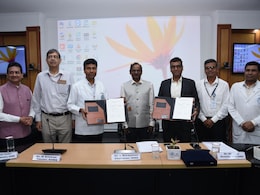
Under the partnership, the two institutions will collaborate on both ground-based and space-based research in space medicine.
-
Rare Blood-Red Aurora Lights Up Ladakh Sky After Powerful Solar Storm Strikes Earth
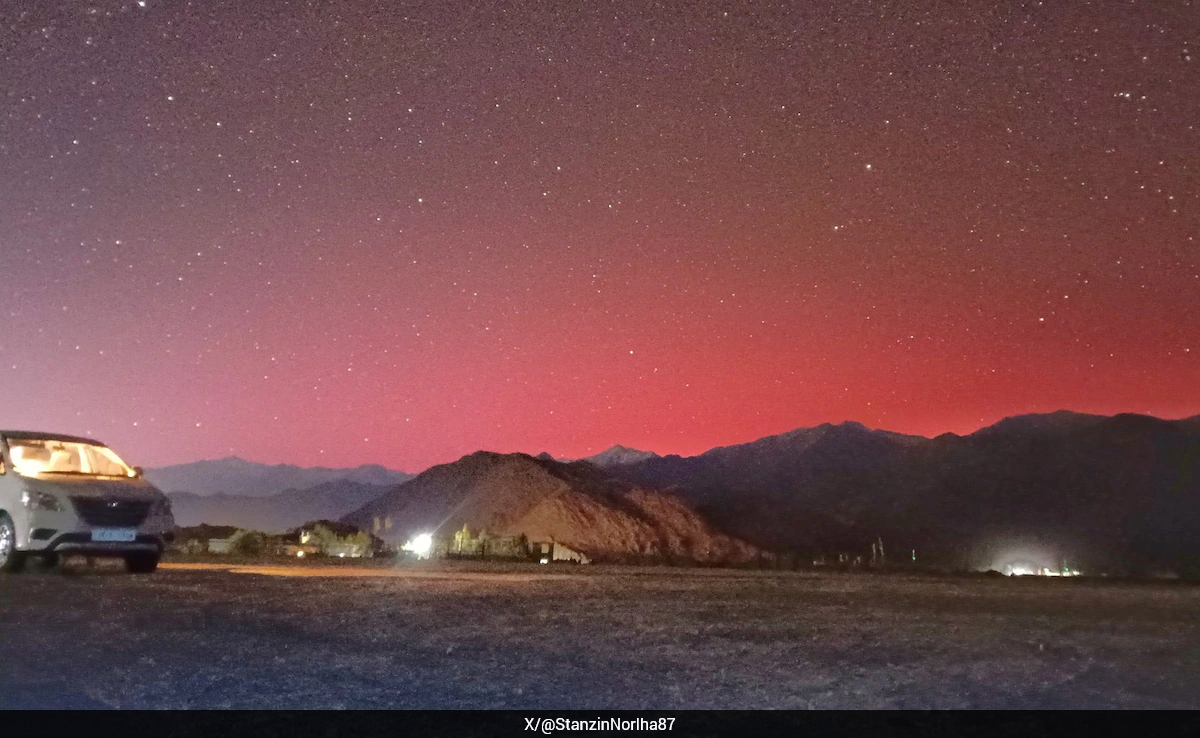
A powerful geomagnetic storm triggered by a fast coronal mass ejection from the Sun produced rare red aurora over Hanle, Ladakh, on January 1920, captured by the Indian Astronomical Observatory.
-
Scientists Propose Space Missions to Chase Down Interstellar Comets
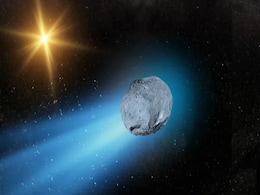
A Southwest Research Institute study reveals that chasing interstellar comets like 3I/ATLAS is achievable with current rockets and instruments. Such missions could collect data on comet nuclei and comae, providing clues to the formation of other star systems. International collaborations make these rare, high-value missions increasingly realistic.
-
Scientists Say Missions to Interstellar Comets Like 3I/ATLAS Are Feasible With Existing Tech
A Southwest Research Institute study reveals that chasing interstellar comets like 3I/ATLAS is achievable with current rockets and instruments. Such missions could collect data on comet nuclei and comae, providing clues to the formation of other star systems. International collaborations make these rare, high-value missions increasingly realistic.
-
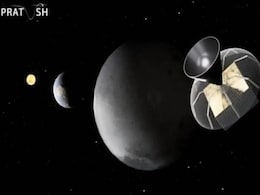
India’s PRATUSH Computer Could Detect Signals From the Universe’s First Stars: Report
RRI’s PRATUSH—a credit-card-sized computer payload—will detect faint radio signals from hydrogen to study the “Cosmic Dawn”. Designed for deployment on the Moon’s far side, the system offers noise-free, efficient data handling using an SBC and FPGA combo. If successful, it could help determine when the first stars formed and expand our ...
-
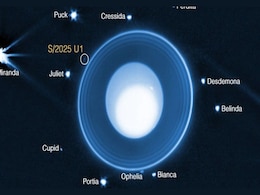
James Webb Telescope Discovers Tiny New Moon Orbiting Uranus
A team from the Southwest Research Institute has discovered a tiny new moon orbiting Uranus using NASA’s James Webb Space Telescope. The moon, called S/2025 U1, is just 6 miles (10 kilometers) wide, too small for Voyager 2 to detect during its 1986 flyby. This discovery brings Uranus’s total known moons to 29, with S/2025 U1 orbiting 35,000 mil...
-
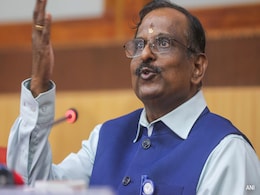
ISRO Chief Shares Key To Success With Students. Here's What He Said
'No matter the heights you achieve, let honesty be the cornerstone of your success,' emphasised Dr. Narayanan, Chairman, ISRO, during the 21st Convocation Ceremony held at SRM Institute of Science and Technology (SRMIST), Chennai.
-
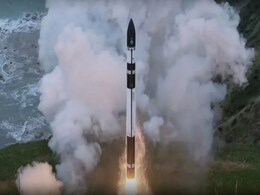
Rocket Lab Launches Kushinada-I Satellite to Orbit for Japan’s iQPS
On August 5, 2025, Rocket Lab launched Japan’s QPS-SAR-12 satellite, nicknamed Kushinada-I, aboard its Electron rocket from Mahia, New Zealand. Built by the Institute for Q-shu Pioneers of Space (iQPS), the satellite joins a growing constellation of synthetic-aperture radar (SAR) spacecraft designed for high-resolution, all-weather, day-and-night...
-
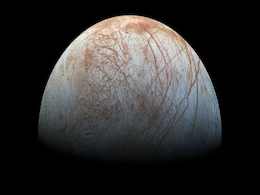
Europa Could Briefly Sustain Life When the Sun Becomes a Red Giant Star, Scientists Say
Scientists at Cornell’s Carl Sagan Institute propose that Jupiter’s moon Europa could host life for up to 200 million years during the sun’s red giant phase. While Earth would be incinerated, Europa’s subsurface oceans might temporarily support microbial life, offering a final refuge in the solar system and expanding the search for biosigna...
-
NASA SPHEREx Mission to Map Water Ice in the Milky Way for Life’s Origins
NASA’s SPHEREx mission, launching February 27, will search for water ice and frozen compounds in the Milky Way’s molecular clouds. By surveying over 9 million regions, the mission aims to understand how these compounds influence planet and star formation. Findings will complement data from the James Webb Space Telescope, enhancing insights into...



-
AIIMS Delhi Partners With ISRO For Space Medicine Research
Under the partnership, the two institutions will collaborate on both ground-based and space-based research in space medicine.
-
Rare Blood-Red Aurora Lights Up Ladakh Sky After Powerful Solar Storm Strikes Earth
A powerful geomagnetic storm triggered by a fast coronal mass ejection from the Sun produced rare red aurora over Hanle, Ladakh, on January 1920, captured by the Indian Astronomical Observatory.
-
Scientists Propose Space Missions to Chase Down Interstellar Comets
A Southwest Research Institute study reveals that chasing interstellar comets like 3I/ATLAS is achievable with current rockets and instruments. Such missions could collect data on comet nuclei and comae, providing clues to the formation of other star systems. International collaborations make these rare, high-value missions increasingly realistic.
-
Scientists Say Missions to Interstellar Comets Like 3I/ATLAS Are Feasible With Existing Tech
A Southwest Research Institute study reveals that chasing interstellar comets like 3I/ATLAS is achievable with current rockets and instruments. Such missions could collect data on comet nuclei and comae, providing clues to the formation of other star systems. International collaborations make these rare, high-value missions increasingly realistic.
-
India’s PRATUSH Computer Could Detect Signals From the Universe’s First Stars: Report
RRI’s PRATUSH—a credit-card-sized computer payload—will detect faint radio signals from hydrogen to study the “Cosmic Dawn”. Designed for deployment on the Moon’s far side, the system offers noise-free, efficient data handling using an SBC and FPGA combo. If successful, it could help determine when the first stars formed and expand our ...
-
James Webb Telescope Discovers Tiny New Moon Orbiting Uranus
A team from the Southwest Research Institute has discovered a tiny new moon orbiting Uranus using NASA’s James Webb Space Telescope. The moon, called S/2025 U1, is just 6 miles (10 kilometers) wide, too small for Voyager 2 to detect during its 1986 flyby. This discovery brings Uranus’s total known moons to 29, with S/2025 U1 orbiting 35,000 mil...
-
ISRO Chief Shares Key To Success With Students. Here's What He Said
'No matter the heights you achieve, let honesty be the cornerstone of your success,' emphasised Dr. Narayanan, Chairman, ISRO, during the 21st Convocation Ceremony held at SRM Institute of Science and Technology (SRMIST), Chennai.
-
Rocket Lab Launches Kushinada-I Satellite to Orbit for Japan’s iQPS
On August 5, 2025, Rocket Lab launched Japan’s QPS-SAR-12 satellite, nicknamed Kushinada-I, aboard its Electron rocket from Mahia, New Zealand. Built by the Institute for Q-shu Pioneers of Space (iQPS), the satellite joins a growing constellation of synthetic-aperture radar (SAR) spacecraft designed for high-resolution, all-weather, day-and-night...
-
Europa Could Briefly Sustain Life When the Sun Becomes a Red Giant Star, Scientists Say
Scientists at Cornell’s Carl Sagan Institute propose that Jupiter’s moon Europa could host life for up to 200 million years during the sun’s red giant phase. While Earth would be incinerated, Europa’s subsurface oceans might temporarily support microbial life, offering a final refuge in the solar system and expanding the search for biosigna...
-
NASA SPHEREx Mission to Map Water Ice in the Milky Way for Life’s Origins
NASA’s SPHEREx mission, launching February 27, will search for water ice and frozen compounds in the Milky Way’s molecular clouds. By surveying over 9 million regions, the mission aims to understand how these compounds influence planet and star formation. Findings will complement data from the James Webb Space Telescope, enhancing insights into...

