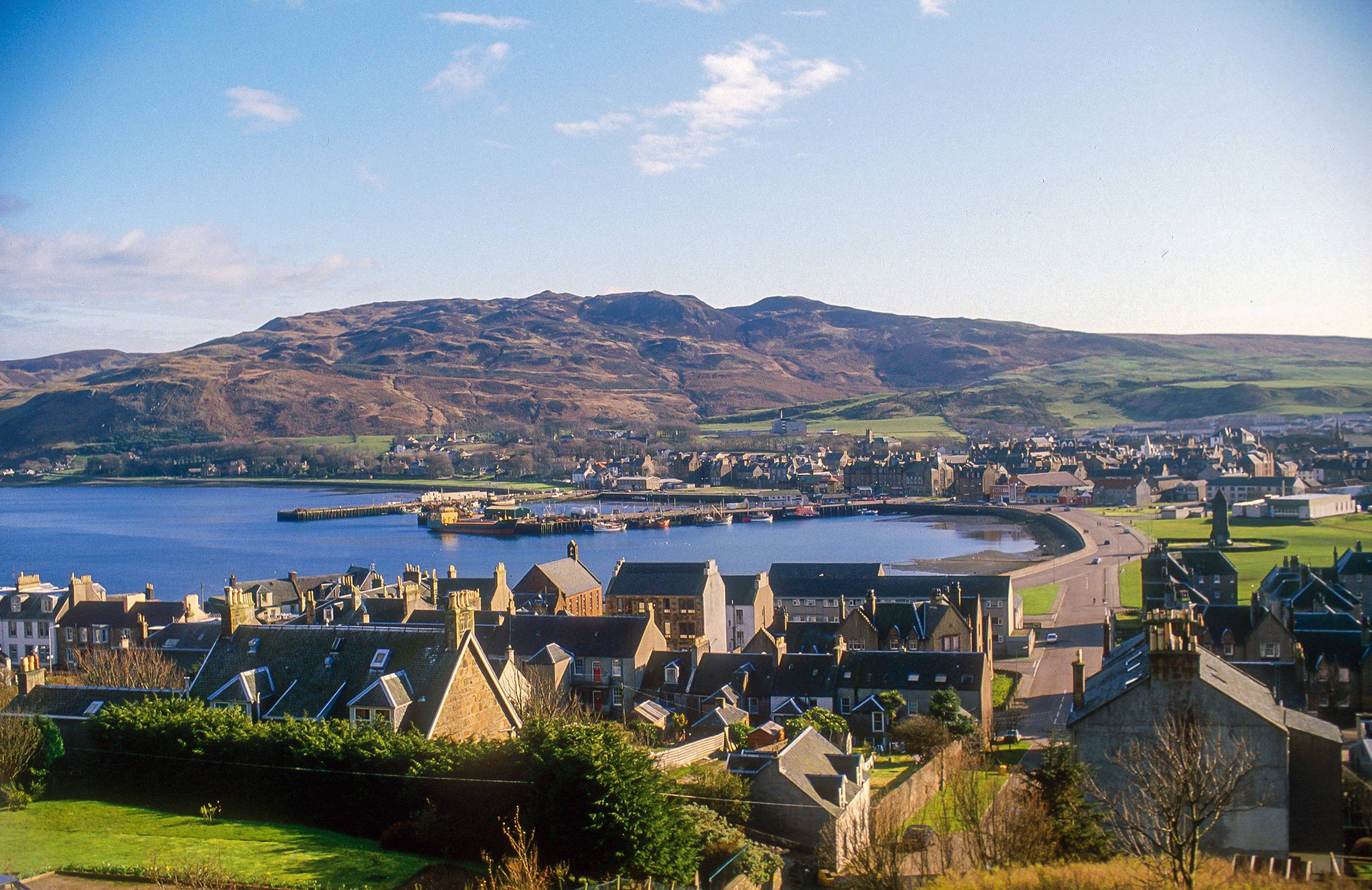
If someone asked you to name the whisky capital of the world, you might say Scotland in general, or perhaps Edinburgh, or maybe even Kentucky if you are thinking American bourbon. But the real answer is far more specific and far more surprising. It is a small Scottish town called Campbeltown, perched at the tip of a remote peninsula on the west coast, with a population of around 4,600 people and a history so soaked in whisky that at one point, nearly every building in town was producing it. This is the story of that town, and why, if you love good whisky or good travel, it deserves to be on your radar.
Where is Campbeltown?
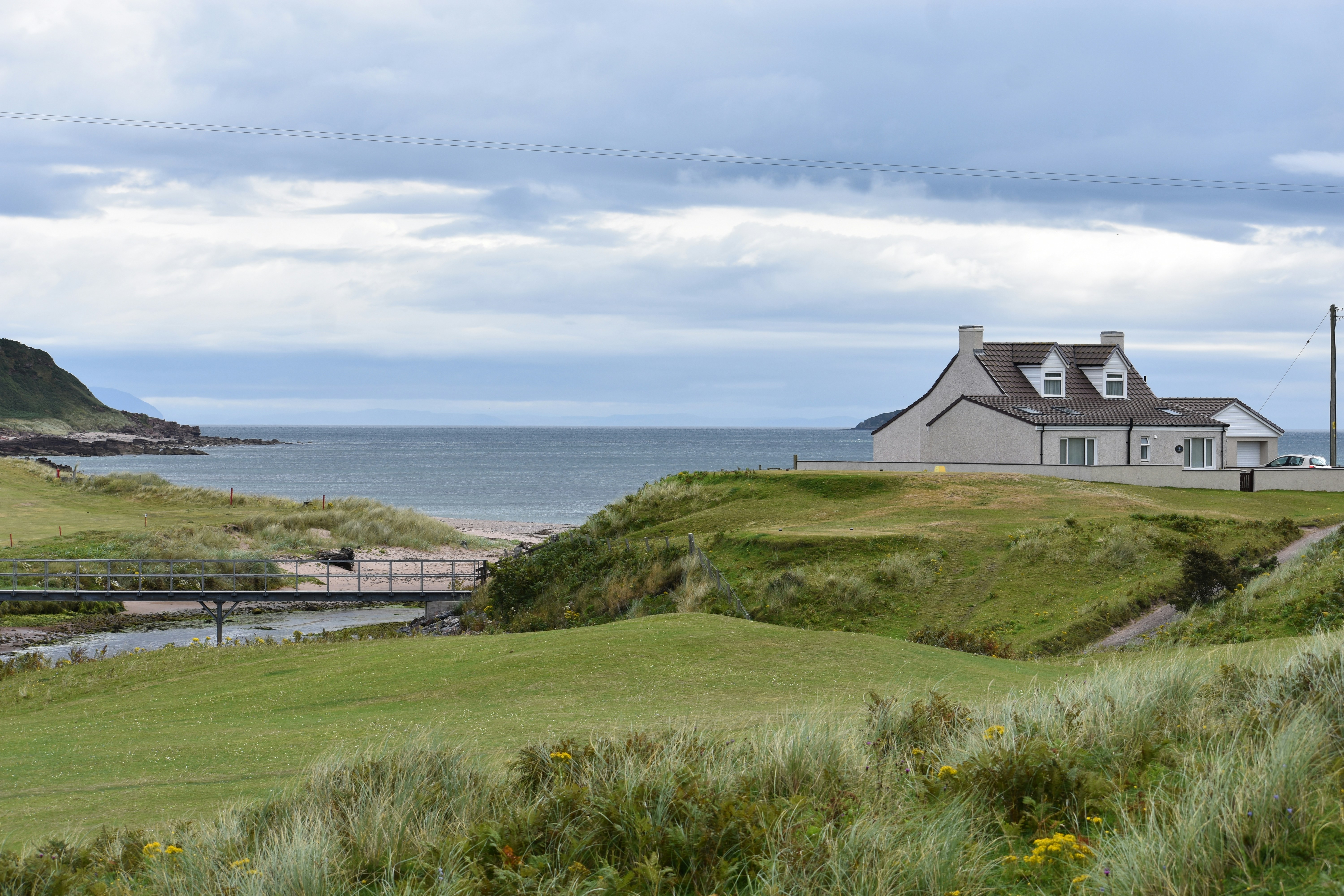
Campbeltown, on the eastern Kintyre Peninsula in Argyll and Bute, Scotland, offers a remote yet inviting experience. Facing the Isle of Arran and the mainland, reaching it requires a long drive from Glasgow, heading north past Loch Lomond, or a scenic ferry from Ardrossan around Arran. Locals call it The Wee Toon. A small airfield at Machrihanish exists, but flights are weather-dependent. For Indian visitors, Glasgow International Airport, 89 km away, is the best option, followed by a drive or bus. The town, around a loch and sheltered by Davaar Island, encourages a slower pace.
Also Read: Which Countries Don't Have Any River?
How It Became the Whisky Capital of the World

The tale of Campbeltown and whisky predates proper record-keeping, with the earliest mention of whisky production in 1591. The town's remote location, abundant water, peat, and barley facilitated the production of illicit whisky for years. Legal distilling began in the early 19th century, leading to a boom. By the mid-1800s, Campbeltown boasted over 30 distilleries, an impressive number for its size, earning it the title of the whisky town.
The port was vital, allowing distillers to ship their products easily, reaching markets across Scotland and beyond. The town prospered, with streets adorned with grand merchant houses and church spires, becoming renowned wherever whisky was enjoyed.
However, the focus on quantity over quality led to the closure of most distilleries. Prohibition in America, an economic downturn, and declining standards further crippled the industry. By the mid-20th century, Campbeltown, once a Scotch whisky icon, was struggling.
Remarkably, Campbeltown was named Scotland's most improved place in the SURF regeneration awards after a £13m investment revitalised 40 buildings. The three remaining distilleries now produce some of the world's most respected whiskies, with a fourth in the planning stages.
The Whisky: What Makes It Special
Campbeltown whisky is unique, with its own regional denomination in Scotland. It is known for its oily, slightly salty, and complex coastal character. The three active distilleries are Springbank, Glen Scotia, and Glengyle. Springbank is renowned for its traditional methods and on-site production. Glen Scotia's single malts have earned international acclaim. Glengyle, reopened in 2000 after closing in 1925, produces under the Kilkerran label. A fourth distillery, Dal Riata, is planned. Visitors should book distillery tours in advance to experience the authentic whisky-making process beyond the marketing.
What to Do in Campbeltown: A Travel Guide
Walk to Davaar Island
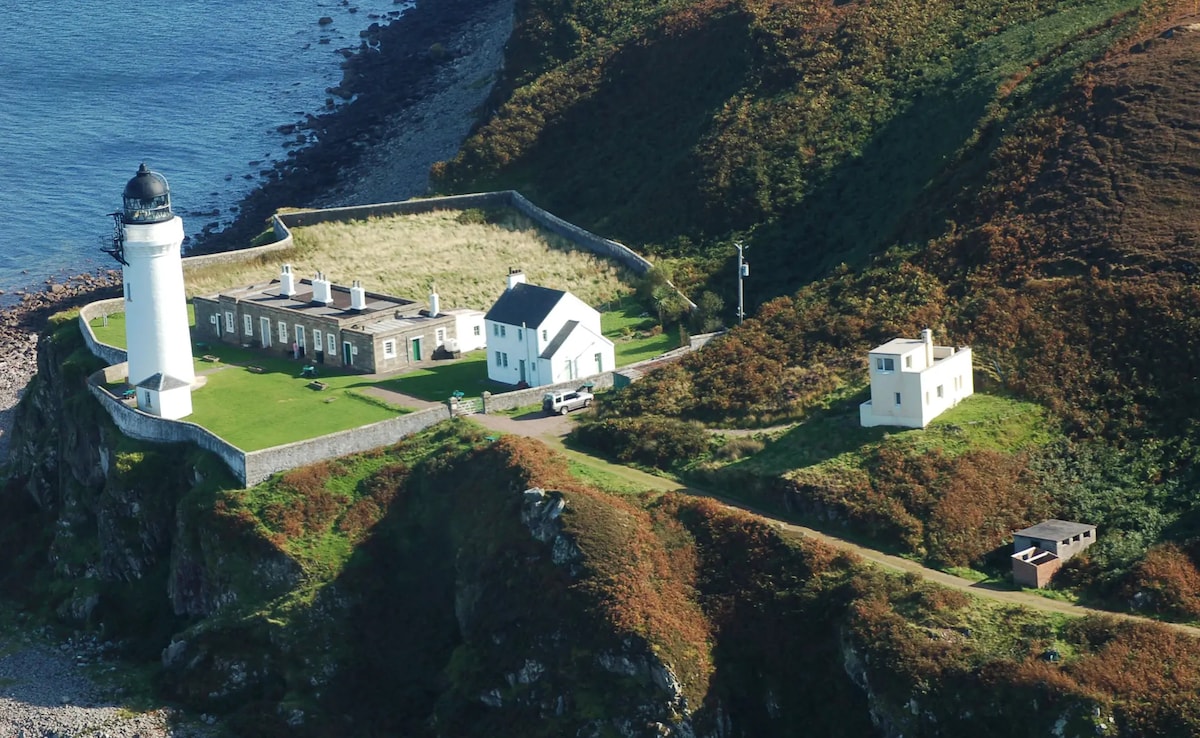
This experience is surprisingly accessible. At low tide, visitors can walk across a shingle causeway to Davaar Island to explore sea caves, including one with a famous Victorian-era Crucifixion painting. In 1887, local art teacher Archibald MacKinnon secretly painted the life-sized scene, which fishermen initially mistook for a miracle. The revelation led to a scandal, prompting MacKinnon to leave town before returning to restore his work. The causeway walk is about a kilometre, so check tide times to avoid being stranded on a Scottish island—romantic only in theory.
Visit the Campbeltown Museum
The Campbeltown Museum really opens up the town and the surrounding peninsula. It has everything from a prehistoric stone axe head and Viking remnants, right through to an old Penny Farthing bike. It is small, free to enter, and surprisingly absorbing. Campbeltown's history is deeper than most people expect. The area is connected to the ancient Kingdom of Dalriada, which was one of the founding elements of what became Scotland. Local heritage guides will happily tell you that this is where the Scotti tribes came from Ireland to gain a foothold, making the town a kind of origin point for Scottish identity itself.
Also Read: Which Is The Largest Railway Station In India?
See the Campbeltown Cross
In the middle of town, sitting on a roundabout near the harbour, stands one of the most extraordinary medieval artefacts in Scotland. The Campbeltown Cross is a magnificent 14th-century Celtic cross carved with intricate designs and considered the finest medieval Celtic cross in all of Argyll. The fact that it sits on a roundabout in regular everyday traffic, rather than in a museum behind glass, is somehow very Campbeltown. Worth seeing, and worth stopping for a photograph.
Go to the Campbeltown Picture House

The Campbeltown Picture House, which opened its doors in 1913, holds the title of the oldest purpose-built cinema in Scotland still in operation. It is renowned for its rare atmospheric interior, designed to resemble a Mediterranean courtyard complete with blue skies, floating clouds, and small houses flanking the screen. There is nothing quite like it in Scotland. The main hall shows mainstream films, while a second screen runs more independent and arthouse releases. Even if you are not a big cinema person, walking into the main hall just to see the interior is worth it.
Walk the Kintyre Peninsula
The landscape around Campbeltown is genuinely beautiful. The coastline is rugged and dramatic, the light changes constantly, and on a clear day you can see Ireland from the southern tip of Kintyre, which is closer to Belfast than it is to Edinburgh. There are several marked walking trails in and around the town, ranging from easy coastal strolls to more demanding hill walks. The scenery along the peninsula is the kind that makes you stop mid-step and just stand there for a moment.
The Paul McCartney Connection
The town shares a special link with music legend Paul McCartney, who owned High Park Farm nearby. His hit song "Mull of Kintyre" featured the local Campbeltown Pipe Band, and visitors can pay their respects at the Linda McCartney Memorial Garden, which features a bronze statue of her holding a lamb, commissioned by Paul himself. If you are a Beatles fan, or just someone who appreciates a good story, this is a quietly moving stop.
Shop and Eat Local
Wandering the old streets, you will find independent shops and a great wee art gallery and craft shop right on the waterfront. Campbeltown Pottery has been making handmade ceramics since 1997 and watching the potters' wheel in action is a lovely way to spend half an hour. For food, local seafood is the thing to eat here. The waters around Kintyre are cold, clean, and extraordinarily productive, and you will find langoustines, crab, and fresh fish on most menus. Kintyre Larder is a good spot for local produce.
Play Golf at Machrihanish
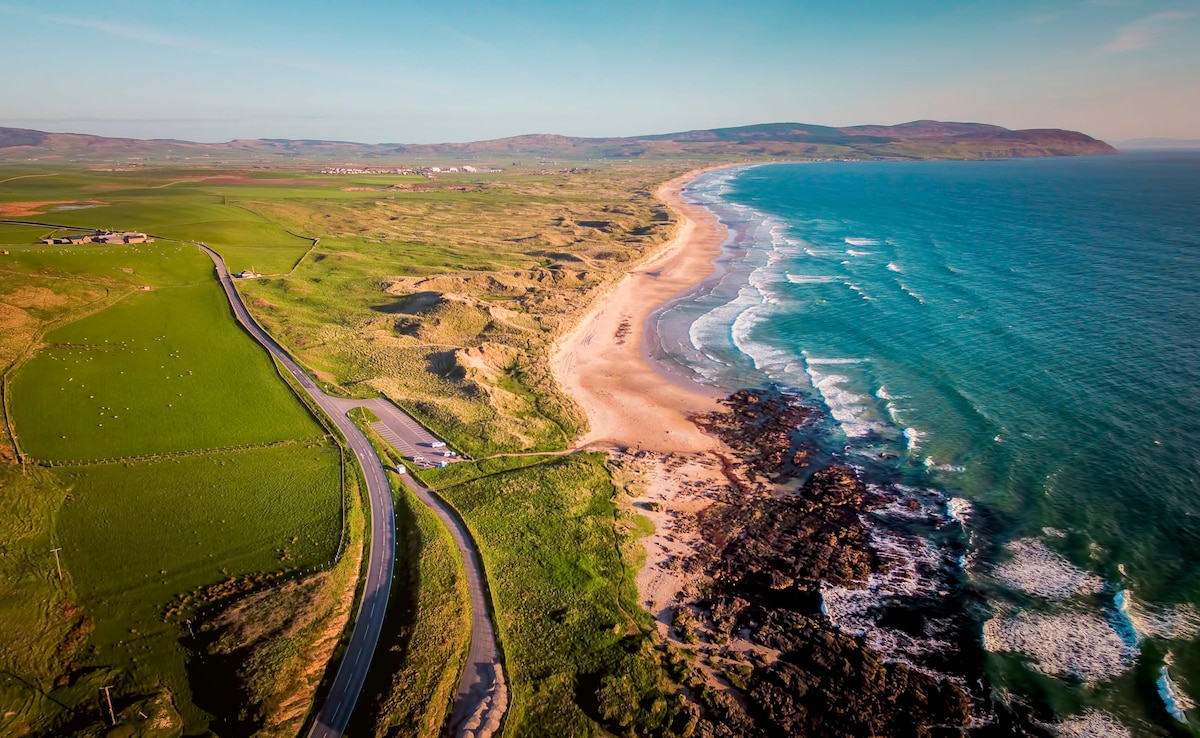
This is one for the golfers. The Machrihanish Golf Club, a few kilometres outside town, is one of the most famous links courses in Scotland and on every serious golfer's bucket list. Between the first tee and the fairway lies a small cove with a beach, and one of the largest bunkers ever seen, a challenge that will test the nerves of even the best golfers. Even if you do not play, driving out to Machrihanish just to see the beach and the Atlantic coastline is worth the detour.
Getting Around and When to Go
Campbeltown is a walkable town for the most part, and the main attractions are either in the centre or reachable by a short drive. If you want to explore the wider peninsula, hiring a car is the most practical option. Buses do run to and from Glasgow, but they are slow and infrequent.
The best time to visit is between May and September, when the days are long, the weather is as cooperative as Scottish weather ever gets, and the distilleries are running their full tour schedules. April and May tend to be the drier months, and the late summer light on the Kintyre coast is genuinely beautiful.
Also Read: Which Destinations Indians Are Choosing For 2026 Summer Vacation
The Whisky Capital
Campbeltown is the kind of place that serious travellers quietly keep to themselves. It does not have the tourist infrastructure of Edinburgh or the Instagram familiarity of the Highlands, but it has something arguably better: a real story, a genuine identity, and a character that has been earned through centuries of making something the world actually wanted. If you are planning a Scotland trip and you want to go somewhere that most people have not been, somewhere that rewards curiosity and repays the effort of getting there, the Whisky Capital of the World is waiting. And it will probably pour you a very good dram the moment you arrive.
Track Latest News Live on NDTV.com and get news updates from India and around the world


