





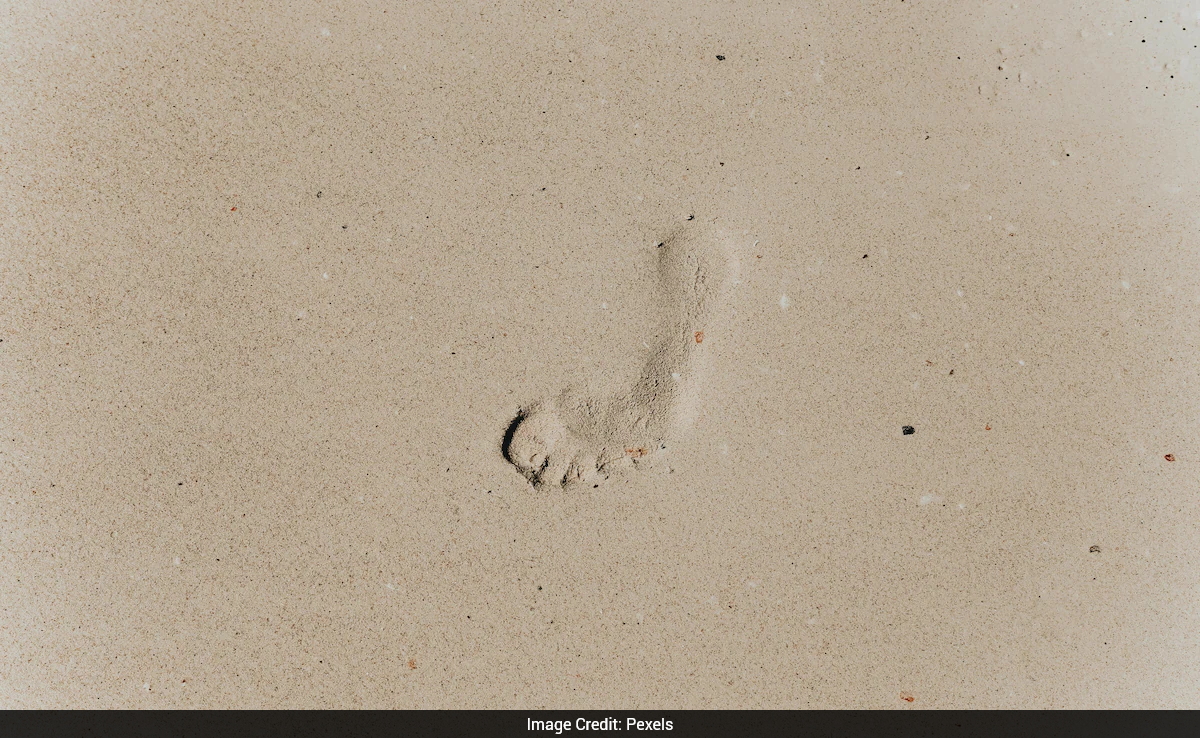
Dog walkers recently made a remarkable discovery on a Scottish beach, uncovering ancient footprints that led to an urgent archaeological excavation. The prints, revealed after winter storms shifted the sands, offered a rare glimpse into life 2,000 years ago, reported the NYPost.
These footprints were found in Lunan Bay, Angus, on the east coast of Scotland. Two local residents, Ivor Campbell and Jenny Sneddon, were walking their dogs, Ziggy and Juno, when they noticed "clear marks," according to a University of Aberdeen press release.
Campbell informed council archaeology expert Bruce Mann. Recognising the significance of the discovery, Mann summoned university experts to the scene.
Archaeology Team's Quick Action
The team, led by Professor Kate Britton, immediately arrived at the site. In their haste, they even purchased plaster of Paris from a craft store along the way to record the footprints.
Arriving at the site, archaeologists faced winds of up to 55 mph. Professor Britton said the team worked in extremely difficult conditions. He said, "Working on the site felt like being showered with sand-it was one of the most difficult work experiences I've ever had."
Age Of The Footprints
Officials reported that the footprints date back to the early first century AD, when Boudica, Jesus, and the Roman Empire were at their peak. Radiocarbon dating confirmed that the footprints are approximately 2,000 years old.
Although the sea has now eroded much of the site, archaeologists recorded the footprints, created maps, created 3D models, and made physical casts.
Rare And Unique Discovery
Professor Britton told Fox News Digital that similar footprints have been found in England, but this is the first time in Scotland. He cited three factors that prove these footprints are ancient: semi-fossilised soil, previously unexposed soil, and the footprints cutting through sedimentary layers.
After three days of hard work, the team successfully documented the site. Within a few days, the sea had engulfed most of it.
He emphasised the rarity of the discovery, calling it a "once-in-a-career experience" for archaeologists. The site is extremely rare globally and is the first footprint discovery of its kind in Scotland.
Track Latest News Live on NDTV.com and get news updates from India and around the world

