Chile is perfect for every kind of traveller. Be it the urban and chic vibe of the capital Santiago or the rugged terrain of Patagonia, which is a must-visit for adventure lovers, the South American country boasts of a diversity of landscapes like few other nations.
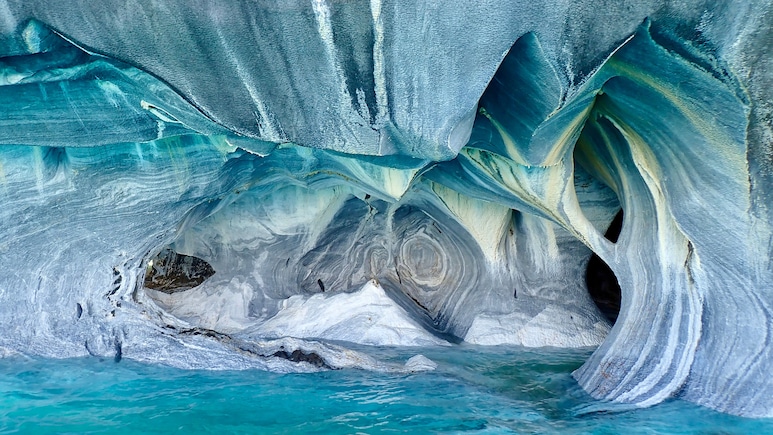
Away from the hustle and bustle of Chile's major cities is a location that will leave travellers stunned. The country's iconic marble caves feature unique swirling patterns that look as if they have been painted into the rock. The patterns are completely natural. The grey, blue, and white patterns were carved into the rock due to the flowing water.
-

-
 At NDTV World Summit, Palestinian Envoy's Amitabh Reference For India Visit
-
 Why "Healthy" Mojtaba Can't Appear In Public, Reveals Iranian Diplomat
-
 A Region in Flux: Who Will Shape the Middle East’s Future?
-
 "It's A Genocide": Palestine Ambassador On Conflict With Israel
-
 Iranian Diplomat On The Human Cost Of War: 'Parents Are Still Crying'
-
 Anarchy Or Change? Nepal Minser's Lesson From Nepal's Gen Z Movement
-
 Why "Healthy" Mojtaba Can't Appear In Public, Reveals Iranian Diplomat
-
 'Needs Very Rapid New Concept Of Warfare': Ex-CIA Chief's Advice To India
-
 'US Never Apologised': Iran Diplomat On Primary School Bombing
-
 AI Divine, AI Gods And Phantoms: BAPS Monk's Warning At NDTV World Summit
Chile's Unique Caves
The formations sit on the shores of General Carrera Lake, a glacial lake in Chile's southern part. The turquoise waters make the location look as if it is a living thing. Each turn reveals a different design.
“As the lake rises and falls, water has slowly sculpted the marble into caves, arches and smooth walls, creating one of the most surreal landscapes in South America,” a post reads.
The most famous caves are the Marble Cathedral (Catedral de Mármol), Cave (Caverna de Mármol), and the Chapel (Capella de Mármol).
Also Read: Video: Thailand's 'Sticky Waterfall' Makes Visitors Say, 'This Makes No Sense'
The Mystery Of Chile's Marble Caves
The sculpted caves were formed over thousands of years as the lake water dissolved the minerals in the rocks until the walls crumbled. Researchers believe the process occurred over the past 10,000 to 15,000 years, as per Live Science, after glaciers retreated from the region and exposed the stone to weathering.
The brilliant turquoise colour of the water is due to the glacial silt or "rock flour." The fine powder absorbs the shortest wavelengths of light (the purples and indigos). It reflects mainly green and light-blue light back to the surface.
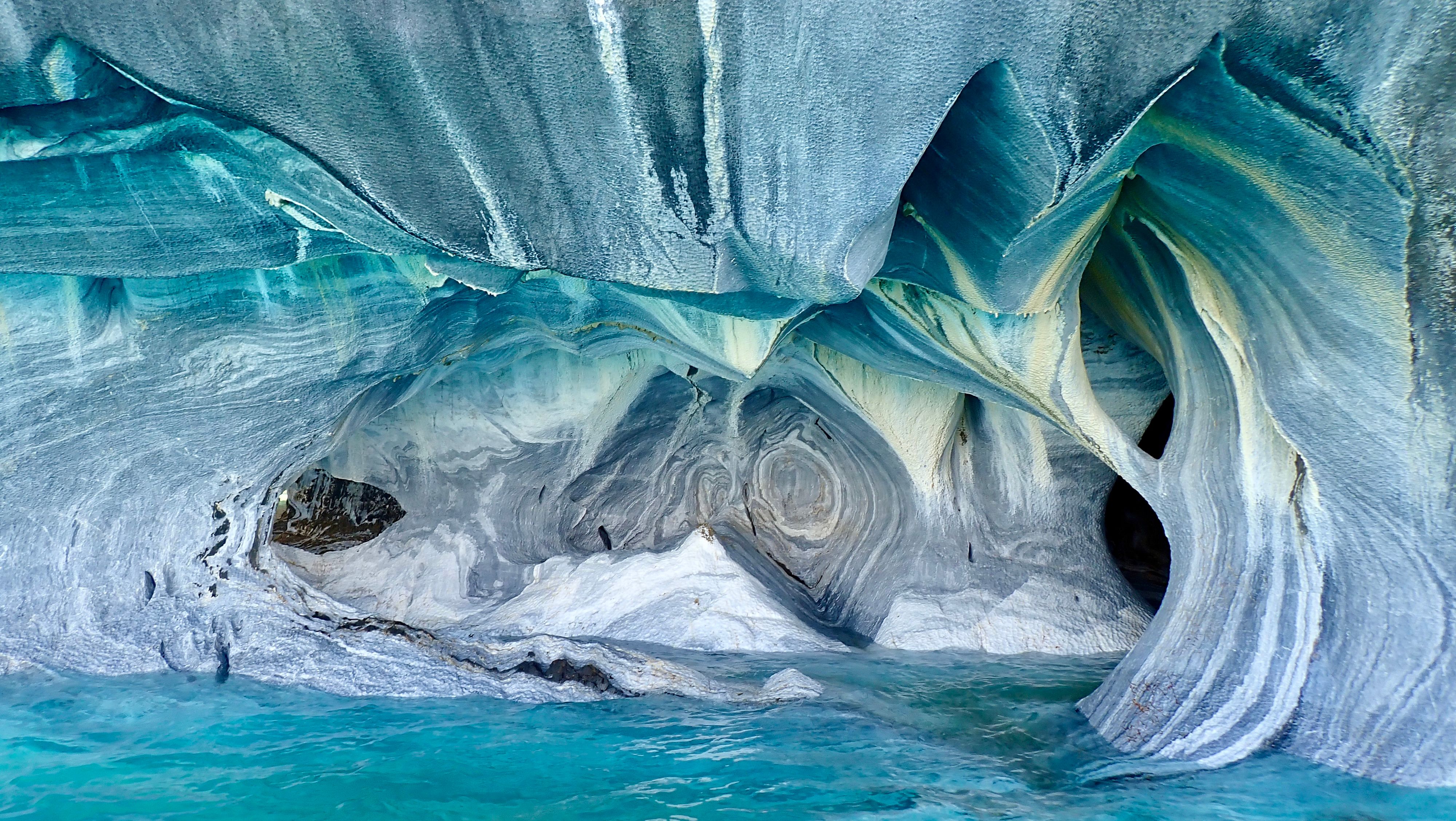
Photo Credit: Representative image/Pexels
The glacial origin of the lake means that the waters are close to freezing temperatures. The marble caves can best be explored by kayaking, allowing travellers to look at the formations in detail. The caves are located in the Aysen region and can be reached by boat from Puerto Rio Tranquillo.
Track Latest News Live on NDTV.com and get news updates from India and around the world


