





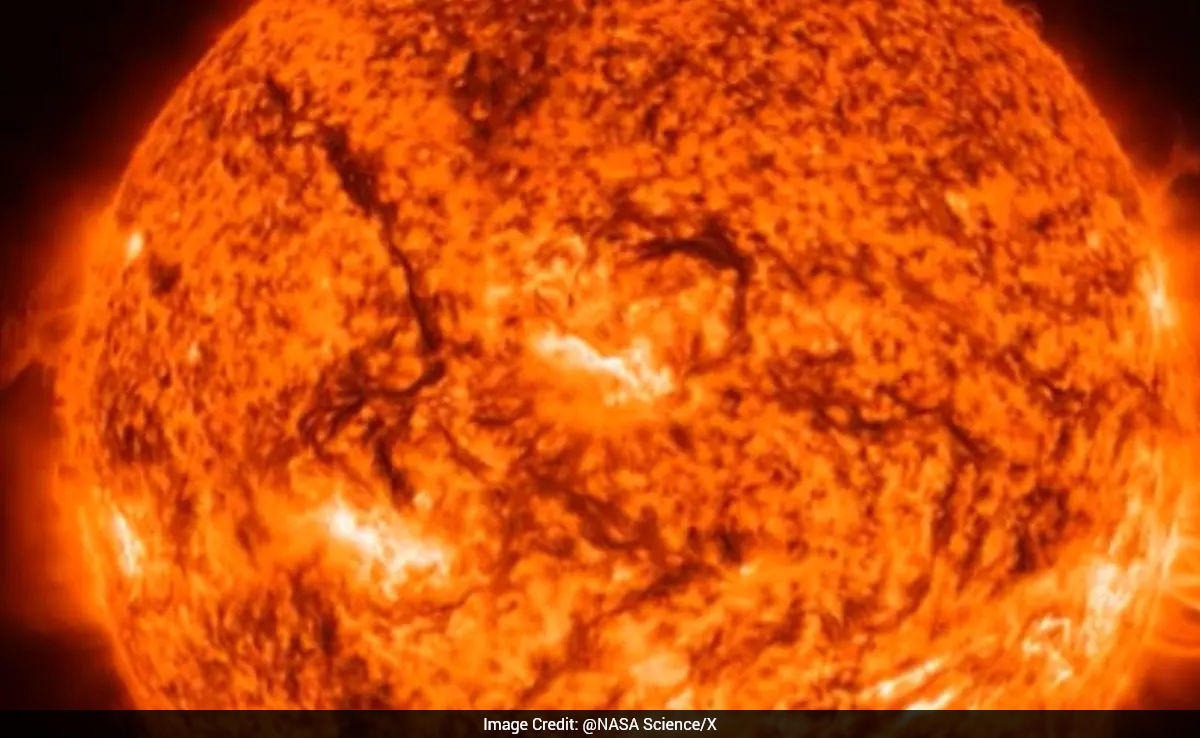
A new study has provided deeper insights into the Sun's surface, explaining how certain regions with strong magnetic activity behave over time. These findings help scientists better understand solar activity and improve predictions related to space weather, reported NASA.
Strong magnetic fields are often observed in parts of the Sun's surface. These fields can form in a matter of hours and fade away slowly or rapidly over time. Sometimes they take days, weeks, or even months to completely dissipate.
This study focused on regions that remain active for longer periods, where the strong magnetic field takes at least a month to weaken. Scientists now have a clearer understanding of how these regions function.
This research used data from NASA's Solar Active Region Spotter citizen science project. This initiative asked volunteers to analyse pairs of images of active regions and answer questions related to them. All of these images were taken by NASA's Solar Dynamics Observatory.
Key Findings Of The Researchers
Emily Mason (Predictive Science Inc.) and Kara Knieszewski (Air Force Institute of Technology), who led the project, reviewed the data and the volunteers' analysis. They found that regions with longer periods of activity produce more solar flares than regions with shorter periods of activity.
The study also revealed that such regions are three to six times more likely to produce the most powerful solar flares.
Importance In Space Weather Forecasting
These results demonstrate that regions with longer periods of activity play a crucial role in space weather forecasting. They can also provide important information about magnetic fields deep within the Sun.
Track Latest News Live on NDTV.com and get news updates from India and around the world

