





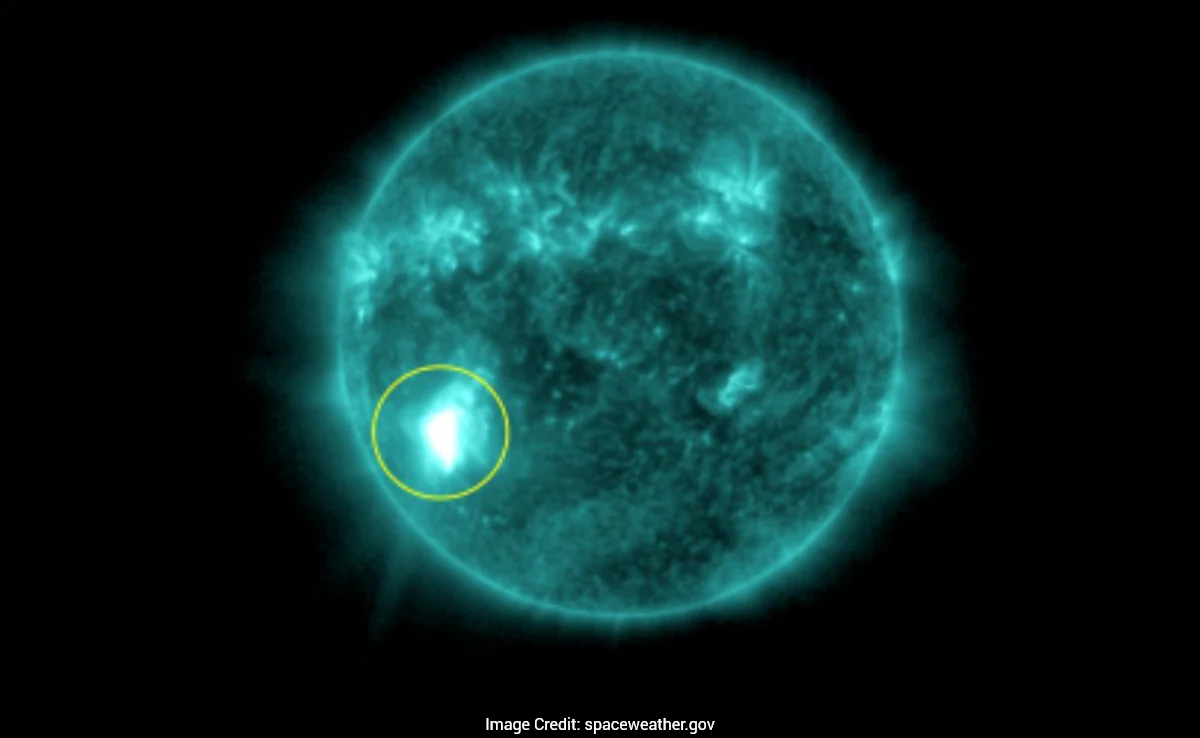
A powerful X-class solar flare has triggered a radio blackout, raising concerns about the upcoming Artemis 2 mission scheduled to launch in April 2026, Space.com reported. The solar flare was unleashed by the sun in the early hours of Monday (March 30).
According to NOAA's Space Weather Prediction Center, the flare peaked at 11:19 pm EDT (0319 GMT). It is reported that the flare, classified as X1.4, has the potential to disrupt satellite communications and navigation systems.
As per the media outlet, the flare also launched a coronal mass ejection that could have an Earth-directed component, which might cause a geomagnetic storm, ultimately leading to auroras.
Also read | Expert Rejects Claims Of Second Sphinx Discovery Beneath Giza Pyramids
Why does it matter at this point?
The solar flare's radiation could pose a risk to the Artemis 2 astronauts, who will be travelling beyond Earth's magnetic field. It will be NASA's first astronaut mission to the moon since 1972, with liftoff set for no earlier than April 1, 2026, at 6:24 pm EDT (2224 GMT) from the agency's Kennedy Space Center in Florida.
NASA's Moon to Mars Space Weather Analysis Office is closely monitoring the situation, tracking solar eruptions and assessing the risk of solar particle events.
Also read | Can Refrigerated Food Cause Poisoning? Microbiologist Explains Risk Of Eating Leftovers
"NASA is paying attention regarding the upcoming Artemis 2 launch," solar physicist Tamitha Skov told Space.com.
"We need to pay attention to radio bursts now. Those can really impact HF/VHF as well as satellite radio communications during critical launch operations and early orbit maneuvers!"
The mission will send NASA astronauts Reid Wiseman, Victor Glover, Christina Koch, and CSA (Canadian Space Agency) astronaut Jeremy Hansen on an approximately 10-day journey around the Moon.
"Among objectives, the agency will test the Orion spacecraft's life support systems for the first time with people and lay the groundwork for future crewed Artemis missions," said NASA.
Track Latest News Live on NDTV.com and get news updates from India and around the world

