





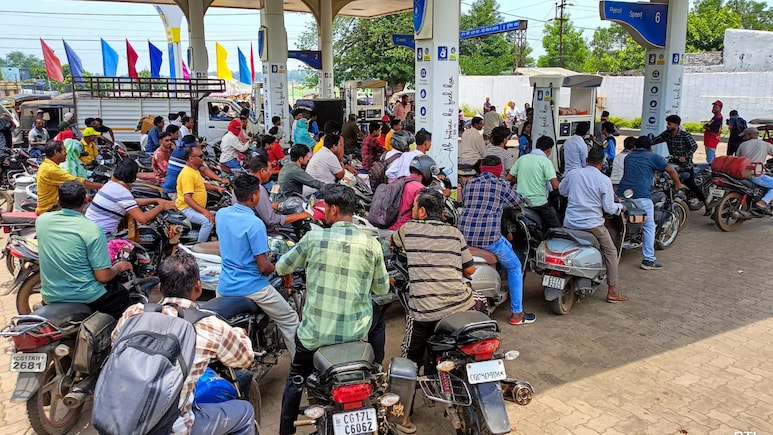
- Petrol and diesel prices rose by Rs 3 per litre on Friday after 10 weeks of stable rates
- Fuel Price Hike: Iran conflict caused crude prices to surge from $69 to over $113 per barrel
- Both the government and the oil marketing companies were bearing huge losses by selling fuel at old rates
Petrol, Diesel Price Hike: Petrol and diesel prices were increased by Rs 3 per litre on Friday after weeks of central government trying to hold the line. The Modi government was hesitant to raise the fuel price as this increase will have a ripple effect. When fuel prices rise, prices of all other essential commodities increase in line. This put the country at the risk of inflation. So, what forced the hike?
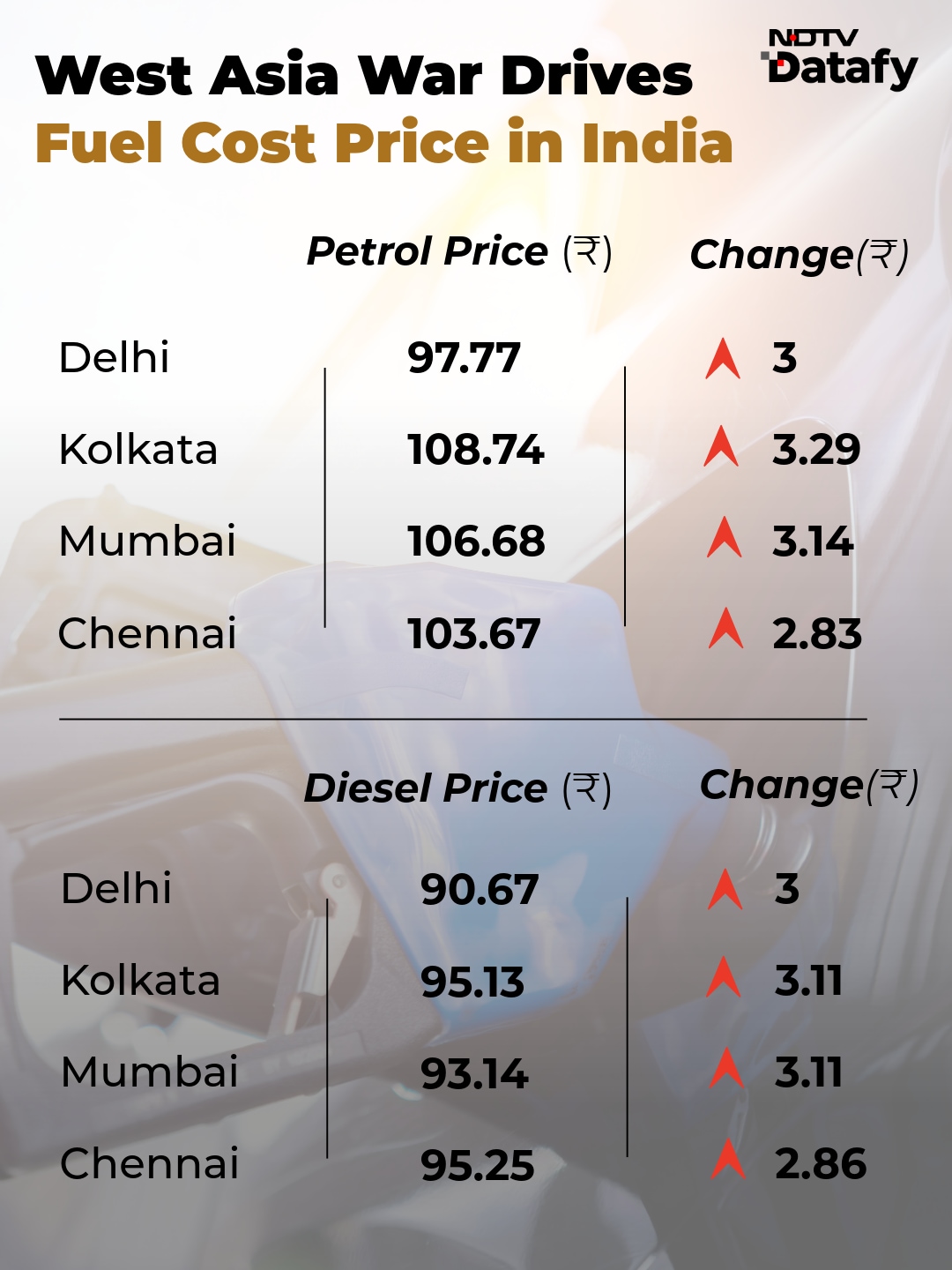
For nearly 10 weeks, oil companies were selling fuel at old rates even as their costs kept rising. They were absorbing the losses. Here's what prompted the petrol, diesel price rise:-
1) Iran Conflict: The ongoing conflict in Iran disturbed global oil supply. A key oil route, the Strait of Hormuz, saw tensions and shipping delays. This created fear in global markets. Whenever there is fear of supply disruption, crude prices rise fast.
Before the conflict, India's crude basket was around $69 per barrel. It later climbed to $113-114 per barrel. That is a massive jump.
India imports nearly 85% of its crude oil. So when global prices rise, India's import bill rises immediately.
2) Countries Competing For Cargoes: Due to the conflict, many oil shipments slowed down. Countries started competing to secure available oil cargoes. This pushed prices even higher.
Freight and insurance costs for ships also went up. So, India was not only paying more for oil, but also more to bring it home.
3) Rupee Slides: Crude oil is bought in US dollars. The rupee recently hit record lows near 95.95 per dollar. When the rupee falls, India pays more for the same barrel of oil.
So even if crude prices had stayed flat, the weak rupee would still raise costs. Here, both happened together:
- Oil became expensive
- Dollar became expensive
- Double pressure.
4) Oil Companies Absorbing Losses: India's three state-run fuel retailers are:
- Indian Oil Corporation
- Bharat Petroleum Corporation Ltd
- Hindustan Petroleum Corporation Ltd
These companies kept bearing losses for 10 weeks. They kept selling petrol and diesel at old rates. But their cost of buying crude had risen by almost 50 per cent. This created what is called under-recovery (selling below cost).
They were losing Rs 1,600 crore per day. In 10 weeks, losses crossed Rs 1 lakh crore. No company can keep doing this for long.
5) Government Also Bearing Losses: The central government, led by Prime Minister Narendra Modi, had already cut excise duty to reduce burden. To protect consumers earlier, the government had cut excise duty -- hitting its own pocket.
- Petrol excise cut from Rs 13 to Rs 3
- Diesel excise cut from Rs 10 to zero
This cost the government Rs 14,000 crore per month in revenue loss. So, in effect:
- Government revenue fell
- Oil companies' losses rose
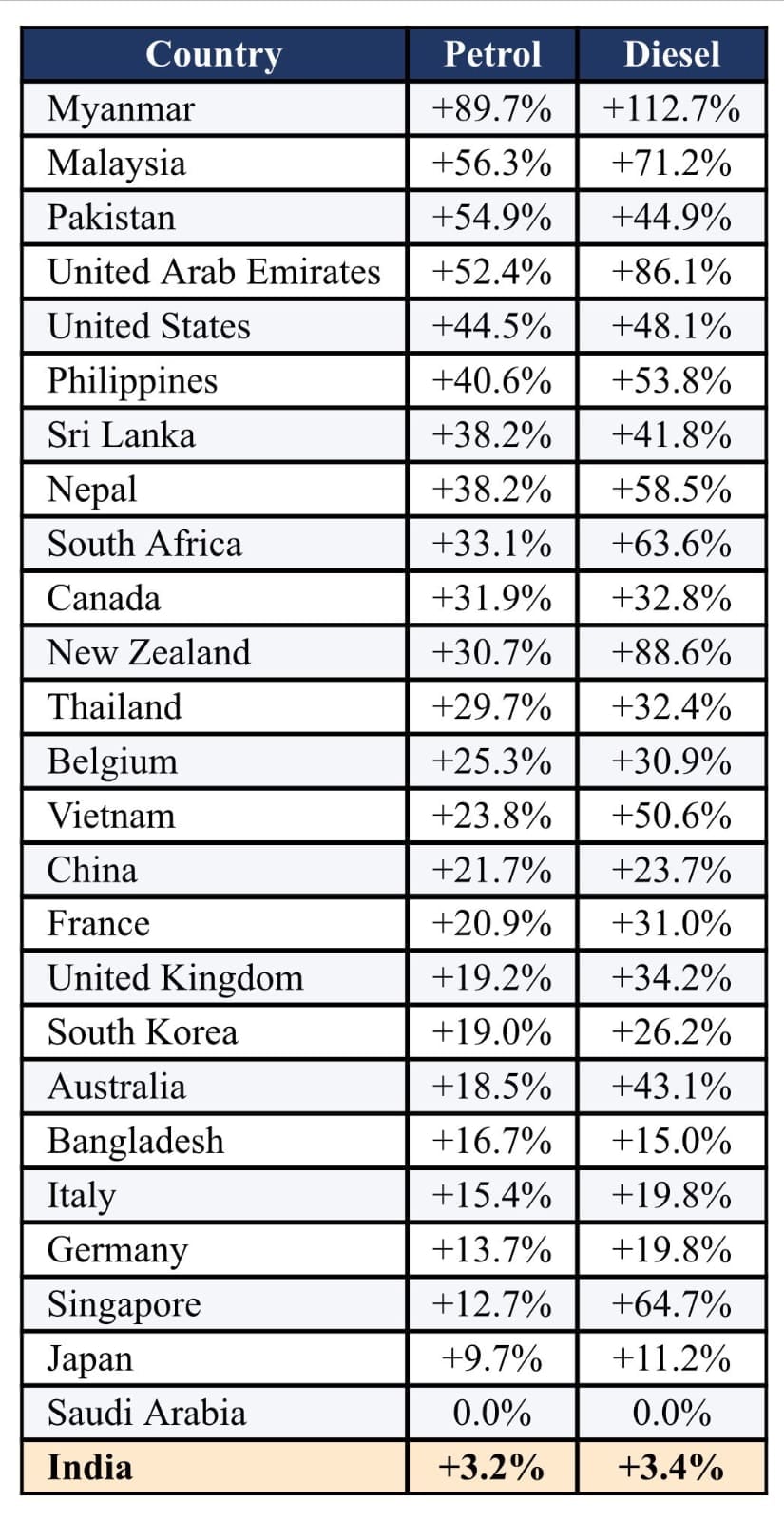
The situation became unsustainable. This could not continue. Notably, fuel price hike in India is still lower (relatively) when compared to other economies.
6) Refining, Transport & Insurance Costs: The total cost for oil companies kept rising from all sides. During geopolitical tension:
- Shipping becomes risky
- Insurance premiums rise
- Logistics slows down
- Refining crude into fuel also becomes more expensive when crude prices are high.
7) Why Only Rs 3 Hike: The Rs 3 increase does not fully cover the losses. Oil companies are still absorbing a huge part of the burden. But this hike reduces some pressure and prevents financial damage from becoming worse.
| Factor | What happened | How It Affected India |
| West Asia conflict | Fear of oil supply disruption | Crude jumped from $69 to $113+ |
| Strait of Hormuz tension | Shipping delays, risk | Higher freight and insurance cost |
| Global supply fear | Countries competing for oil | Prices rose further |
| Weak rupee | Near 95.95 per dollar | Imports became costlier |
| OMC losses | Rs 1,600 crore loss per day | Unsustainable for 10 weeks |
| Excise duty cuts | Govt revenue loss Rs 14,000 cr/month | Less room to absorb shock |
| Higher refining cost | Cost of turning crude to fuel rose | Extra burden on companies |
For 10 weeks, oil companies and the government protected consumers. They absorbed the global shock. But with crude above $100, rupee at record lows, and losses crossing Rs 1 lakh crore, holding prices was no longer possible.
"Oil Marketing Companies (OMCs) earnings remain highly sensitive to fuel marketing margins, with every Rs 1 per litre increase in retail margins potentially boosting EBITDA by 12-17 per cent across major state-run refiners -- approximately 17 per cent for Hindustan Petroleum Corporation Limited, 15 per cent for Bharat Petroleum Corporation Limited, and 12 per cent for Indian Oil Corporation Limited. While the recent fuel price hikes provide partial relief, additional hikes may still be required to fully offset marketing losses amid elevated crude prices. Further, LPG under-recoveries continue to weigh on profitability, with losses for HPCL estimated at nearly Rs 670 per cylinder in May 2026 versus around Rs 84 per cylinder in Q4FY26," said Dhaval Popat, Lead Analyst at Choice International Limited.
The Rs 3 hike is a partial pass-through of a much bigger global problem. Much now depends on how the Middle East situation unfolds and whether crude oil prices cool down.
Track Latest News Live on NDTV.com and get news updates from India and around the world

