





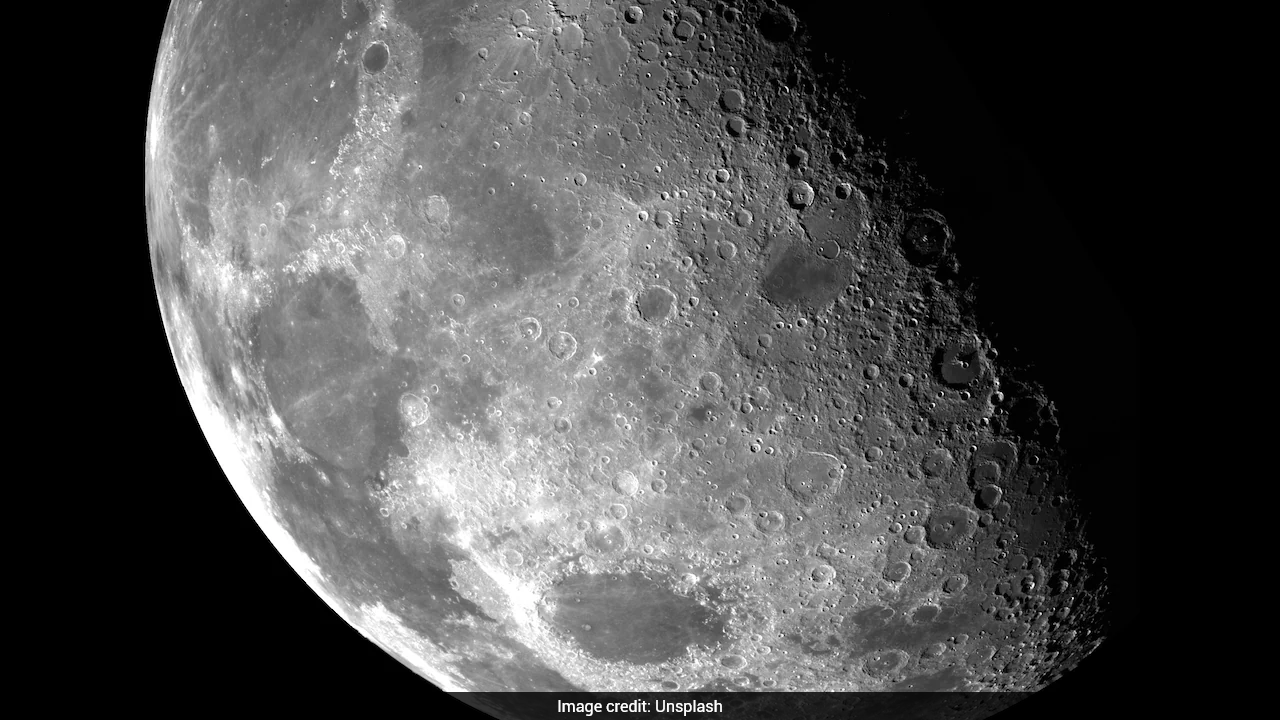
Scientists have found that some of Earth's microbes could have travelled to space with human explorers, and might survive on the Moon's South Pole region. According to a study from NASA and the University of Maryland, Earth-bound bacteria and fungi could survive there by taking cover in the deep, freezing shadows of the lunar south pole. Otherwise, it was assumed that any tiny microscopic hitchhikers carried by human missions would be wiped out almost instantly.
The latest study published in Science Advances highlights the urgent need to understand microbial presence in extreme lunar environments, especially before humans build a permanent presence on the Moon.
Also read | Scientists Reveal How Sun's Ancient History Shaped Earth's Unique Climate
"Humans are natural explorers, and with them come their voices, their memories... and their microbes," Prabal Saxena, who is a planetary scientist, said in a blog released by NASA. "For some scientists, myself included, that reality can be unsettling. But it also creates an opportunity to turn an imperfect situation into a useful experiment." Saxena is the one who led the study from NASA's Goddard Space Flight Center in Greenbelt, Maryland.
The study reveals that Earth-bound bacteria survive on the Moon by taking cover in the deep, freezing shadows of the lunar south pole. "We need to understand what was there before us, because when we go to Mars to search for signs of life beyond our planet, we will want to make sure it's not stuff we brought," said Andrew Needham, a NASA Goddard-based paper co-author in the statement.
Scientists have used elevation maps and temperature records from NASA's Lunar Reconnaissance Orbiter to simulate environmental conditions across candidate landing zones for the Artemis III mission.
They analysed how five common spaceflight microbes, including common human skin bacteria like Staphylococcus aureus and Aspergillus niger, would face these conditions.
Also read | Scientists Identify Protein That May Influence Cravings For Fatty Foods
The computer models revealed a surprising network of "survivable niches." In shaded polar pockets, all tested microbes could easily hang on in a dormant state for at least 24 hours. The strain studied, Aspergillus niger, could potentially endure in these cold shadows for up to a week.
Even dormant or dead microbes pose a major headache for scientists. If microscopic biological material persists around landing sites, it could pollute pristine soil samples. That makes it much harder for geologists to study the Moon's natural, untouched chemistry or search for ancient organic compounds.
Not just on the Moon's surface, the scientists also aim to understand if contaminants are brought by humans.
Track Latest News Live on NDTV.com and get news updates from India and around the world

