






On 11 March, the United Nations Security Council adopted the historic Resolution 2817, condemning in the strongest possible terms Iran's unprovoked attacks on the United Arab Emirates, Bahrain, Kuwait, Saudi Arabia, Qatar, Oman, and Jordan. The resolution passed with 13 votes in favour. Not a single nation voted against it.
India did not just vote in support. India co-sponsored the resolution, joining 135 nations in putting its name to a text that leaves no room for ambiguity. Iran's indiscriminate and cowardly aggression against infrastructure, civilian populations, and sovereign territory are a violation of international law, a threat to regional stability, and a danger to global economic security.
This resolution sends a clear and unified message that the international community will not tolerate attacks on our sovereignty or the deliberate targeting of civilians and critical infrastructure.
What Iran Has Done
Since 28 February, in an act of sustained aggression, Iran has launched ballistic missiles, cruise missiles, and drones against the UAE and neighbouring countries. The UAE has borne the brunt of these attacks, facing down 278 ballistic missiles, 15 cruise missiles, and a staggering 1,540 drones as of 12 March.
Despite Iran's claims, excuses, and justifications, these are not precision strikes against military targets. Iranian munitions have struck residential neighbourhoods, commercial districts, and civilian infrastructure. In the UAE alone, civilians of multiple nationalities have been killed and injured, including an Indian national whom His Highness Sheikh Mohamed bin Zayed Al Nahyan, the President of the UAE, personally visited in hospital.
Iran's unprovoked, hostile actions are not directed at the states that declared war on it, but rather at its neighbours - countries that have played a significant role in efforts to avert escalation. The UAE categorically rejects any narratives seeking to justify this aggression and views it as further evidence of Iran's short-sighted policies. We remain resilient in the face of any threat and are fully capable of safeguarding our sovereignty, stability, and security. Any aggression will not go unanswered, and the UAE stands fully prepared to address such threats.
The Safety Of Indians In The UAE
Since the outbreak of the conflict, I have been in daily contact with Indian families in the UAE and across India. The question I consistently hear is: "Are our people safe?"
I would like to use this opportunity to dispel concerns directly to the Indian public.
The safety, security, and well-being of everyone in the UAE remains the nation's top priority. The UAE is home to more than 200 nationalities, including a substantial Indian community, who live together in peace and harmony. This spirit of openness and stability continues to define the UAE today. Daily life continues without disruption. Essential services, including energy, water, telecommunications, transport, healthcare, and supply chains, are operating at full capacity.
The UAE's integrated air defence network has intercepted an overwhelming majority of the incoming threats. Our civil defence systems are operational; our hospitals prepared; and our emergency protocols are functioning exactly as designed.
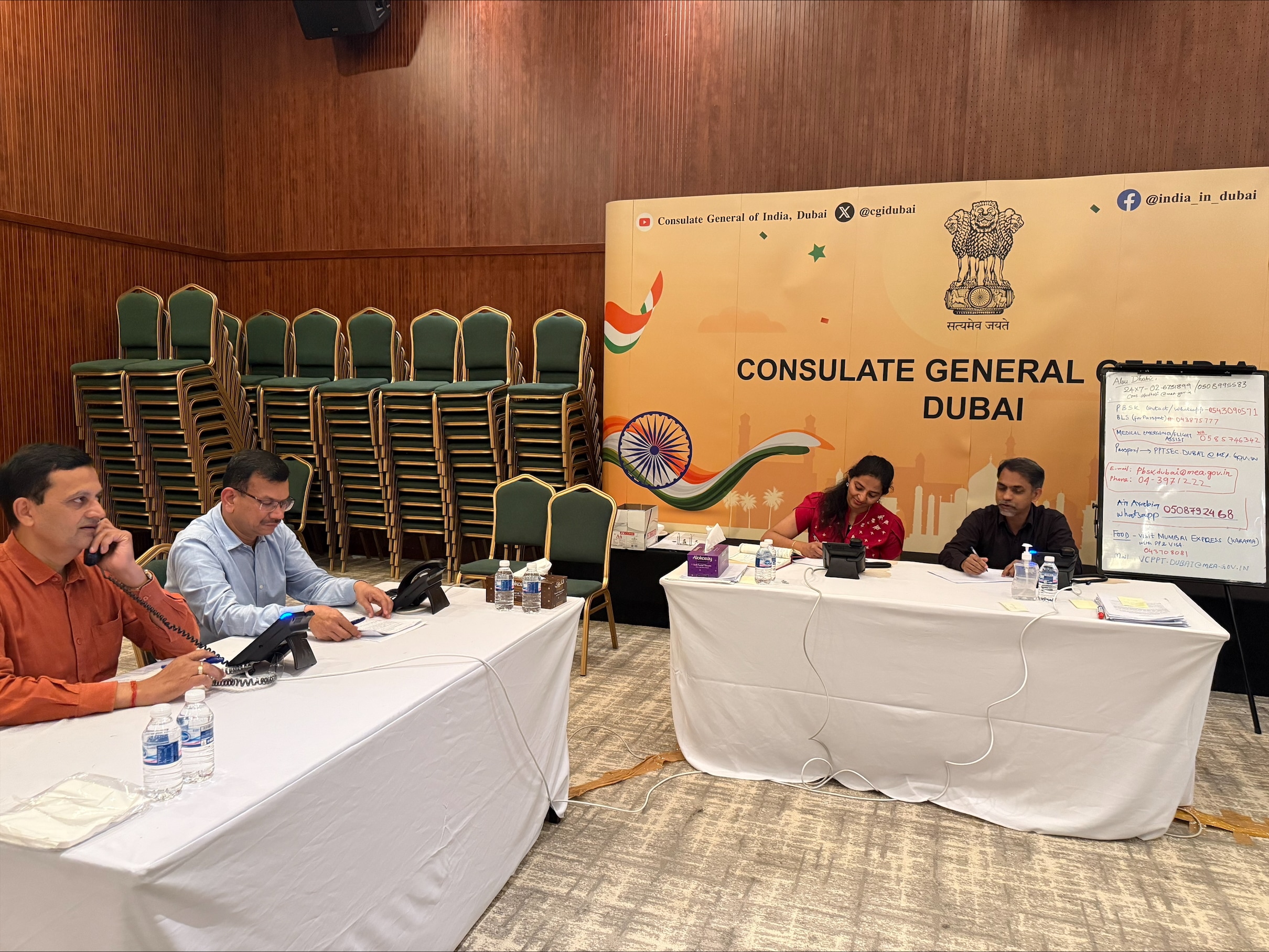
His Highness Sheikh Mohamed bin Zayed Al Nahyan has made it clear that all nationals living in the UAE, whether they be Emirati or Indian "are all our responsibility". Indians in the UAE are far beyond being considered our guests. They are teachers, engineers, doctors, entrepreneurs, and labourers, whose contributions are woven into the very fabric of our society.
In 2024, the UAE was the second-largest source of remittances to India, contributing $21.6 billion of India's record $129.4 billion in inflows. The over four million Indians residing in the UAE are not an abstract number. They proudly represent families and communities in Kerala, Maharashtra, Tamil Nadu, Uttar Pradesh, and every state in between, whose livelihoods depend on a stable, functioning, and secure UAE. Their safety is an obligation we take seriously.
A Word On Predictions Of "Dubai's Demise"
I have read, with interest, the commentary in some quarters suggesting that the current conflict marks the end of Dubai, the collapse of the UAE's economic model, or the beginning of a mass exodus. I understand the instinct behind these narratives. Conflict is alarming, and alarm generates dramatic headlines.
However, allow me to offer the facts.
The UAE's non-oil sectors now account for 75 per cent of GDP. Our sovereign wealth funds hold $2.49 trillion in assets, making the UAE the third-largest sovereign wealth holder in the world, behind only the United States and China. S&P Global affirmed our AA/A-1+ credit rating with a stable outlook just days ago, noting that the UAE's consolidated net asset position will reach approximately 184 per cent of GDP in 2026, with government liquid assets at roughly 210 per cent of GDP. Our average budget surplus over the past five years has been 5.6 per cent of GDP.
This is not an economy that collapses under pressure, it is one that is built to last.
The UAE's foundations have been nurtured by five decades of leaders who planned not for the next quarter, but for the next generation.
Bilateral trade between the UAE and India reached $100 billion in FY 2024-25. In January 2026, His Highness Sheikh Mohamed bin Zayed Al Nahyan, UAE President, visited India and both nations agreed to double that figure to $200 billion by 2032. The UAE is India's third-largest trading partner and second-largest export destination.
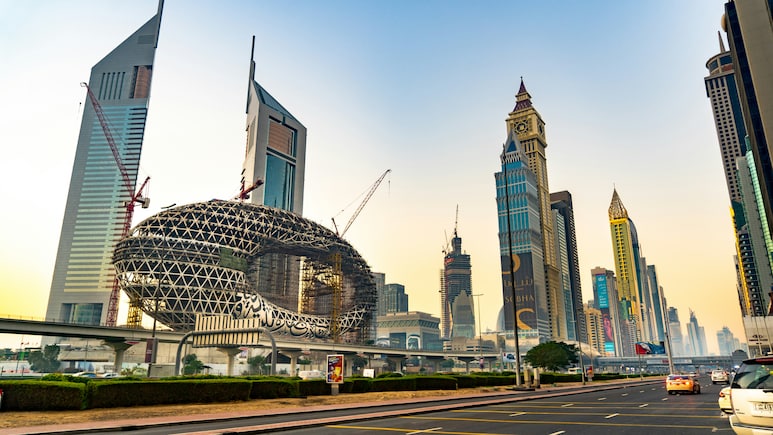
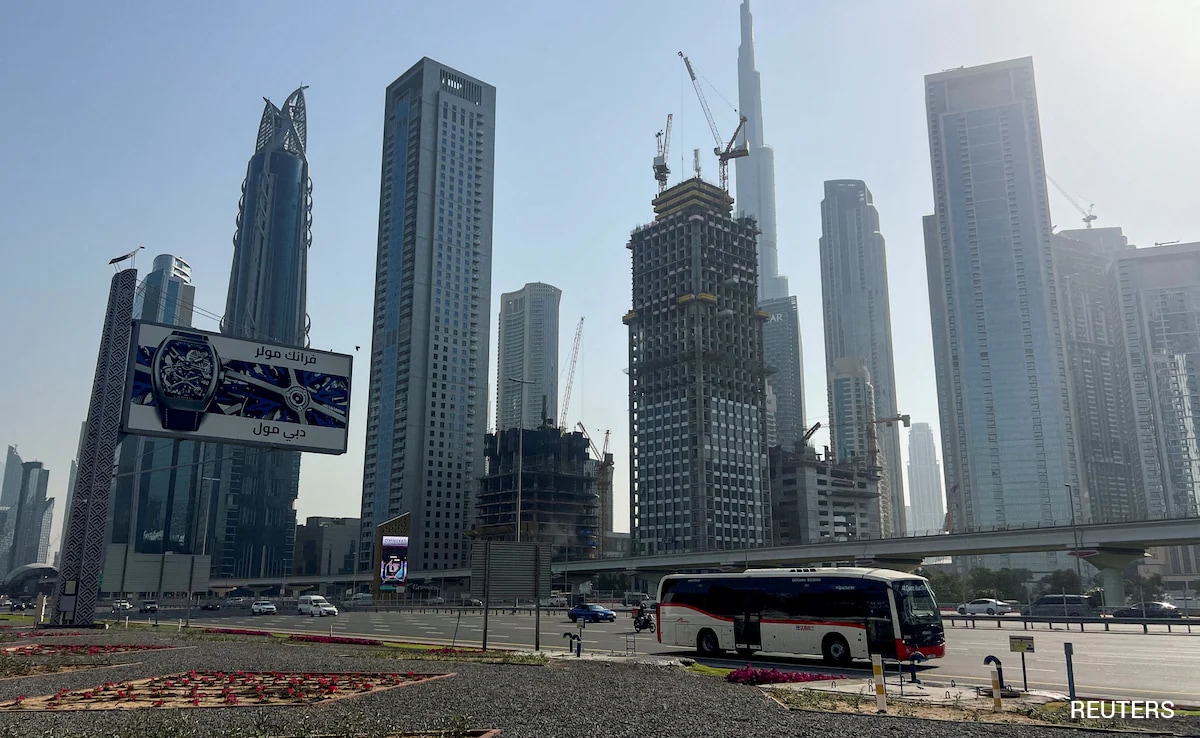
To certain commentators glibly predicting the UAE's downfall, I would gently suggest they revisit their predictions in 12 months. The cranes will still be turning. The thousands of flights each week will still be landing. And the millions of people who have chosen to build their lives in the UAE will still be here, because they understand something that distant commentators sometimes do not - the UAE faces pressure head on, we do not succumb to it.
What Comes Next
The current crisis has not weakened the UAE, and it will not. Instead, it has demonstrated the depth of the UAE's national structure, the resilience of its institutions, the cohesion of its society, and the strength of its international standing. The UAE has once again proven itself to be a nation built on a firm foundation, a clear vision, and the ability to face challenges with resolve, wisdom, and a profound sense of responsibility.
India's decision to co-sponsor Resolution 2817 is a statement of principle. It reflects the depth of a relationship that extends far beyond diplomacy to a genuine shared connection between our two peoples, nurtured over a decade of personal trust between President His Highness Sheikh Mohamed bin Zayed Al Nahyan and Prime Minister Shri Narendra Modi.
The solidarity India has shown towards the UAE from the very outset of this crisis has not gone unnoticed. Prime Minister Modi was among the first world leaders to personally telephone His Highness, strongly condemning the attacks. That call came before any formal resolution or multilateral statement. It was a message of brotherhood, and the UAE received it clearly.
We will remember who supported us, and as our President His Highness Sheikh Mohamed bin Zayed affirmed, "I promise, we will emerge stronger than before. Without doubt."
(The writer is Ambassador of the UAE to India)
Disclaimer: These are the personal opinions of the author.

