






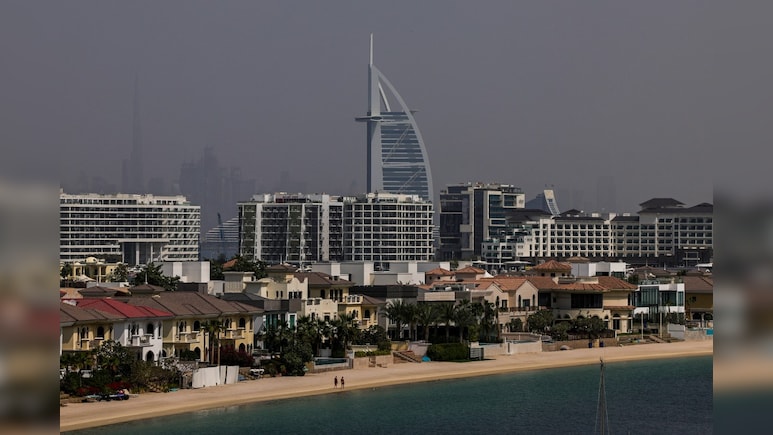
In the shadow of perennially shifting alliances, the recent eruption of hostilities between Iran and a coalition led by Israel and the United States marks a pivotal moment in the geopolitics of the Middle East. With the targeted assassination of Supreme Leader Ayatollah Ali Khamenei, the region stands at a cruel crossroads where retaliation and survival intersect, creating a tumultuous environment that threatens to engulf much of the Gulf.
Though Iran has long been viewed as a formidable leader in shaping regional politics, its ambitions now wield a dangerous, double-edged sword. Perceived by Iran as the vassal states of the US, the six Gulf Arab monarchies of the Gulf Cooperation Council (GCC) find themselves ensnared in the conflagration, suffering immensely in the face of Iranian vengeance.
Diversification Of Hydrocarbon Sector
Having spent over a decade as an Editor of various media groups in the Gulf region, I witnessed the massive diversification out of the hydrocarbon sector and the transformation of some of these Gulf states from close quarters. During the first Gulf War of the 1990s, the Middle East practically lived off hydrocarbons: oil and gas.
In sharp contrast today, about 77 per cent of the UAE's economy is based on non-hydrocarbon sectors: finance, technology, tourism, real estate, sports and education. The corresponding figures for Oman are 73 per cent, 66 per cent for Qatar and 57 per cent for Saudi Arabia. In the Global Financial Centre Index (GFCI) 38 Rank, for 2025, Dubai was ranked 11th out of 38 leading financial hubs globally, ahead of Frankfurt, Washington DC, Geneva, Tokyo, Zurich, Boston, Paris and others. To achieve such a remarkable structural transformation, all the Gulf countries have projected an image of safety and stability, as champions of "soft power."
The days of relative stability, stretching from the 1990s to 2020, appear as a utopia of the past. In sharp contrast, today the Gulf countries, pounded by Iranian drones and missiles, appear as a desert inferno, wherein each missile and drone strike sends ripples through the global energy supply and shakes the very foundations of regional economies.
Iran's Fight For Survival
Iran's response to the unprovoked aggression has been vehement and uncompromising. The drone strikes -- targeting oil refineries, embassies, and even iconic landmarks -- serve not only as acts of defiance but as desperate measures in a fight for survival. The closure of the Strait of Hormuz, a crucial artery for global oil transport, sends shockwaves through international markets, driving gas prices to unprecedented heights. The earth beneath the rich sands of the Gulf no longer feels stable; instead, it reverberates with the cries of economies on the brink, as investment flees and the prospect for growth dims.
The Spectre Of War
The Kingdom of Saudi Arabia, once a beacon of energy wealth, finds its giant oil refining facility at Ras Tanura under siege, its economic backbone threatened by Iranian hostility. With every attack on US embassies across the region -- be it in Riyadh or Kuwait -- the landscape of safety and security that Gulf states had long cultivated crumbles. The closures of strategic sites are akin to death knells, resonating through the halls of power and striking fear into the hearts of investors. Half of Dubai, once a flourishing hub of tourism and commerce, is scrambling for exits, as the spectre of a protracted war looms large.
Ironically, the Gulf monarchies -- despite their relative wealth, sovereign wealth funds and modernised economies -- possess much more to lose in this newly minted chaos. Over the past quarter-century, they have diversified their economies away from a sole reliance on fossil fuels, yet the very infrastructure that allows this transformation is now vulnerable to threat. UAE's economy, for instance, is now predominantly non-hydrocarbon, driven by finance, tourism, and technology. Yet, when drones strike AWS facilities and disrupt critical services, the progress they made appears ephemeral, caught in the crossfire of escalating conflict.
Psychological Toll On Gulf Monarchies
The psychological toll on these nations is profound. The attacks sow seeds of doubt about safety and stability -- qualities that were once a bedrock of their relationship with the United States. The image of the Gulf as a sanctuary for expatriates and tourists disintegrates under the weight of a sullied reputation. Faced with an uncertain horizon, nations like Qatar, Bahrain, Kuwait, UAE and Oman must urgently advocate for peace, seeking to quell the flames of unrest that threaten their very existence.
In the bitter aftermath of the US strikes on Iranian soil, as nearby populations -- fearing for their lives -- experience devastation firsthand, the reciprocal hostility from Iran cannot be understated. Missiles launched toward Israel disrupt the very fabric of what was assumed to be a stabilised region. Both sides are locked in a dance of devastation, and with each lost life, a broader narrative of vengeance is etched into the sands of history.
India A Glimmer Of Hope
Yet, amid the destruction, there lies a glimmer of hope. India, standing at an advantageous intersection of good relations with Iran, Israel, the Gulf states and the United States, possesses the unique opportunity to mediate a path toward peace. With over 1 crore Indian workers residing within the Gulf economies, the stakes are personal, transcending diplomatic rhetoric. India's intervention could pave a way for dialogue -- a flicker of rationality amid chaos.
Prime Minister Narendra Modi has spoken to leaders of Qatar, Oman, the UAE, Bahrain, Kuwait, and Saudi Arabia and condemned the Iranian attacks on these Gulf economies. The Prime Minister continues to lead India's efforts to ensure the well-being of the expatriate community and the return of a large number of students from Iran and the Gulf countries. For many Indian families, separated across the Indian Ocean, Holi and Eid will be an occasion to celebrate reunion.
The brewing storm does not merely pose a regional threat; it spirals into a global crisis. As stocks tumble and energy prices soar, the consequences of conflict reverberate beyond the Middle East. A world interconnected through trade and economy watches anxiously, knowing that peace -- or the lack thereof -- will shape the future of energy and security for generations to come.
In this boiling cauldron of conflict, one truth remains: while one nation retaliates, the others face the dire consequences of its fury. Rich Arab Gulf monarchies must actively lobby with Israel and the United States to end the Iran War. The prosperous Gulf economies depend on their image as oases of safety and sustainability. As the cries for peace in the Gulf grow louder and as the world holds its breath, one hopes that reconciliation may arise from the ashes, restoring a sense of stability before the flames consume all.
(The author is Editor, Research, NDTV. He has lived and worked for over a decade in the Gulf countries)
Disclaimer: These are the personal opinions of the author

