Opinion | Gasping In 4 Days? How Iran Humbled US-Israel's Million-Dollar War Inventory
In the ongoing war, in just four days of battle, there are fears that the US and Israel's inventory of Patriot and Tomahawk missiles may run out soon.
Israel claimed Iran to be an 'existential threat', while the US claimed Iran to pose an 'imminent threat' to its mainland through the latter's rapidly growing capability in ballistic missiles. Both launched a pre-emptive air campaign on February 28, targeting key infrastructure in Iran and also taking out its top leadership in a well-timed and executed intelligence operation. Obviously, the killing of Iran's Supreme Leader, Ayatollah Khamenei, was the top prize for both the US and Israel. The campaign was expected to pulverise Iran in a matter of days, decapitate its entire political and military leadership and orchestrate a change of regime in Iran in no time.
However, what has been witnessed in the four days has shocked the world and has gone well beyond the wildest calculations of American and Israeli generals. The Iranian counterattack has been focused and ferocious, unmindful of the mighty armies that it is opposing. The death of its Supreme Leader and over 40 top generals has not deterred it but has, on the contrary, strengthened its resolve to fight back. The inadequacy of the American security umbrella in the Gulf region has been exposed as the American defensive systems get overwhelmed and outnumbered. US bases and embassies are being vacated, energy supplies across the Persian Gulf have come to a halt, and there is fear that if the conflict prolongs, the costs that it imposes will soon become untenable for Israel and the US.
Low-Cost For The Win?
Iran is fighting an uneven battle against Israel-US. There is no military matchup when Iran is up against the most modern and lethal militaries in the world. However, military superiority comes at a cost. This war is about fighting with stand-off weapon platforms such as missiles, drones and fighter jets. A comparison in costs is revealing. Some estimates suggest that the US may have incurred a cost of around USD 779 million in the first 24 hours of Operation Epic Fury. The cost estimates suggest an overall expense of around USD 1.24 billion in the first three days. It may not seem too much given that the US military budget is around USD 1 trillion. But the figures give an idea about the cost of a military campaign of this size.
Even so, it is not the overall expense that matters as much as the cost of each weapon platform pitched against what Iran is firing and paying for.
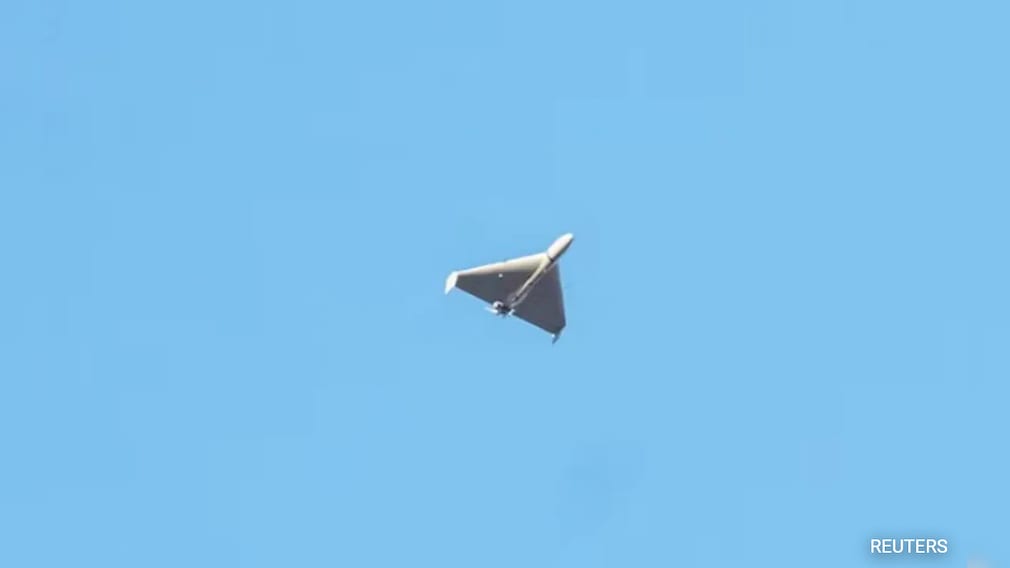
The American Patriot and Tomahawk missiles cost between USD 1-3 million apiece, whereas an average Iranian ballistic missile is priced at merely USD 800,000 to 1 million. Similarly, the MQ-9 Reaper drone costs a staggering USD 30 million compared to the Shahed drone of Iran costing merely USD 30-50K. This huge disparity in costs is resulting in double trouble for Israel and the US. First is the heavy costs, and second is the shorter numbers being produced annually, as a result of which replacement in battlefields, where large numbers are required, becomes problematic.
Will US Run Out Of Inventory?
In the ongoing war, in just four days of battle, there are fears that the inventory of Patriot and Tomahawk missiles may run out soon. The availability of Patriot missiles in the war zone is estimated to be around 600-800 only. Also, for any incoming missile from Iran, four to six interceptors are fired. With an estimate of 150-200 missile interceptors already fired, it is feared that Israel and the US may run out of interceptors in the next four to seven days. There are reports that the US is contemplating shifting some Patriot missiles from Japan and Korea to augment the inventory. Similarly, the Tomahawk missiles, too, may start facing criticality, especially if the battle intensifies in the seas. The production rate of around 600-650 Patriot missiles annually cannot keep pace with the requirements of a war where almost 250-400 missiles are required every week.
Iran knows it and has prepared for it. It has huge missiles and drone inventories, many of them safely kept in underground silos deep inside mountains where American air or missile strikes cannot reach. As per some estimates, Iran's inventory of missiles of various types ranges from 20,000 to 50,000; its drones, too, are in thousands. Knowing the asymmetric advantage it has, Iran is steadily firing a combination of old and new missiles and drones, keeping the Israeli and American defences occupied, knowing fully well that its inventory could last months, if not longer. Plus, it is producing dozens of missiles every month, enough to keep replenishing stocks for months to come. The costs that it is imposing both in terms of expenditure and availability of numbers for critical missiles is becoming a challenge for Israel and the US.
The Human Cost
The cost of body bags is yet another key determinant in the outcome of war. Although President Trump hinted at a number of casualties in the ongoing conflict, the return of body bags in 'away wars' is a big 'No' in America. The early signs of despair are already to be seen as President Trump as well as the Secretary of War counted in their address on March 2 the three lives lost. This was just the third day of war, and they promised to honour their sacrifice with a medal of honour. With many more casualties expected, especially as Iranian missiles are successfully hitting US embassies, bases, ammunition depots and even hotels where evacuated soldiers are staying, this could soon become a cost that President Trump will not be able to bear much longer. Similar is the case with Israel, although it can claim to have a higher threshold, especially as it is fighting an 'existential threat'.
The Political Stakes For Trump And Netanyahu
Both President Trump as well as Prime Minister Benjamin Netanyahu have a lot riding on in this war, as far as their political future is concerned. President Trump is fighting steadily lowering approval ratings in the year of mid-term polls. His MAGA base is just about holding on, and the recent Supreme Court judgment against his unilateral tariffs and the scandals triggered by the Epstein files have put him on the back foot. The war with Iran is perhaps an attempt to divert the attention and build on his campaign for the midterm election later this year.
Similarly, Prime Minister Netanyahu faces elections later this year. With the Gaza war still unresolved, his right-wing allies are pushing him to restart a ground offensive in Gaza. The controversial judicial reforms and corruption allegations have put him in the dock, with several court cases against him. In fact, on February 28, the day Israel-US launched pre-emptive strikes, he was due to be present in the courts for a hearing, which was then put off. His actions of firing the Attorney-General as well as the Shin Bet Chief last year have also been met with protests and opposition.
Given this, anything less than an outright victory against Iran could spell doom for the two leaders' respective political careers. Iran knows it and is happy to keep prolonging and expanding the conflict, increasing the time and cost for both Israel and the US.
Reputation At Stake
The Gulf countries had bought their security through American guarantees for decades. Granting permission to locate American bases in the region was part of the security umbrella against any external aggression. After Israel struck Qatar with a missile strike in September 2025, the US had doubled down on giving iron-clad security assurances to the Gulf countries.
The bubble has, however, burst. Almost all Gulf countries have been successfully targeted by Iranian missiles and drones. The American security umbrella has proven ineffective as missiles and drones have destroyed the Fifth Fleet HQ in Bahrain, the largest military base in Doha, other bases in Kuwait, Iraq, the UAE and Jordan, as well as embassies and consulates in Riyadh and Kuwait. Even Oman, the most neutral country and mediator in talks between Iran and the US, has not been spared. Hotels and ports have been successfully struck and there is panic in the region. The closure of the Strait of Hormuz has triggered fears of a global economic meltdown owing to stoppage of critical energy supplies.
In the midst of it, the myth of American security lies busted. The reputation built over decades has been shattered. Iran knew about it and the costs it could impose on the US in the future. Its decision to expand the conflict across the region is, therefore, well-calculated, imposing huge economic as well as reputational costs on the US.
Unexpect Outcomes
The conflict is only in its first week, but the tables have turned sooner and faster than expected. Iran, battered by unstoppable air strikes, the assasination of its Supreme Leader and over 40 top leaders, has refused to bow down and surrender. Instead, it has unleashed a strategy that has not only caught Israel, the US and the entire region by surprise but is also imposing costs upon Israel and the US, which may become unbearable soon.
(The author is a retired Army officer and a senior research consultant at Chintan Research Foundation)
Disclaimer: These are the personal opinions of the author
-
Opinion | Why The Saudi-Pak-Turkey Defence Pact May Actually Be An 'Intel' Network

Rather than a NATO-like construct, the Mecca pact may evolve to become something like the West's Five Eyes alliance.
-
The Real Story Of France's Unrest Is Getting Lost In A Storm Of Online Lies
A man cosplaying Napoleon on the streets, looting at luxury fashion stores like Dior, France is currently confronting one of its most serious episodes of civil unrest in years.
-
Opinion | The Last Bet? What Trump's 'Mother Of All Bombs' Could Actually Do To Iran
Can an MOAB deliver a decisive blow to Iran that may force it to surrender immediately, as Japan did after Hiroshima and Nagasaki in World War 2?
-
Hit Songs, Empty Pockets: The Hidden Math Behind India's Viral Music Boom
Over 80,000 brands and five lakh creators in India make branded content. The opportunity is worth around Rs 1,500 crore.
-
Opinion | Great 'Exceptions': How The Oil India Was Attacked For Is The Oil Trump Now Seeks
A law written to punish the buyers of Russian oil was suspended by the US to protect a purchase of Russian oil. India spent fourteen months being lectured for less.
-
Opinion | Louis Vuitton Loot, Torched Cars: France Protests Have An Unlikely Beneficiary
It's an unbelievable moment. Crowds looting the most exclusive stores in Paris, including the famed Luis Vuitton. But what's behind this meltdown?
-
Blog: Kolkata Didn't Learn From 2015. Eleven Years Later, It Proved To Be Fatal
The City of Joy isn't a stranger to crowd control. Be it during Pujo or Christmas at Park Street, Eden Gardens cricket matches, or Derbies between Mohun Bagan and East Bengal. But during Pujo, the entire city is on alert.
-
Opinion | Slurs, Threats, Now A Temple Attack Plot: When Did America Become So Hostile To Indians?
The rising tide of anti-India, anti-Hindu, and racist attacks serves as a stark reminder that economic prosperity does not automatically guarantee social immunity from bigotry.
-
A Step Behind Neha Bora: What Rahul Gandhi's Gesture Says About Congress' Gen-Z Pitch
At INDIA bloc's march to Supreme Court, Rahul Gandhi placed himself a step behind two women, hands resting on their shoulders. One was his sister Priyanka. The one on his right was Neha Bora. Here's what the image means for the protest wave now, and for Rahul's politics in general.