The Ramayana may be one of India's most familiar epics, but its story does not end at the country's borders. For centuries, versions of the tale have travelled across Asia, finding their way into Buddhist scriptures, Tibetan literature and even one of China's best-loved literary classics, Journey to the West.
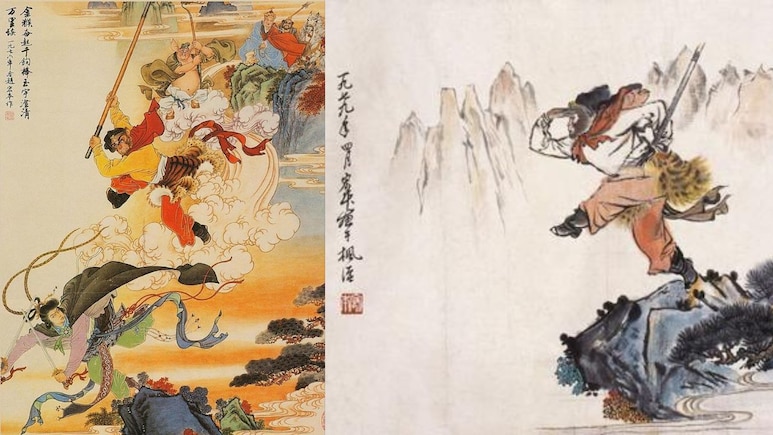
At the centre of this cultural connection is an intriguing possibility: could Sun Wukong, the mischievous Monkey King who has captured generations of Chinese readers, have been inspired by Hanuman?
Chinese scholars have revisited this question while tracing the Ramayana's influence on their country's religious traditions, art and literature. At a symposium titled "Ramayana: A Timeless Guide", organised by the Indian Embassy in China in 2024, researchers discussed how the Indian epic crossed geographical and cultural boundaries, taking on new meanings along the way.
Their findings point to a long history of cultural exchange, one in which stories travelled across borders and adapted to the worlds in which they were retold.
From Hanuman To The Monkey King: An Unexpected Connection
One of the most fascinating links between the Ramayana and Chinese literature lies in the resemblance between Hanuman and Sun Wukong, the Monkey King from Journey to the West, a classic Chinese novel composed in the 16th century.
Both characters are celebrated for their extraordinary abilities, cleverness and adventurous spirit. Hanuman can change his size, leap vast distances and take on formidable challenges during his search for Sita. Sun Wukong, meanwhile, is known for his shapeshifting abilities and supernatural feats during a pilgrimage to obtain sacred scriptures.
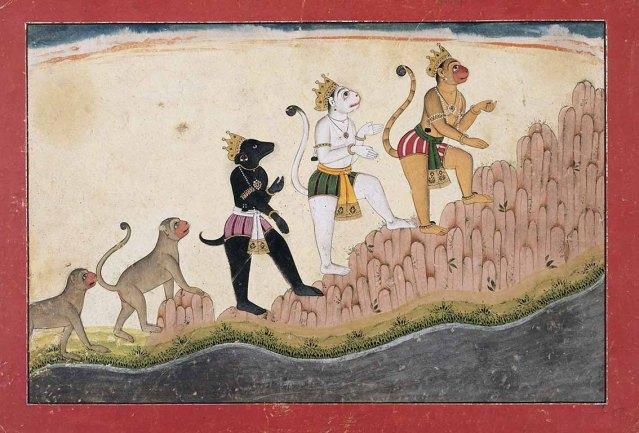
Chinese scholars have revisited this question while tracing the Ramayana's influence on their country. Photo: Pinterest
The similarities have prompted scholars to investigate whether the Chinese character drew inspiration from the Hindu epic's beloved devotee of Rama.
At the symposium, Liu Jian, a professor at the National Institute of International Strategies of the Chinese Academy of Social Sciences, said many Chinese scholars believe Sun Wukong can be traced to Hanuman.
"Chinese scholars generally agree that the image of Sun Wukong comes from that of Hanuman. Therefore, Sun Wukong is not a domestic product, but a character from India," he asserted.
The connection is not universally accepted, however. Some scholars maintain that Sun Wukong developed within Chinese literary traditions. The resemblance between the two characters remains an important subject of Sino-Indian cultural research.
The Archaeological Dimension
The theory also has an archaeological dimension. Research on Quanzhou, a historic trading centre in China's Fujian province, has pointed to Hindu influences in its religious art.
Scholars have identified imagery associated with Hanuman alongside motifs connected to Hindu deities, suggesting that Indian cultural traditions had a presence in the region centuries before Journey to the West was written.
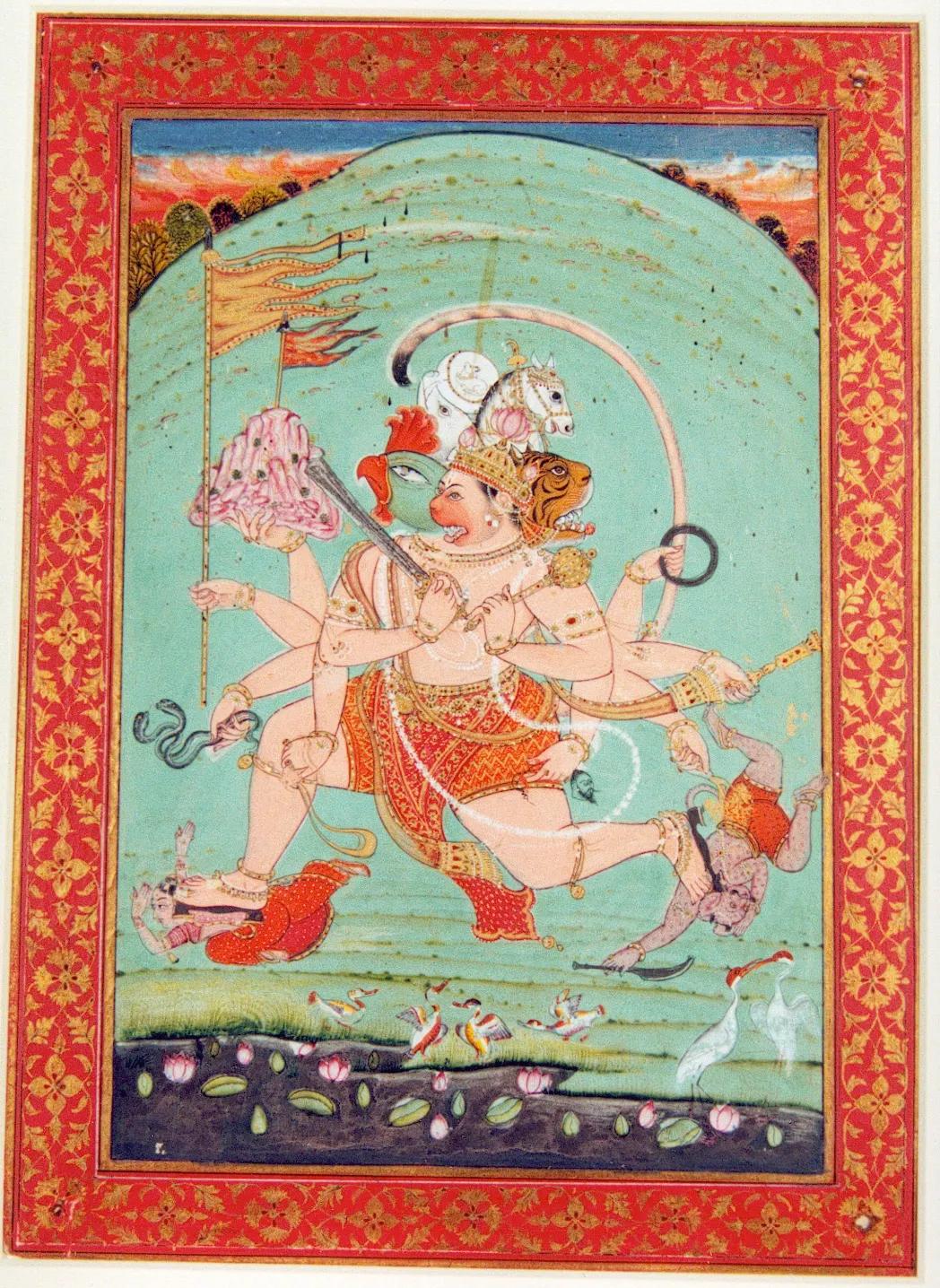
The theory also has an archaeological dimension. Photo: National Museum, New Delhi
The Monkey King, then, may be more than a memorable figure in Chinese folklore. For some scholars, he represents a possible meeting point between two rich storytelling traditions.
How The Ramayana Entered China Through Buddhist Scriptures
The Ramayana's journey into China began long before it was translated into Chinese as a complete literary work. According to scholars, Buddhist scriptures played a crucial role in introducing parts of the epic to Chinese audiences.
Dr Jiang Jingkui, Professor and Dean of the Institute for International and Area Studies at Tsinghua University in Beijing, China, explained that the earliest Ramayana-related material entered the Han cultural sphere primarily through Buddhist texts.
Rather than reproducing the entire epic, these texts incorporated elements of its narrative into Buddhist moral teachings. Characters such as Dasharatha and Hanuman appeared in Buddhist contexts, while stories resembling episodes from the Ramayana were retold with a different emphasis.
One example is the transformation of Hanuman into a Monkey King who follows Buddhist teachings, bringing elements of the Indian epic into Chinese religious storytelling.
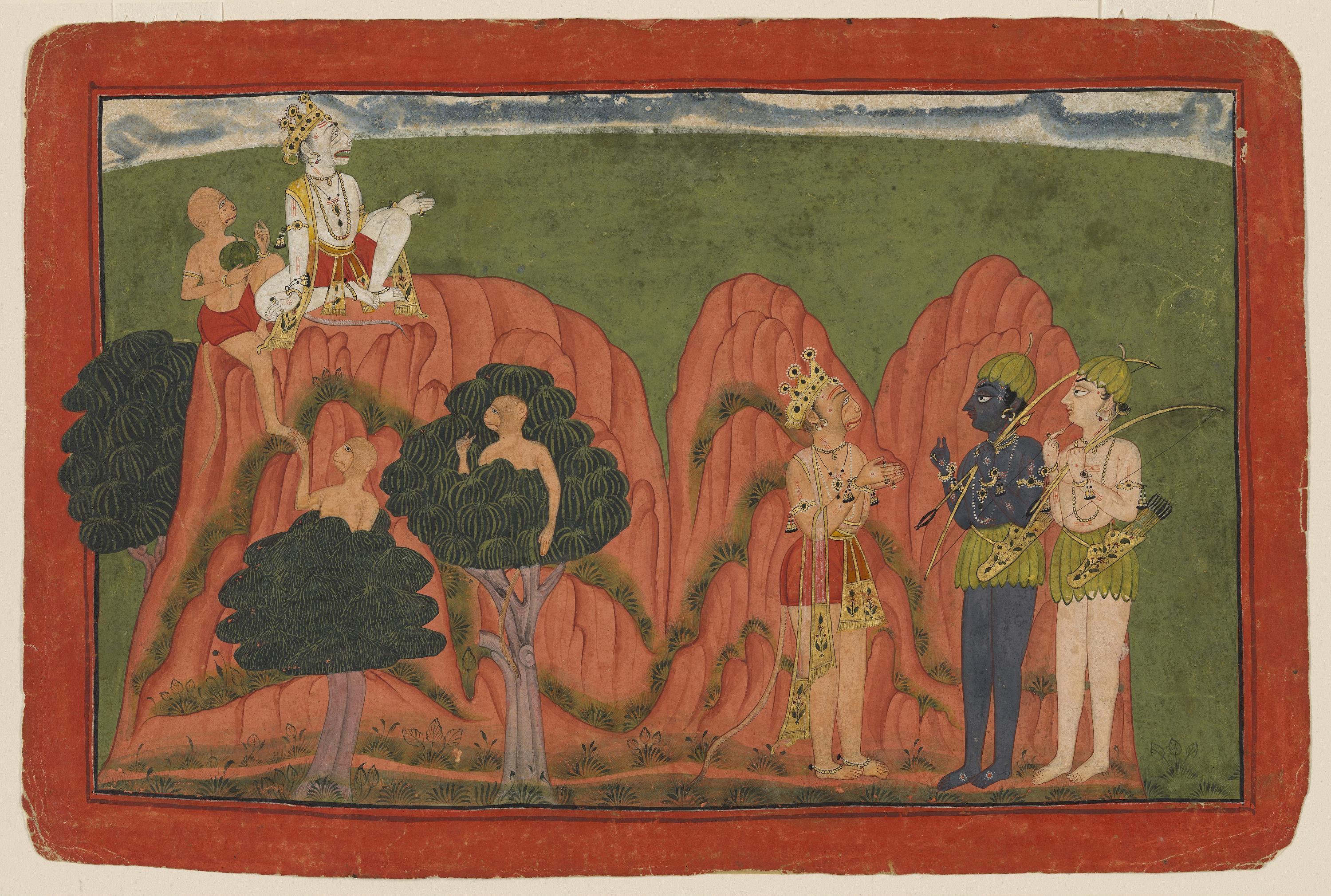
The Ramayana's journey into China began long before it was translated into Chinese as a complete literary work.
The stories also took on local moral values. In some Buddhist adaptations, Rama's exile became a tale of filial obedience, reflecting the importance of respect for parents in Chinese thought, particularly within Confucian traditions.
This meant that the Ramayana was not simply transported from one country to another. Its stories were reinterpreted to make sense within a different cultural and religious landscape.
Jiang noted that the epic's journey demonstrated its ability to acquire new meanings as it travelled. "This cultural migration and adaptation demonstrate the openness and flexibility of Ramayana as a classic and worldly text," he said.
Tibet's Version Of The Ramayana Has A Different Ending
The Ramayana also developed a distinct presence in Tibetan literary traditions, where it was adapted in ways that differed from both the Sanskrit original and the versions circulating through Chinese Buddhist texts.
According to Jiang, the epic has a longer and more extensive history of influence in Tibet. It became a subject of scholarly study and theatrical performances, gaining recognition beyond academic circles.
A Tibetan version of the Ramayana was reconstructed from six manuscripts discovered by scholar F W Thomas in 1929. These manuscripts were subsequently studied by other researchers, including J W de Jong, who examined their relationship with one another and their historical context.
While the Tibetan narrative retains the central figure of Rama as a heroic ruler with god-like qualities, it differs from Valmiki's Ramayana in several important respects.
For instance, the Tibetan version combines prose and verse, unlike the Sanskrit epic's use of a regular metrical verse form. It also changes elements of the story, including the beginning, ending and Sita's birth.
In Valmiki's Ramayana, Sita is discovered in a furrow in the earth and associated with Bhumi Devi, the Earth Goddess. In the Tibetan version discussed by scholars, she is portrayed as the daughter of Ravana, who abandons her because of a prophecy that she will bring about his downfall.
The endings differ, too. While Valmiki's account concludes with Sita returning to the earth, the Tibetan version describes a happy reunion between Rama, Sita and their sons.
These changes reveal how the epic could retain its central characters and narrative while absorbing the traditions and storytelling preferences of another region.
When Did The Ramayana First Reach China?
The exact timeline of the Ramayana's arrival in China is difficult to establish, but scholars have traced references to the epic in Buddhist literature dating back many centuries.
One important source is the Mahavibhasa, a Buddhist commentary associated with the Jnanaprasthana. Scholars have identified stories in early Chinese Buddhist texts that resemble key episodes from the Ramayana, including Rama's exile and the abduction of a queen by an evil serpent.
These stories did not necessarily name Rama and Sita directly. Instead, they adapted the characters and events into narratives that reflected Buddhist teachings and local moral values.
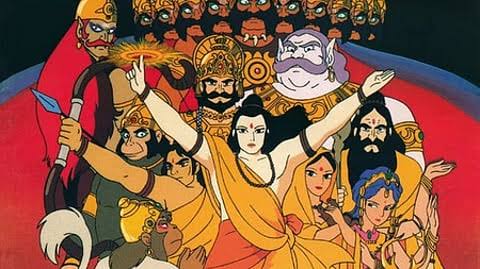
The exact timeline of the Ramayana's arrival in China is difficult to establish.
The travels of the Chinese Buddhist pilgrim Xuanzang also provide an important link between India and China. During his seventh-century journey to India, Xuanzang studied at Nalanda University and returned with Buddhist scriptures and accounts of Indian traditions.
Jiang recalled that these records contained details of Ramayana stories encountered during the pilgrimage. However, the epic's Hindu origins and Buddhism's predominance in China meant that it was neither fully translated nor widely circulated within Han culture at the time.
The first Chinese translation of the Ramayana directly from Sanskrit was completed by scholar Ji Xianlin in 1980. Translating the vast work of approximately 24,000 verses took nearly a decade.
Jiang described the translation as a significant breakthrough for Chinese academia, giving Chinese readers access to a major Indian literary classic and strengthening cultural exchange between the two countries.
The Ramayana's influence has never been limited to a single language or religious tradition. Across Asia, the epic has inspired different versions that preserve its central narrative while incorporating local beliefs, customs and artistic traditions.
Track Latest News Live on NDTV.com and get news updates from India and around the world
