





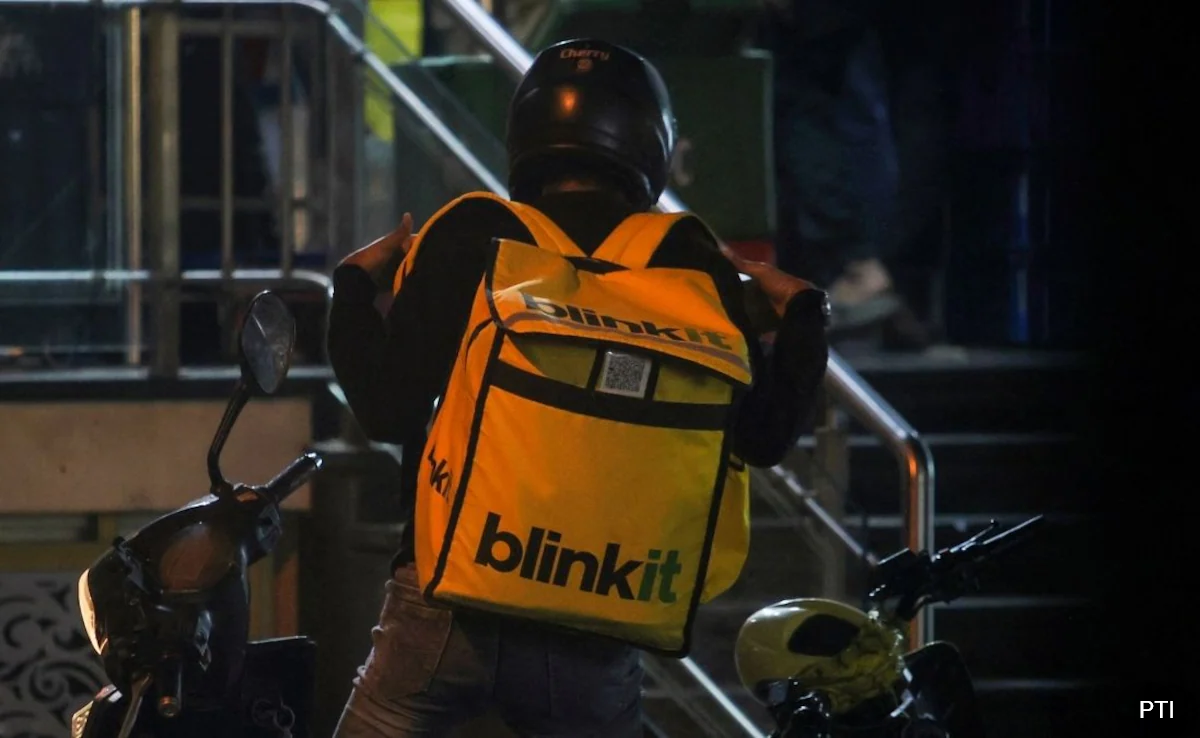
Quick commerce has always been about racing against the clock. Speed has been a competitive advantage that kept aggregators ahead of their rivals. But bold marketing tactics setting a 10-minute timeline on deliveries led to concerns over the safety of the delivery partners. Such claims failed to factor in the traffic and often led to unrealistic customer expectations, often stressing out riders finding their way to locations through busy streets, unmarked localities, and high-rise buildings.
The concerns led to a government directive to take down such time-restricted delivery claims, which is expected to provide relief to gig workers on the ground.
Major aggregators have already started bringing changes to their ‘10-minute' claims, but this leads to a crucial question: Will it impact deliveries?
The 10-Minute Reality
There was nothing real about delivery in 10 minutes. It was always a marketing gimmick aimed at grabbing eyeballs rather than a promise. It worked for some, living right next to a dark store, something that they may not have an idea about.
On her experience, a homemaker shares, “The 10-minute thing was just for show; many times, it took 20-25 minutes during high-demand hours.”
This is because a rigid timeline rarely worked for quick commerce platforms, contrary to Domino's deliveries. Domino's promised free pizzas if deliveries were delayed beyond 30 minutes. Such promises were never made by the quick commerce platforms.
However, the debate was never over delivery speed or time, but over how it put the delivery partners at risk of reckless riding and whether they were penalized.
No such data exists in the public domain, and aggregators deny any such action. Zomato's Deepinder Goyal asserts they never forced delivery partners to ride faster.
Will Deliveries Be Late?
No. Deliveries are unlikely to be impacted. The real change is likely to be limited to the branding and marketing language of quick commerce aggregators. Their operations are unlikely to see any change, unless there is a change in on-the-ground realities.
Rather, delivery times have always been dynamic in the quick commerce ecosystem. In reality, the delivery time is determined by factors such as the dark stores' density, riders' availability, routing algorithms, and batching logic.
Structural Reset? Not Really
The change will not bring any structural reset to how quick commerce works, from a long-term perspective. This is unlikely to bring a change in consumer behaviour since demand is driven by convenience and not time-bound promises.
What will change is the tagline as aggregators try to align their public messaging with operational reality.
As is being seen already, apps will move to softer claims around easy and convenient deliveries, rather than promises to deliver within a time limit. Faster deliveries would still be possible through reducing the distance between dark stores and residential areas.
Delivery App Still Shows 10 Minutes
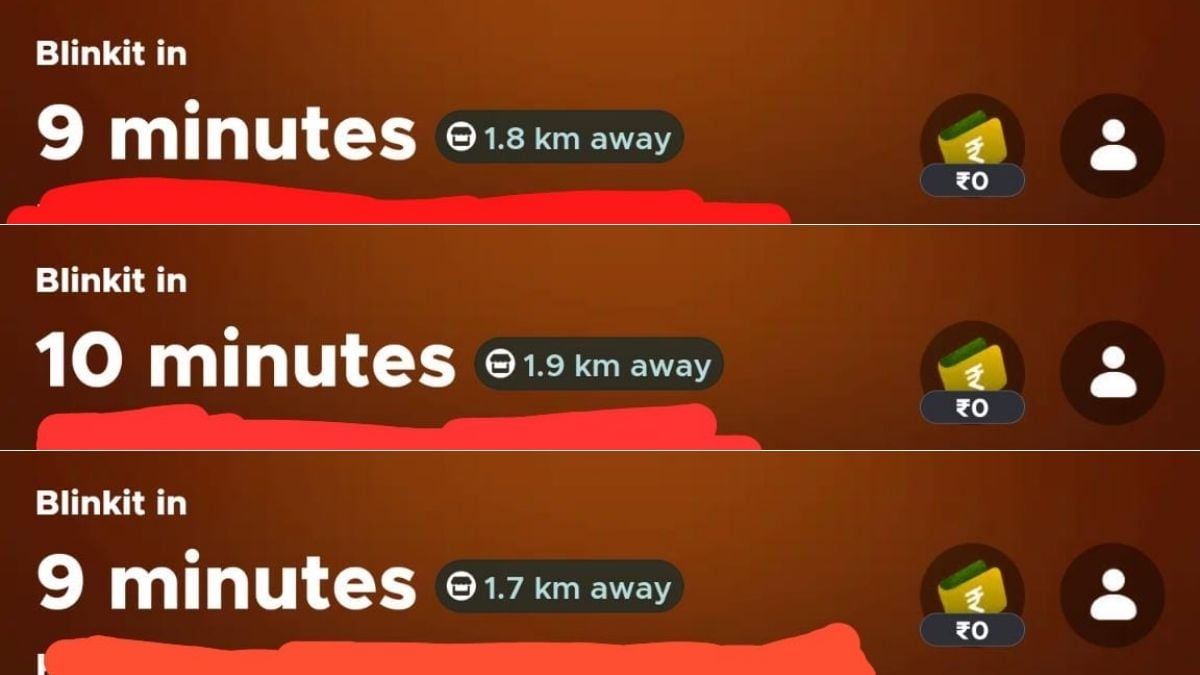
In most cases, the delivery time remains the same as was shown earlier. In Sector 129, Noida, a city with a dense network of dark stores, all major quick commerce apps report delivery times between 8 and 10 minutes.
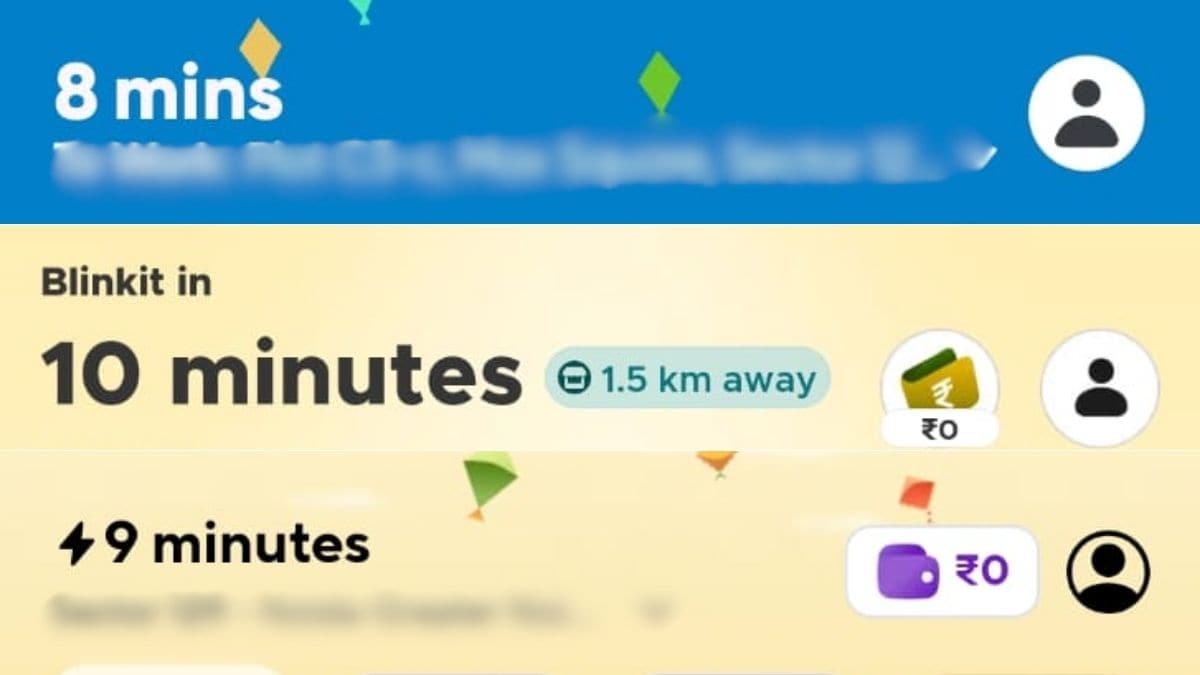
While the absence of time branding may reduce implicit urgency, the entire operation would remain as efficient. The picking and packaging process is expected to remain the same, with traffic and distance playing the actual role in deciding delivery time.
In Mumbai, a location in BKC still shows delivery times less than 10 minutes, whereas it's 14 minutes in Nerul, Navi Mumbai. During surge hours, the times may increase to up to 20 minutes in cities like Mumbai and Bengaluru, known for slow traffic.
To sum up, you might still get your order delivered in 10 minutes, depending on where you live, if there's traffic on the road, and algorithmic factors.
Track Latest News Live on NDTV.com and get news updates from India and around the world

