





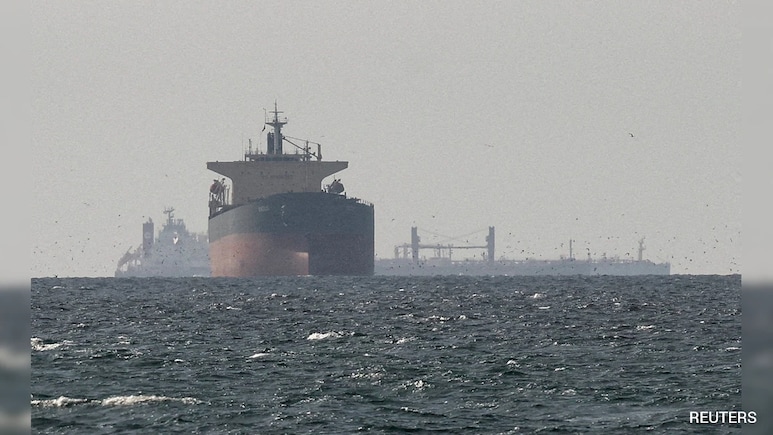
- US Central Command will enforce a naval blockade around Iranian ports to stop oil exports
- US crude rose 8% to $104.24 and Brent crude jumped 7% to $102.29 per barrel
- The Strait of Hormuz handles 20% of the world's traded oil daily, raising supply concerns
Oil is back above $100. And markets are back on edge.
Prices jumped after the United States Central Command (part of US Department of Defense) said it would enforce a naval blockade around Iranian ports. The aim is stop Iranian oil exports and prevent tolls in the Strait of Hormuz.
As a consequence of this increased supply disruption risk, US crude (West Texas Intermediate) rose 8 per cent to $104.24 a barrel. Brent crude jumped 7 per cent to $102.29. This is the same benchmark that was near $70 before the war in late February, then spiked above $119 at the peak. It had cooled to $95 ahead of peace talks. However, that relief is gone now as the US-Iran peace talks failed.
The Strait matters because one-fifth of the world's traded oil passes through it daily. Saudi Arabia, Iraq, the UAE, Kuwait and Iran all depend on it. Even if ships between non-Iran ports can pass, the risk to tankers has risen. Fewer ships. Higher insurance. Slower deliveries.
| What changed | Why it matters | Market reaction |
| US blockade around Iranian ports | Threat to Iranian exports and tanker movement | Oil jumps above $100 |
| Risk in Strait of Hormuz | 20% of global traded oil passes here | Freight, insurance costs rise |
| Talks fail in Islamabad | Ceasefire looks fragile | Stocks fall, dollar firms |
| Fewer vessels in region | Slower cargo movement | Supply fears return |
| Strike fears resurface | Risk to energy infrastructure | Volatility across assets |
Oil Price Rise Triggers Markets' Fall
S&P 500 futures fell 1 per cent. Asian indices slipped. The dollar strengthened. Risk currencies like the Australian dollar and sterling fell. US Treasury futures dropped as traders braced for renewed inflation pressure. Gold, which had rallied before the war, fell as investors booked profits.
Analysts say the market is now back to pre-ceasefire conditions - except the US is trying to block up to 2 million barrels a day of Iranian-linked flows through Hormuz. The bigger fear is not today's blockade, but what happens if strikes resume and energy infrastructure is hit across the region.
That risk is what keeps oil above $100. And keeps markets nervous.
Got a follow‑up question on this article? Go on
Track Latest News Live on NDTV.com and get news updates from India and around the world

