





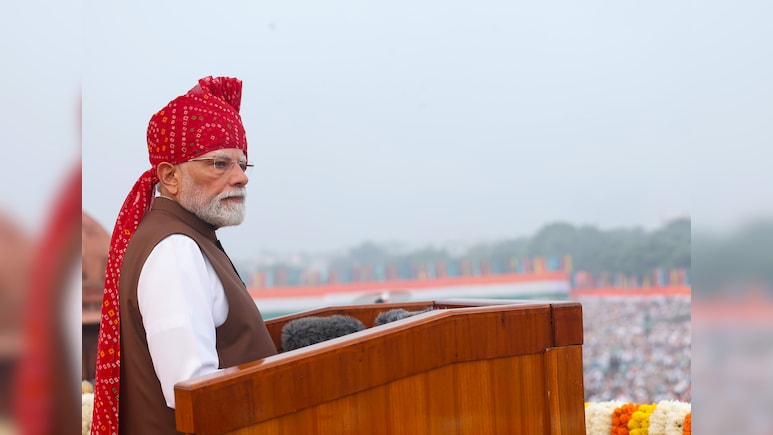
- Prime Minister Modi addressed the nation on the 80th Independence Day from Red Fort for the 13th time
- He outlined seven key pillars called 'Saptadhara' for India's development and global leadership
- PM Modi set targets for Indian firms to join Fortune 500 and lead in pharma, tech, and banking
On the 80th Independence Day, the Prime Minister today addressed the nation from the ramparts of the Red Fort for the 13th consecutive time. He is now just a few years away from matching the record of former Prime Minister Jawaharlal Nehru, who addressed the nation from the Red Fort 17 times in a row.
In his address, PM Modi presented an account of his 12 years of development work in his regime. He laid out his vision for a "Viksit Bharat" before the nation. He made several important appeals to the people of the country and also announced some key measures.
PM Modi presented a detailed blueprint for the future strategy towards a "strong, prosperous, and Viksit Bharat". His speech clearly reflected a vision to accelerate the nation's growth and take India's global ambitions to new heights.
The concerns of youth regarding employment, competitive exams, and coaching also found special mention in PM Modi's address. He spoke of those who repeatedly predicted India's failure and their repeated failures, and reiterated his appeal to build consensus on women's reservation.
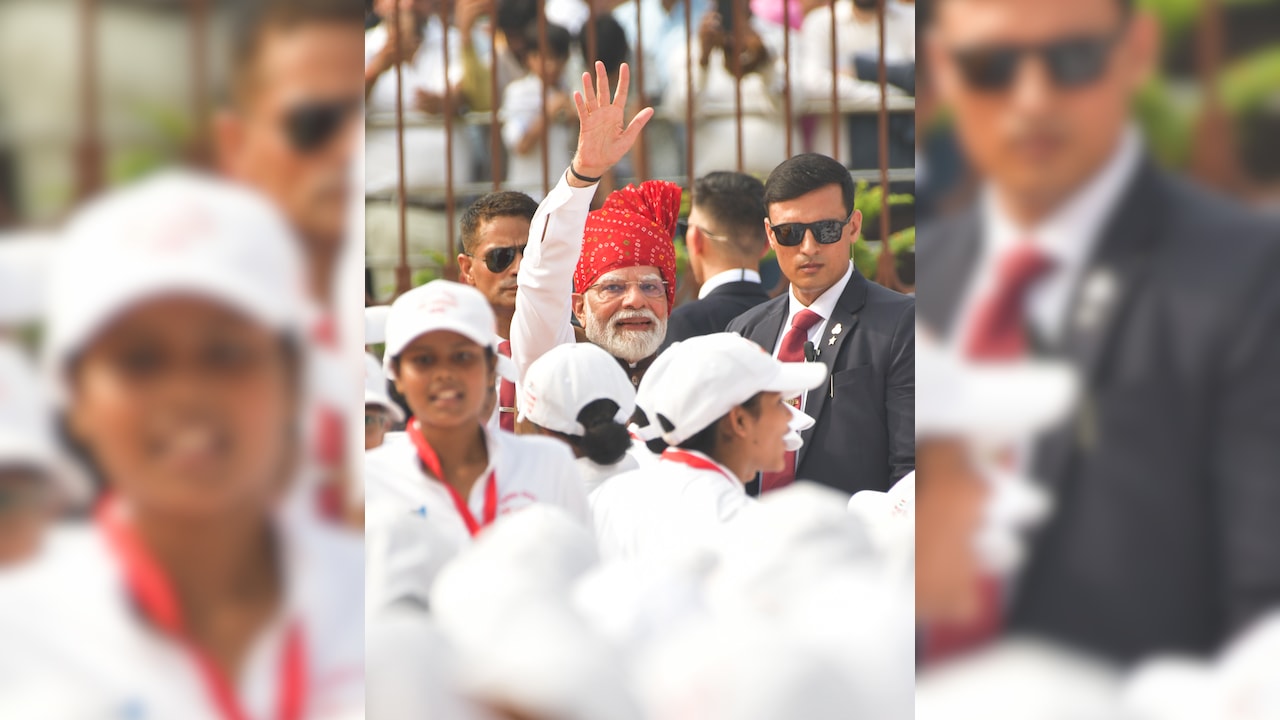
Saptadhara
The Prime Minister outlined 7 key pillars to give the country's progress a new direction, calling them "Saptadhara".
He elaborated on these seven streams:
Manufacturing Power: Building a complete domestic end-to-end value chain from design to components. The main focus is on 'Zero-Defect' quality, affordable cost, and scaling up global production.
Agriculture and Food Processing: Building an integrated farm-to-export supply chain for millets, also called 'Shree Anna', spices, and fruits, and rapidly moving towards chemical-free natural farming.
Technology and Innovation: PM said India should not remain limited to just being a market for technology but must become a global innovation hub. This includes leading the world in AI, quantum technology, space, robotics, Digital Public Infrastructure, and indigenous 'Made-in-India' 6G.
Gati Shakti: Establishing a high-speed, seamless multimodal logistics network connecting cities, highways, railways, airports, and modern industrial sea ports.
Defence Power: Achieving complete strategic self-reliance by leading in next-generation defence technologies like drones, counter-drone systems, and hypersonic technology, and exporting them.
Green and Blue Economy: PM Modi said his government's priority is to promote sustainable development through green hydrogen, renewable energy and energy storage, along with the full utilisation of ocean, coastal, and maritime capabilities.
India's Soft Power: This includes the global promotion of Indian culture, yoga, Ayurveda, and tourism. It also aims to establish global leadership in gaming, VFX, animation, and the creative economy.
PM Modi mentioned Free Trade Agreements with more than 40 countries and explained how this will benefit the MSME sector. However, he made a direct appeal to industry and manufacturers that there should be no compromise on product quality. Maintaining the highest quality is the biggest benchmark for building trust in Indian products in the global market.
Goals
PM Modi said that the scale of India's ambitions has changed. To strengthen India's presence and influence on the world stage, he set several major global targets. The Prime Minister said at least 50 Indian companies should be included in the Fortune 500 list. Currently, only 9 Indian companies are on the list, and five of them are government undertakings.
The Prime Minister said Indian banks should feature in the list of the world's top banks, an Indian company should be among the world's top 5 pharma companies, an Indian law or rating agency should lead internationally, an Indian consulting or accounting firm should be established among the world's top firms, an Indian tech company should be named among the world's top tech companies, and Indian such brands should be created that the world accepts with enthusiasm and respect when it hears the name 'India'.
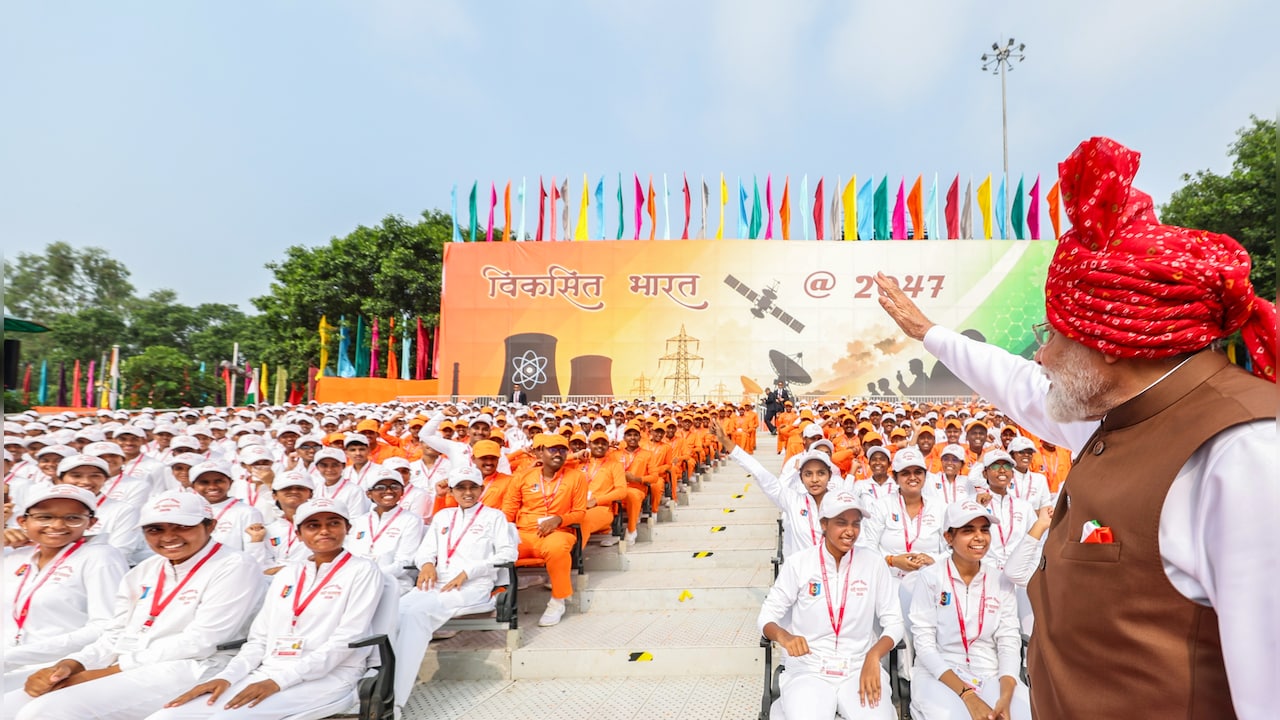
Facing Crises
PM Modi said India has the capacity to face all global challenges. The world has seen this capacity during crises in the last few years. He said that during difficult times like the COVID-19 pandemic, global conflicts, and the energy crisis, some people continuously tried to create an atmosphere of fear and despair in the country. The Prime Minister said questions were raised about the availability of vaccines during COVID, and fears were expressed about shortages of petrol, gas, and fertilizer amid wars. But India faced every challenge with its strong policies and resolve for self-reliance, he reiterated.
Focus On Youth
There has been a lot of discussion about youth, especially Gen Z, in the last few months. Naturally, the concerns of youth found a place in the President's address on Friday and the Prime Minister's speech on Saturday.
PM Modi also made some important announcements related to young population.
He said that in mission mode, 1 crore youth will be trained in Artificial Intelligence, or AI, in the next one year. Free online coaching will be arranged for youth preparing for various competitive exams. Work is underway on the digital infrastructure for this, he assured.
To deal with emerging security challenges, the civil defence framework will be modernised and modern training will be provided. A nationwide sports talent hunt campaign, 'Sports Hunt', will be launched for children aged 5 to 15 in villages and cities.
The Prime Minister placed special emphasis on the 'Nasha Mukt Yuva Abhiyan' and urged every family in the country to join this campaign. He said public participation is essential to completely eliminate the menace of drugs, which harm society and the future of youth.
Referring to the ideological struggle, he said it is necessary to identify 'dimaghi Naxals'. Various tactics are being used to push society in the wrong direction, he warned.
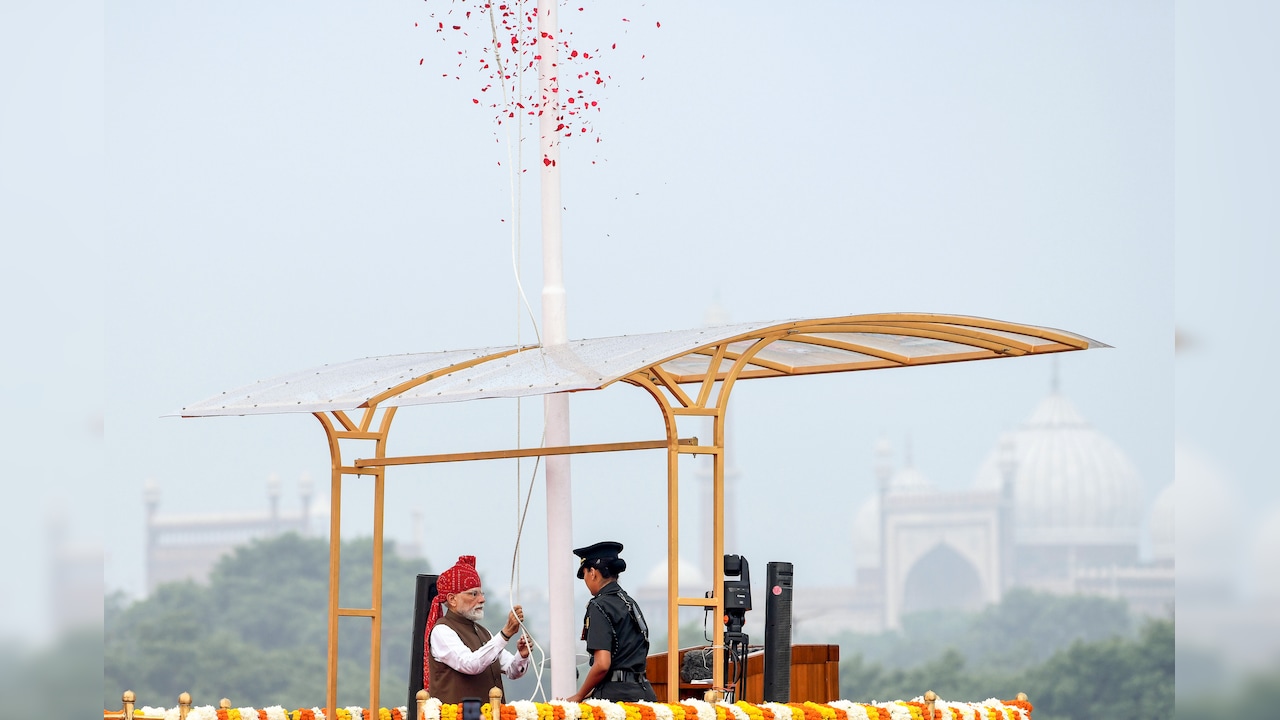
Appeal
PM Modi also mentioned the first-ever digital Census being conducted in the country. He appealed to every family in the country to sit together and enter correct and accurate information related to their family. He clarified that accurate information provided by citizens will directly help the government in making better policies.
PM Modi also prominently mentioned cooperative federalism and reforms. He stressed the need for the Centre and state governments to work together for the next phase of reforms for development.
PM Modi said the goal of a Viksit Bharat by 2047 can only be achieved by combining 'cooperative federalism' and inclusive growth.
The Prime Minister also called for unity for Nari Shakti. He made a direct appeal to all political parties for the implementation of 33% reservation for women in Parliament and state Assemblies. He appealed to all parties to respect the aspirations of women and cooperate in implementing it effectively.
Key Announcements
Prime Minister Modi said that 7 to 8 new semiconductor manufacturing plants will be started in the next 1 to 2 years. A target of 100 GW capacity in nuclear energy has been set for the year 2047. 5 new nuclear reactors will be made operational within the next 6-7 years.
Track Latest News Live on NDTV.com and get news updates from India and around the world

