





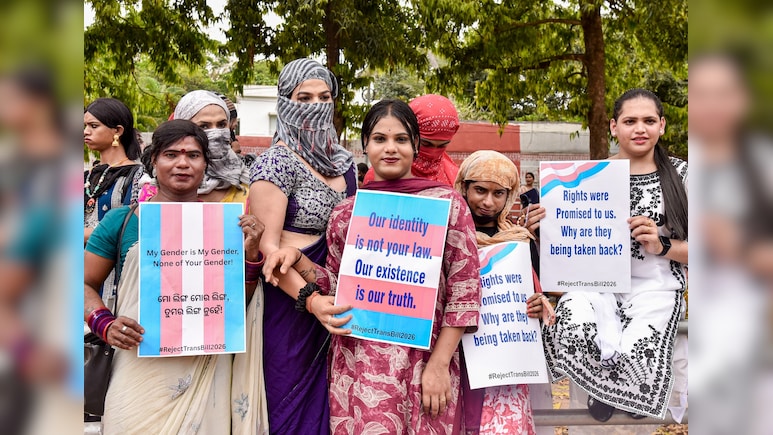
The proposed changes to Transgender Persons (Protection of Rights) Act have triggered nationwide protests, with members of the queer community, people and organisations fighting for LGBTQI+ rights and Opposition MPs demanding a rollback of the amendment Bill.
The protesters have described the Transgender Persons (Protection of Rights) Amendment Bill, 2026, as "discriminatory". They say the new law strips away the right to self-determination and runs afoul of the Supreme Court's 2014 NALSA vs Union of India judgment.
As rights organisations and Opposition leaders join the cause and members of the queer community hit the streets, here is a look at the major changes in the proposed law and why they have drawn a fierce pushback from the community.
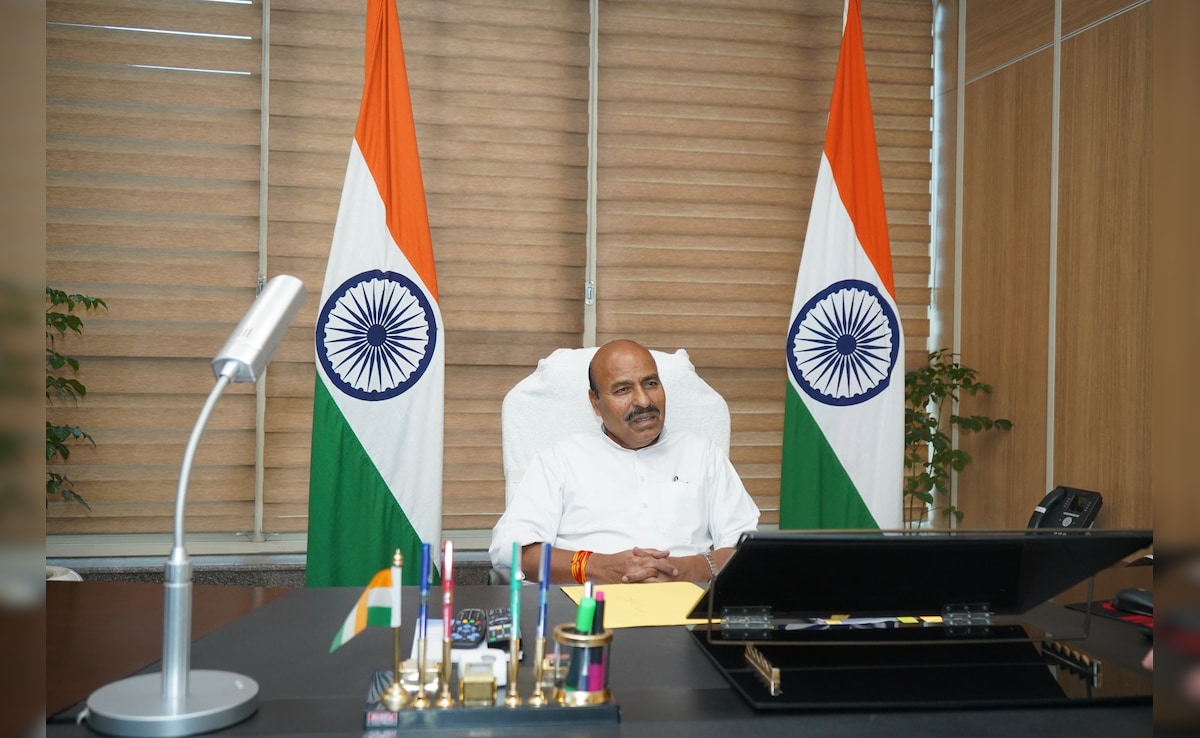
Social Justice and Empowerment Minister Virendra Kumar introduced Bill in Lok Sabha
The Bill
The Transgender Persons (Protection of Rights) Amendment Bill, 2026, was introduced in the Lok Sabha by Social Justice and Welfare Minister Virendra Kumar on March 13. The Bill aims to amend the Transgender Persons (Protection of Rights) Act, 2019.
According to the Bill's Statement of Objects and Reasons, it aims to "recognise a specific class of transgender persons, who face social issues and to create a regime for their protection".
"Over the course of time, during the implementation of this enactment, certain doubts and difficulties have arisen and are likely to arise with regard to the expanse of the definition of transgender persons and how the identification of such persons is to be done under the existing definition. This is critical to the implementation of the Act, as it is of prime importance that the enactment is utilised and works towards only those who are in actual need of such protection," the draft legislation states.
The Bill proposes the deletion of a clause in the 2019 law which states, "A person recognised as transgender under sub-section (1) shall have a right to self-perceived gender identity."
This means that a person would be identified as transgender only on the recommendation of a medical board and if the individual meets the criteria laid down in the proposed law.
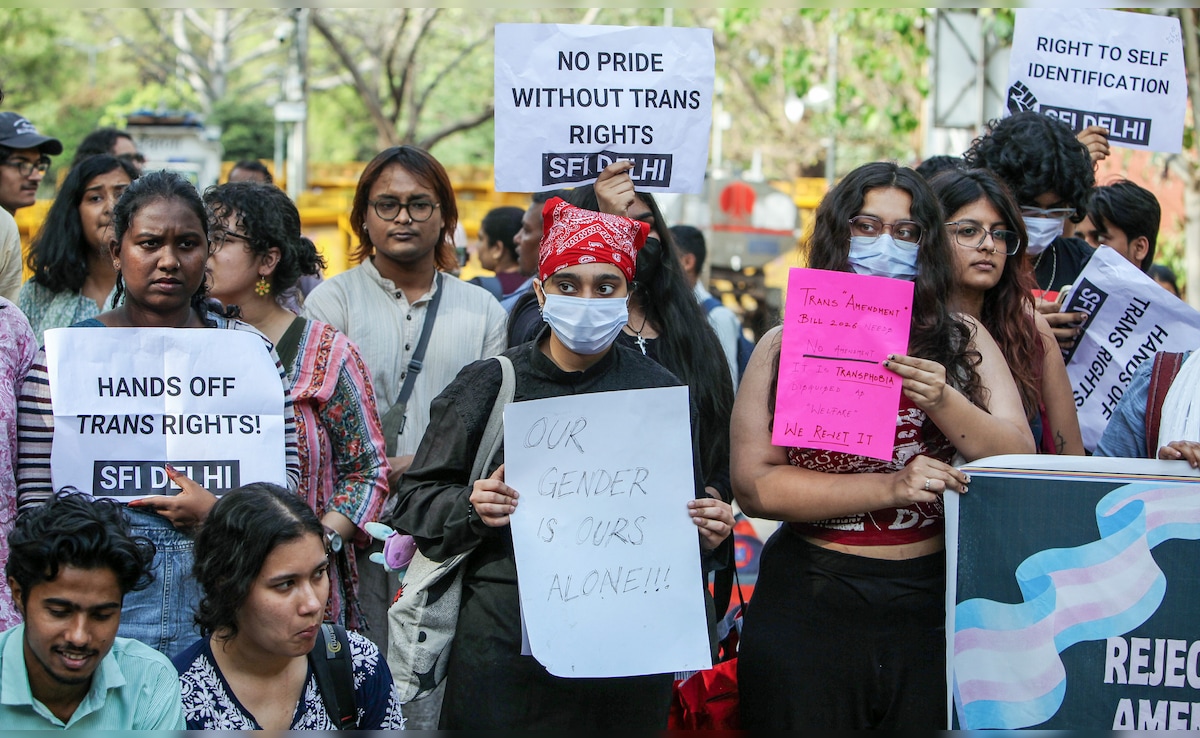
The proposed changes to the law has triggered protests across the country
How Proposed Law Defines Transgender
The draft law has a definition for a transgender person: "a person having socio-cultural identities as kinner, hijra, aravani and jogta, or eunuch, or a person with intersex variations specified below or a person who, at birth, has a congenital variation in one or more of the following sex characteristics as compared to male or female development:- (a) primary sexual characteristics; (b) external genitalia; (c) chromosomal patterns; (d) gonadal development; (e) endogenous hormone production or response, or such other medical conditions; or (ii) any person or child who has been, by force, allurement, inducement, deceit or undue influence, either with or without consent, compelled to assume, adopt, or outwardly present a transgender identity, by mutilation, emasculation, castration, amputation, or any surgical, chemical, or hormonal procedure or otherwise."
The Bill then specifies that transgenders "shall not include, nor shall ever have been so included, persons with different sexual orientations and self-perceived sexual identities".
"The intent, object and purpose of the Act is and was to protect a specified class of persons socially and culturally known as transgender people who face societal discrimination of an extreme and oppressive nature. The purpose was and is not to protect each and every class of persons with various gender identities, self-perceived sex/gender identities or gender fluidities," it states.
The Bill says that the "existing vague definition of the expression 'transgender person' not only makes it impossible to identify the genuine oppressed persons to whom the benefits of the Act are intended to reach, but also makes the operation and enforcement of several provisions under penal, civil and personal laws unworkable". "The protection and benefits that are provided under the Act are vast in nature, and therefore, care has to be taken that such identification cannot be extended on the basis of any acquirable characteristics or personal choice or claimed self-perceived identity of an individual," it adds.
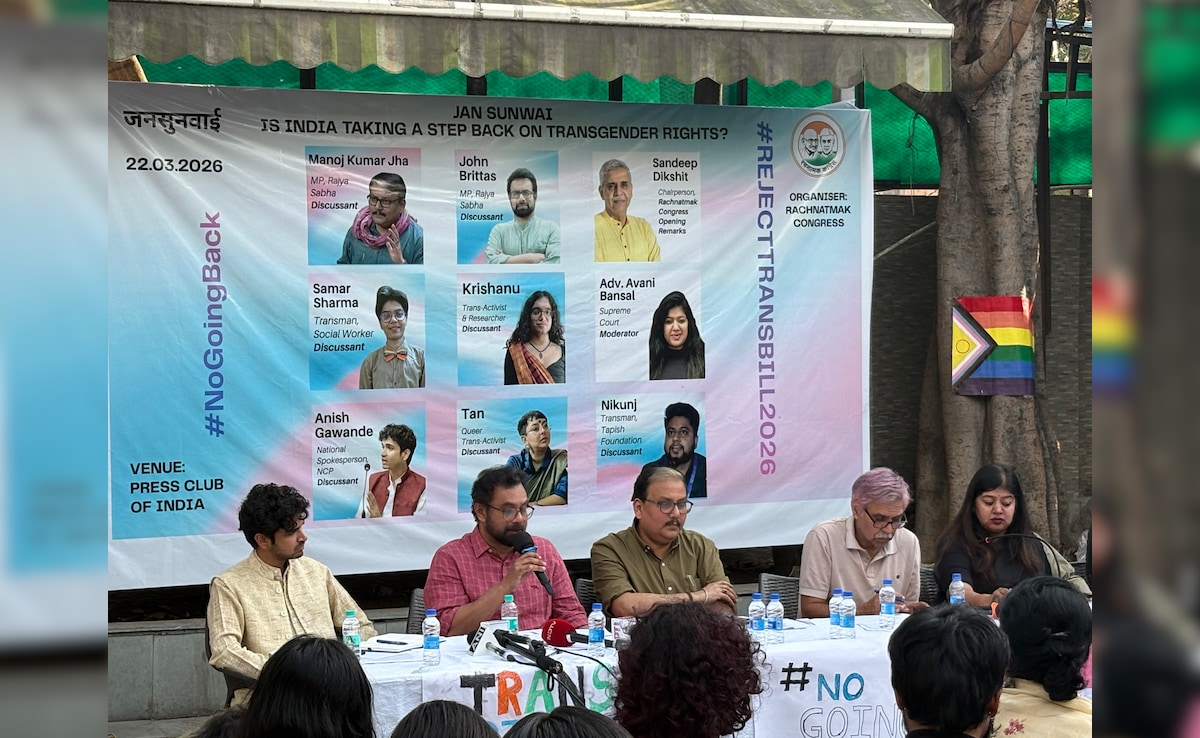
Queer Activists, MPs Push Back
At the centre of the massive backlash is the Bill's proposal to replace self-identification of gender with mandatory certification by medical boards. Activist Grace Banu, addressing a protest at the Press Club of India yesterday, said, "Strangers probing our bodies, demanding proof of who we are, our privacy shattered, our dignity crushed. Who gave anyone the right to decide my gender for me?"
"This is not protection, but violation. Our bodies are not evidence to be examined. We demand recognition without invasion, rights without humiliation," she added.
Other speakers at the Jan Sunwai (public hearing) described these provisions as institutionalising humiliation. Trans man and social worker Samar Sharma said medical boards "strip people of their dignity" and create "surveillance on our identity", leading to mental health issues and deterring individuals from seeking legal recognition.
The activists also said the draft law flies in the face of the 2014 Supreme Court judgment.
Several Opposition leaders joined the protest. Calling the Bill unfit even for a standing committee review, RJD's Rajya Sabha MP Manoj Kumar Jha said, "It should be thrown into the dustbin."
Congress's Rajya Sabha MP Renuka Chowdhury warned that if these concerns are not addressed, protests will intensify nationwide.
Senior Congress leader Shashi Tharoor labelled the Bill "deeply regressive". In a post on X, he said the Bill was tabled "surreptitiously and without proper stakeholder consultation". "The Bill appears to represent a fundamental reversal of the rights-based framework established after the Supreme Court's landmark NALSA (2014) judgment," Tharoor stated.

What Top Court Judgment Said
The landmark judgment in the NALSA vs Union of India (2014) case, delivered by Justice KS Radhakrishnan and Justice AK Sikri, legally recognised transgender persons as a gender category. It also stressed that discrimination based on gender identity is unconstitutional.
The court emphasised that an individual's "gender" is not defined solely by "biological sex", but by the person's psyche and self-perception.
"Each person's self-defined sexual orientation and gender identity is integral to their personality and is one of the most basic aspects of self-determination, dignity and freedom and no one shall be forced to undergo medical procedures, including SRS, sterilization or hormonal therapy, as a requirement for legal recognition of their gender identity," the court said in its judgment.
"Determination of gender to which a person belongs is to be decided by the person concerned. In other words, gender identity is integral to the dignity of an individual and is at the core of personal autonomy and self-determination," it added.
"Article 14 has used the expression 'person' and the Article 15 has used the expression 'citizen' and 'sex', so also Article 16. Article 19 has also used the expression 'citizen'. Article 21 has used the expression 'person'. All these expressions, which are "gender neutral" evidently refer to human beings," the court said.
"Gender identity as already indicated forms the core of one's personal self, based on self-identification, not on surgical or medical procedure. Gender identity, in our view, is an integral part of sex and no citizen can be discriminated on the ground of gender identity, including those who identify as third gender," it said.
Track Latest News Live on NDTV.com and get news updates from India and around the world

