





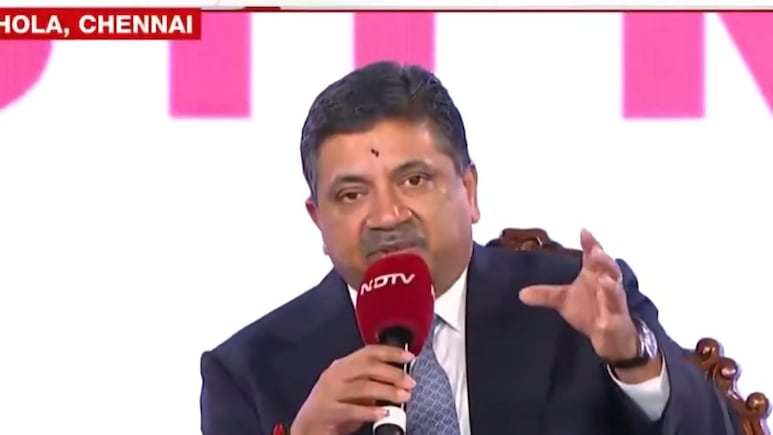
The 'Dravidian model' of development - one of several flashpoints between Tamil Nadu's ruling DMK and the BJP-AIADMK opposition ahead of an Assembly election in April - is built on a socio-economic welfare philosophy that began in the 1920s, after the Justice Party won provincial elections in the Madras Presidency, and continues today, the state's IT Minister, PTR Palanivel Rajan, said.
Rajan also noted the Congress' contribution in keeping that model afloat, referring to the Temple Entry Act of 1939, which removed legal restrictions on Dalits and marginalised communities entering temples, and which was signed by C Rajagopalachari, then the head of the Madras Presidency.
"If anything, the Congress government of the Madras Presidencty adhered closer to this model than its ideology for the rest of country. In theory they could have reversed it, legislated the opposite... but they doubled down," he said, offering a measure of praise to an ally as seat-share talks rumble on.
Speaking at the NDTV South Summit, Rajan began by recalling comments he made nine years ago - 'everybody agrees Tamil Nadu, among larger states, has had relatively great outcomes... economically, structurally... and, at a broader level, south states had good outcomes too'.
"I first mentioned it then as the 'Tamil Nadu model' because it was quite unique in its philosophy. Eventually, because it was then picked up by the other southern states, it became the 'Dravidian model' and that catchphrase has stuck since..." he explained today.
#NDTVTNSummit | "At the heart of this (Dravidian) model is the notion of inclusion, equity and access": Tamil Nadu IT Minister Palanivel Thiaga Rajan (@ptrmadurai) to @tmvraghav pic.twitter.com/3uoH4oSG9w
— NDTV (@ndtv) January 30, 2026
The idea of a 'Dravidian model' of economic and social development has been actively promoted by the DMK before the election, with Chief Minister MK Stalin pointing to the state recording double-digit growth - 11.9 per cent - in 2024/25 according to federal data.
The Tamil Nadu government has argued the Dravidian model - by integrating social equity, industrial growth, welfare, and infrastructure - has not only ensured inclusive economic and social growth for the people but also added to the state's appeal as an investment hotspot.
The 'Dravidian model', however, has come under heavy attack from the BJP as it tries to dismantle the DMK's development claims. In September Finance Minister Nirmala Sitharaman said, "A separatist mindset dominates the so-called 'Dravidian model' of politics."
At the NDTV summit this morning, Rajan said the core of that model rests on 'inclusive and equitable access' to fundamental resources for human development, such as education and healthcare.
"As the great Lee Kuan Yew (i.e. the late Prime Minister of Singapore) once said, if you want good economic outcomes you need to engineer your socio-economic structures."
"In that sense, it starts with the 1920s, diarchic government of the Justice Party, which took a hammer to social constructs of the time... a massive amount of legislation, including right for women to vote, compulsory education for boys and girls, reservation based on population percentage... anything that established hierarchy or limited access to resources was broken."
Decades of focus on this philosophy - equitable sharing of resources - provided the focus for Tamil Nadu's economic and social growth, Rajan said. He said the DMK and AIADMK - which have dominated the Tamil Nadu political landscape since the late 1960s - each played a role in maintaining that envelope further. "Till today none has deviated from this approach."
Track Latest News Live on NDTV.com and get news updates from India and around the world

