





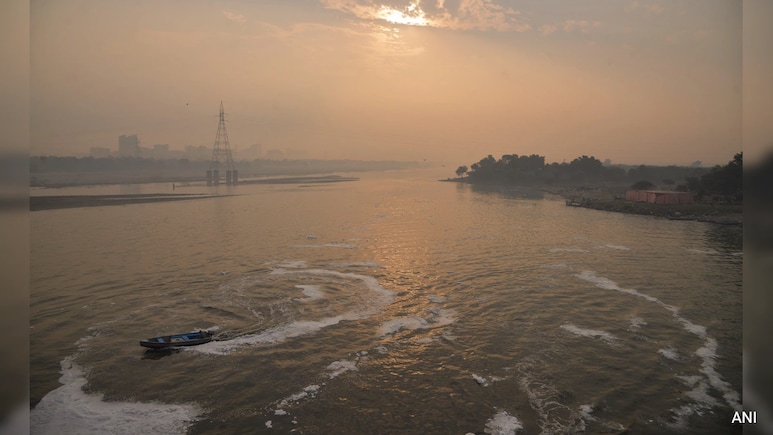
Despite Rs 5,536 crore spent in the last three financial years, the Yamuna continues to run dirty inside Delhi. A written reply in the Rajya Sabha on Monday lays out the reasons in stark detail, a 414 MLD sewage-treatment shortfall, missing industrial effluent plants, delayed STP upgrades, and a 4,221-tonne daily gap in solid-waste processing.
The Ministry of Jal Shakti said these systemic failures continue to overwhelm the river even as multiple cleanup programmes are underway.
Untreated Sewage Remains Yamuna's Biggest Polluter
The government said the single largest reason for the Yamuna's poor condition is the discharge of untreated and partially treated sewage into the river.
According to the Delhi Pollution Control Committee (DPCC), as of August 2025, Delhi had a 414 million litres per day (MLD) gap between how much sewage it generates and how much it can treat, leaving large volumes flowing directly into drains that empty into the Yamuna.
Industrial Areas Still Lack CETPs
Several approved industrial zones in Delhi still do not have Common Effluent Treatment Plants (CETPs), the reply noted.
This allows untreated industrial waste to land in stormwater drains, eventually mixing with domestic sewage and entering the Yamuna.
Delayed STPs Slowing Down Cleanup Efforts
The Ministry highlighted delays in completing new sewage treatment plants (STPs) and in upgrading older ones.
These delays have prevented the city from closing its treatment gaps and have significantly slowed down any improvement in water quality inside Delhi.
Delhi Processing Far Less Waste Than It Generates
Solid waste mismanagement remains a major contributor to pollution.
Delhi generates 11,862 tonnes of solid waste every day, but only 7,641 tonnes are processed, according to DPCC's monthly report to the National Mission for Clean Ganga (NMCG).
This leaves a 4,221-tonne daily gap, resulting in unprocessed waste reaching drains, floodplains and, eventually, the river.
Rs 5,536 Crore Spent - But Pollution Rises Inside Delhi
While the Delhi Jal Board has spent Rs 5,536 crore over three years on Yamuna cleaning, the river still turns toxic inside the city because the underlying systems remain weak.
Yamuna Enters Delhi Clean - But Degrades Quickly
The river enters Delhi at Palla with comparatively good water quality.
CPCB readings (Jan-Jul 2025): BOD 4 mg/l, DO 6 mg/l
DPCC monitoring (Sept 2025): BOD 2.5 mg/l, DO 9.5 mg/l (within healthy limits)
But as the river flows past urban drains that carry untreated sewage and waste, the water quality deteriorates sharply.
Rs 6,534-Crore Push for Rejuvenation Underway
Under the Namami Gange Programme, NMCG has sanctioned 35 projects worth Rs 6,534 crore for rejuvenating the Yamuna.
These aim to create 2,243 MLD of sewage-treatment capacity. Out of these, 21 projects have been completed, the Ministry told Parliament.
The Road Ahead
The Centre's assessment makes one thing clear: Delhi's Yamuna cleanup now depends entirely on fixing the capital's broken systems. Until the city closes its sewage-treatment gap, installs CETPs in industrial hubs and processes all the waste it generates, the river will continue to carry the burden of Delhi's untreated pollution, no matter how much money is spent.
Track Latest News Live on NDTV.com and get news updates from India and around the world

