






India's monsoon in 2026 began on a weak note, marked by a significant rainfall deficit in June and delayed advancement over parts of northwest India. The season so far reflects uneven progress compared to last year, with large regions still waiting for full monsoon coverage.
Driest June in a Century
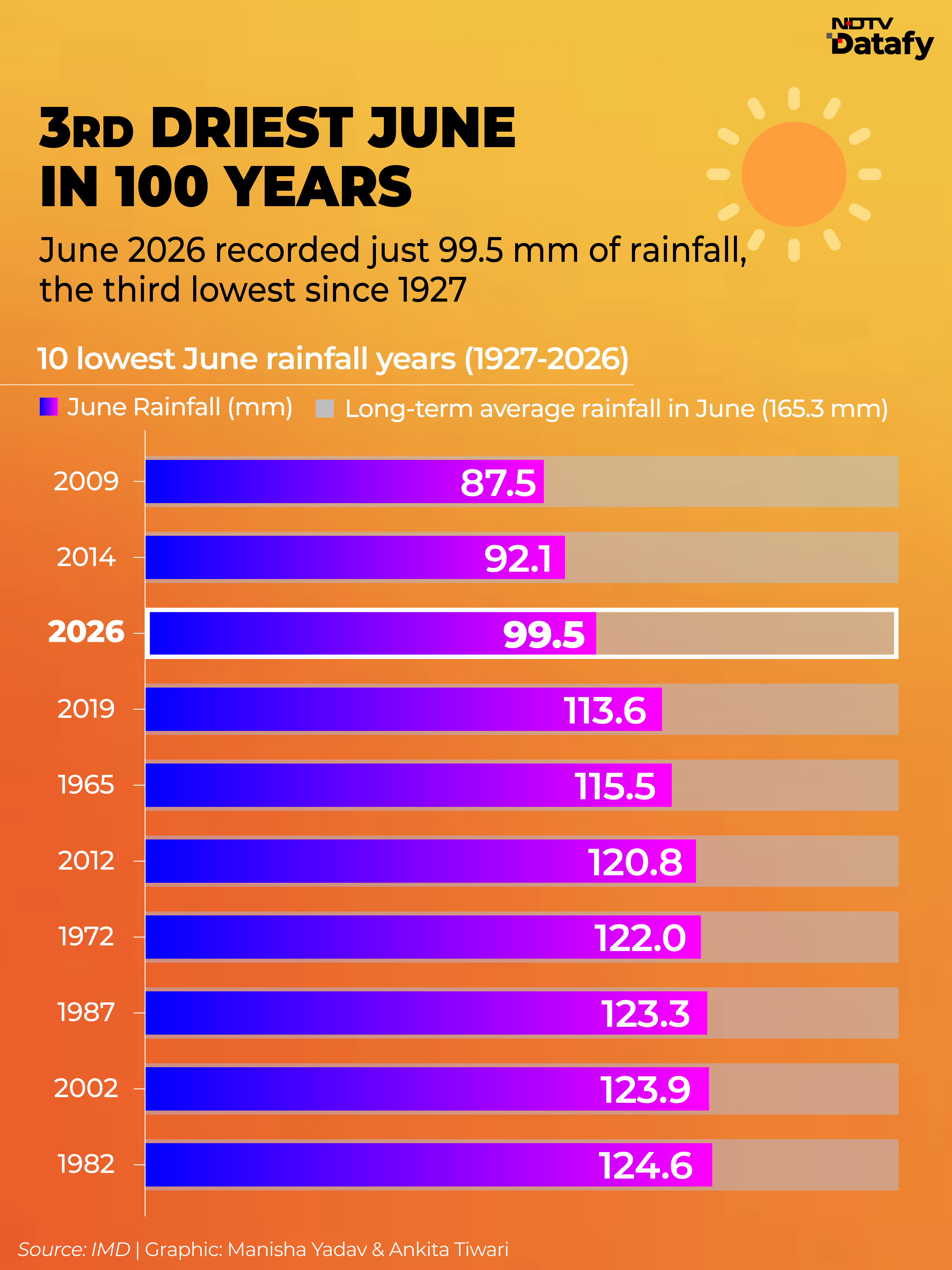
June 2026 recorded as the third driest June in 100 years, highlighting a significant rainfall deficit in the current monsoon season. Historical rainfall data from 1927 to 2026 shows that the weakest Junes are 2009 (87.5 mm), 2014 (92.1 mm), 2026 (99.5 mm), 2019 (113.6 mm), and 1965 (115.5 mm).
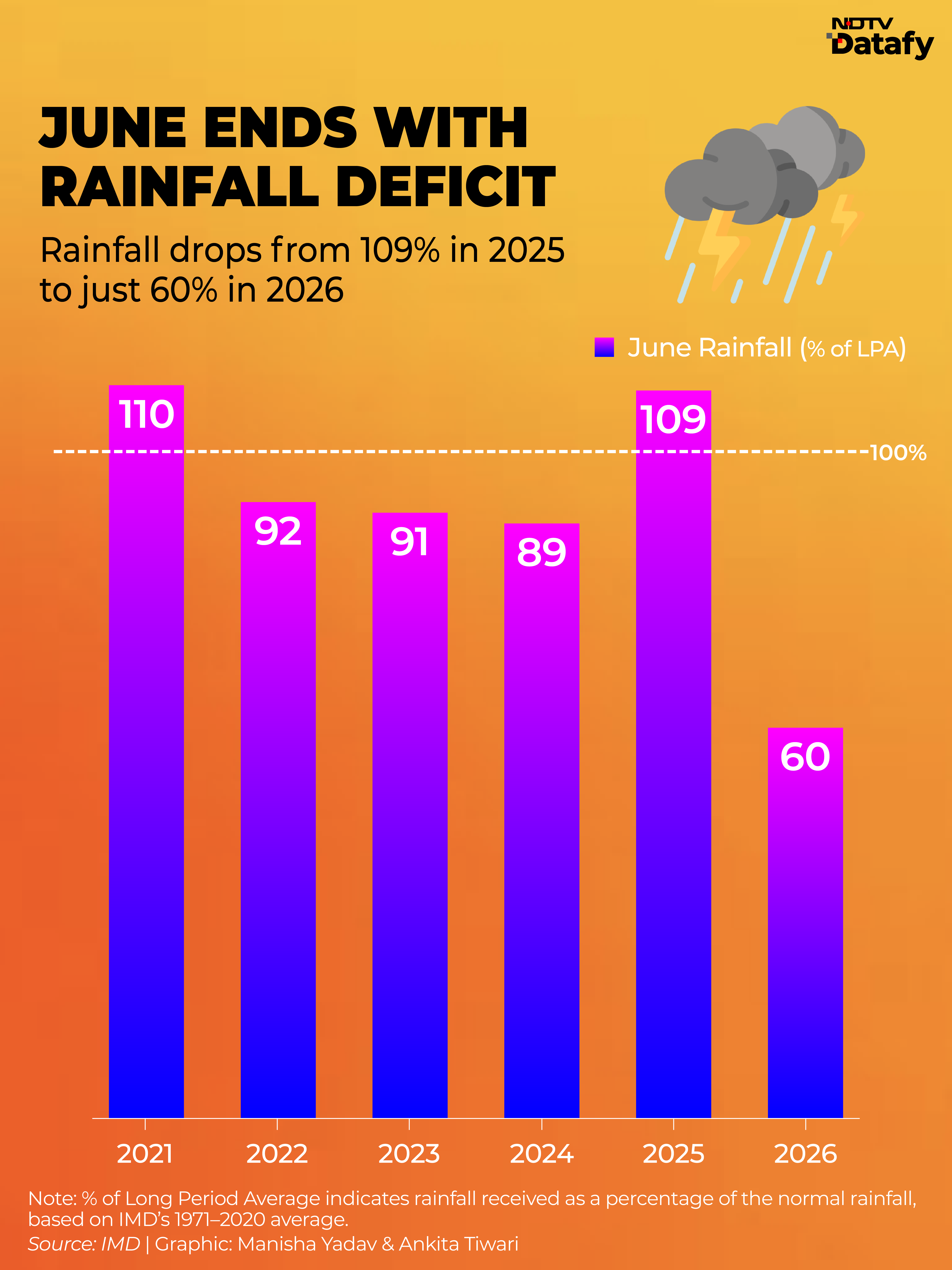
The rainfall deficit is also visible when seen by comparing it with the Long Period Average (LPA). June 2026 received only 60 per cent of normal rainfall, compared to 109 per cent in 2025. In the previous years, rainfall remained closer to normal or above-normal levels, including 110 per cent in 2021, 92 per cent in 2022, 91 per cent in 2023, and 89 per cent in 2024. The sharp fall in 2026 marks a clear deviation from this pattern and signals a weak onset phase of the monsoon.
Incomplete Monsoon Progress
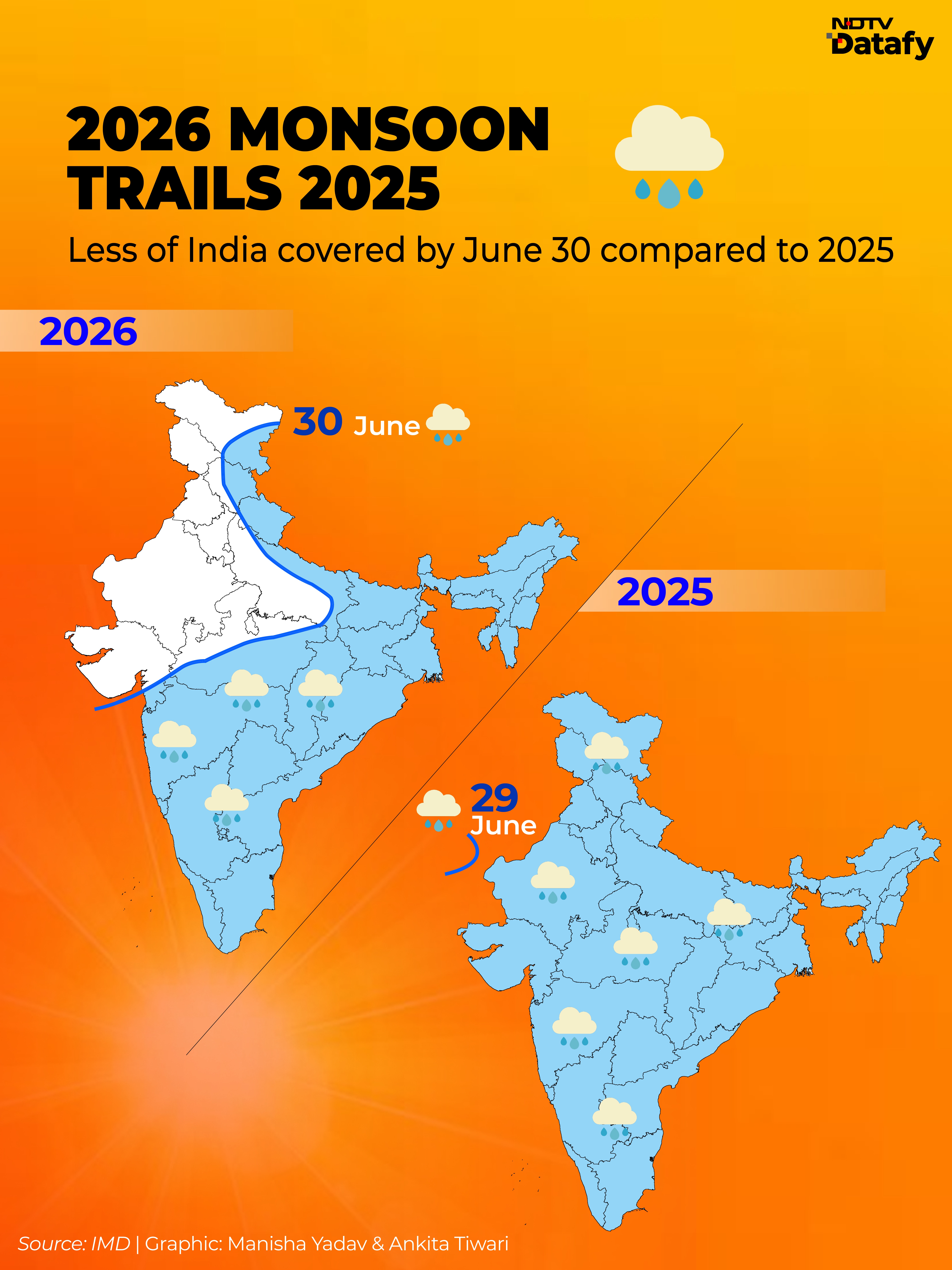
Despite the arrival of monsoon currents, its spread has remained uneven this year so far. Even by June 30, the monsoon did not fully advance over key parts of the northwest belt, including Haryana, Punjab, Rajasthan, and Delhi, which are still waiting for consistent rainfall activity. In contrast, the monsoon had progressed much faster, covering almost the entire country early in the season and showing a far more uniform distribution last year.
Why Rainfall is Weak in 2026
The weak monsoon performance in 2026 is linked to multiple atmospheric and oceanic factors, according to India Meteorological Department (IMD). One of the key reasons is the influence of El Nino-like conditions, which usually reduce rainfall over India by weakening monsoon winds. Along with this, the monsoon arrived late in some parts of the country and its progress slowed down in early June, affecting the overall spread of rainfall.
Another important factor is the uneven development of low-pressure systems in the atmosphere. These systems are needed for continuous and widespread rain, but in 2026 they have been weak and irregular, leading to fewer sustained rainfall spells. IMD has consistently indicated that June 2026 rainfall is expected to remain below normal, contributing to the early-season deficit and overall monsoon in 2026 will also follow the same trend of remaining below normal.
Track Latest News Live on NDTV.com and get news updates from India and around the world

