





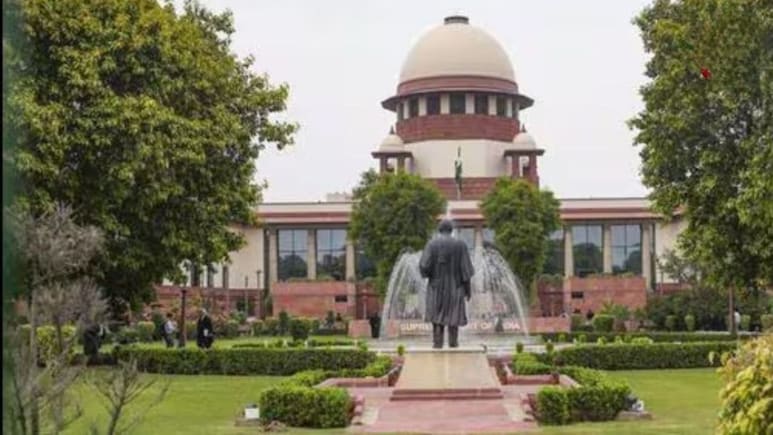
In a significant verdict, the Supreme Court on Thursday held that the adjudicating authority confirming provisional attachment of properties by the Enforcement Directorate under the Prevention of Money Laundering Act (PMLA) must include a judicial member.
Observing that even a single-member bench can adjudicate such matters if its sole member is from the judicial field, a bench headed by Chief Justice of India Surya Kant held that adjudication under Sections 8(2) and 8(3) of the PMLA involves interpretation of statutory provisions and appreciation of evidence, and hence the presence of a judicial member is essential to ensure legal objectivity and fairness.
The CJI, however, clarified that a judicial member is not required while issuing a show-cause notice under Section 8(1) of the Act. The requirement applies to subsequent hearing and determination of whether the attached property is involved in money laundering.
Referring to the serious consequences of property attachment, the verdict said that confirmation of provisional attachment can lead to the government taking possession of the property, potentially depriving its owner of its use until the trial concludes.
"If the adjudicating authority finds that the property is involved in money laundering, the provisions of Sections 8(3) and 8(4) are attracted, and the property is taken over by the Government of India. Such dispossession may well endure until the conclusion of the trial for the offence of money laundering, depriving the person of the use of the property for a considerable period before the offence is proved," the verdict said.
The bench said that while administrative and financial members may possess considerable expertise in their respective fields, adjudication involving legal interpretation and assessment of evidence requires judicial temperament and training.
"Consequently, we are satisfied that a member drawn from the field of law must comprise or be a part of the bench of the adjudicating authority for a determination under Section 8(2) or issuance of an order under Section 8(3) of the PMLA," it said.
The bench also upheld the validity of Sections 6(5)(b) and 6(7) of the PMLA, which empower the adjudicating authority to constitute benches comprising one or two members.
The verdict clarified that a minimum two-member bench was not mandatory for adjudication under Section 8 of the PMLA.
The bench directed the chairperson of the adjudicating authority to issue an appropriate administrative circular under Section 6 of the PMLA to ensure that every bench passing an order under Section 8(3) includes a judicial member.
However, the verdict rejected the contention that the chairperson of the adjudicating authority must necessarily be a judicial member, saying that such a requirement was not supported by the statutory scheme.
The detailed judgment is awaited.
During the proceedings, the counsel appearing for various litigants had argued that independent adjudication was an essential safeguard against the Enforcement Directorate's (ED) extensive powers of provisional attachment.
The ED, represented by Additional Solicitor General Anil Kaushik, had defended the statutory framework permitting single-member benches.
Section 5 of the PMLA empowers the ED to provisionally attach properties suspected to be proceeds of crime.
Under Section 8, the adjudicating authority examines whether the properties are involved in money laundering and whether the provisional attachment should be confirmed.
Section 6(2) provides for an adjudicating authority comprising a chairperson and two members, while Section 6(5)(b) permits the constitution of benches consisting of one or two members.
The issue of whether a single-member bench could confirm property attachments without a judicial member has been the subject of litigation before various high courts.
In January 2018, the Delhi High Court had held that a single-member bench does not necessarily have to comprise a judicial member.
The high court, however, directed that reasons underlying attachment proceedings be disclosed and that affected parties be given access to relevant material.
The top court stayed the high court's judgment in July 2018.
(Except for the headline, this story has not been edited by NDTV staff and is published from a syndicated feed.)
Track Latest News Live on NDTV.com and get news updates from India and around the world

