





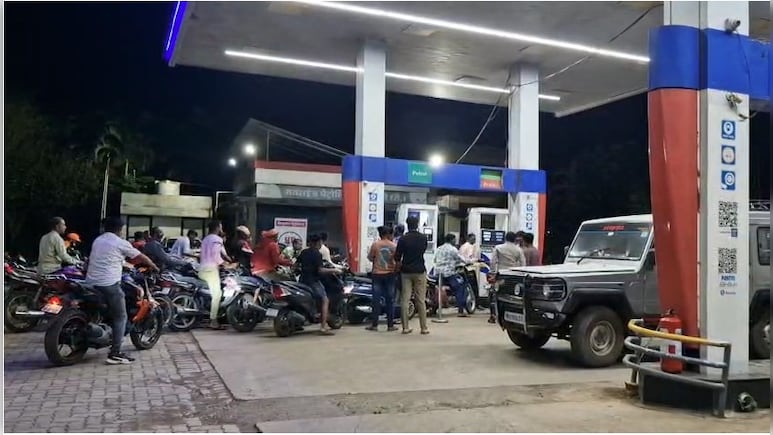
The quiet nights of rural Kolhapur in Maharashtra have been replaced by the roar of engines and the anxious chatter of hundreds of motorists. In the talukas of Bhudargad and Kagal in Kolhapur, petrol pumps that usually wind down by evening are now operating under the glare of headlights well past midnight.
The ground reality is a stark visual of desperation where motorcycles lined up for kilometres and farmers carrying multiple plastic cans, all driven by a fear that tomorrow, the nozzles will be dry.
But is there a real shortage? The short answer is no. According to the Kolhapur District Administration and supply officials, the crisis is almost entirely man-made. The root of the panic lies in the ongoing conflict in Gulf countries, which has sparked viral WhatsApp rumours claiming that shipping lanes are blocked and India's fuel reserves are depleted. While these geopolitical tensions are real, they have not translated into a supply cut for Maharashtra.
Follow LIVE Updates
Iran controls the Strait of Hormuz, a key shipping route through which 20 per cent of the world's energy is transported. Since the conflict, very few ships have been allowed by Iran to cross it. The blockade has resulted in severe disruptions in energy supply to many countries, including India.
The actual on-ground problem is a logistical bottleneck. Petrol pumps are designed to handle steady, predictable daily sales. When a rumour causes 5,000 people to show up at a pump that usually serves 500, the underground tanks empty faster than the delivery tankers can arrive. This creates a "phantom shortage": a pump looks empty, confirming the rumour in the eyes of the public, even though a full tanker is already on its way.
District Collector Amol Yedge and Supply Officer Mohini Chavan have confirmed that the district has an abundant buffer stock. To manage the madness, the administration has now put flying squads on alert to prevent hoarding and black-marketing.
The 25-day waiting rule recently applied to gas cylinders is a clear sign that the government is moving to ration supply to break the cycle of panic booking, ensuring that those in genuine need are not left behind by those who are simply hoarding.
In reality, Kolhapur isn't running out of fuel. The administration's biggest challenge isn't refuelling the tanks. It's stopping the viral misinformation that is turning a stable supply chain into a chaotic scramble.
Notably, Prime Minister Narendra Modi on Sunday reviewed with senior ministers the situation related to crude, gas and other petroleum products, and power and fertiliser sectors in view of the evolving Middle East situation.
Government sources said the focus of the meeting was on ensuring uninterrupted supply, stable logistics and efficient distribution across the country.
The situation related to crude, gas, petroleum products, and power and fertiliser sectors was reviewed in view of the situation in evolving Middle East, the sources said.
The government is taking proactive steps to ensure an uninterrupted supply of all essential goods, including petroleum products, the sources added.
The meeting took stock of the current global situation in the wake of the West Asia conflict and the measures taken to protect consumer and industry interests, which is the key focus of the government, the sources said.
Track Latest News Live on NDTV.com and get news updates from India and around the world

