





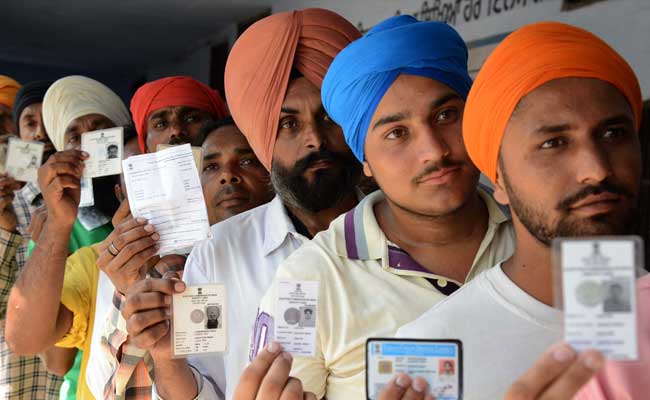
Punjab's next Chief Minister will very likely be decided in one place: the Malwa belt. With 69 of the state's 117 assembly seats, nearly 59 per cent of the total, this region has produced five of Punjab's last Chief Ministers, including the current one, Bhagwant Mann. It has also long been the beating heart of farmer politics, home to some of the state's most powerful farmer unions. As Punjab heads towards the 2027 election, the battle for Malwa is shaping up to be the one that matters most.
The Malwa belt is dominated by the Jat Sikh landlord community, which makes up 35 to 40 per cent of the electorate. Dalits follow at 31 to 33 per cent, then OBCs at 15 to 18 per cent, and Urban Upper Castes and trading communities at 12 to 15 per cent. Hindu voters, a mix of urban upper castes, trading communities, OBCs and SCs, also form a significant bloc, accounting for 37 per cent of the electorate.
This mix of Hindu and OBC voters makes the region a natural target for the BJP. Haryana Chief Minister Nayab Singh Saini, tasked with the party's OBC outreach, has held several rallies here. Punjab BJP president Kewal Singh Dhillon, who hails from this belt, has been brought in to draw Jat Sikh voters.
Also Read: How Dera, Dynasty, And Drugs Will Define Punjab's 2027 Mandate
Even so, winning over rural voters will not be straightforward for either the AAP or the BJP, as the region's dominant farmer unions continue to hold both parties to account over unmet demands. In 2022, the AAP swept 66 of the 69 seats here with nearly 57 per cent of the vote share. Congress managed just two seats and under two per cent of the vote, having lost 38 seats. The Shiromani Akali Dal was reduced to a single seat after losing seven. The scale of the AAP's win showed it had support across every community in the belt.
Why AAP Won In 2022, And Why 2027 Could Be Different
Rising farm debt, unemployment, drug addiction, crop losses and pink bollworm infestations in the cotton belt combined to create serious rural and agrarian distress. One study found that over 90 per cent of farmer suicides and drug overdose deaths in the state occurred in this region, which also sits at the centre of Punjab's rural drug and opioid crisis. A major farmer agitation shortly before the elections further pushed voters away from established parties like Congress and the Shiromani Akali Dal.
Free electricity of 300 units and Rs 1,000 for women, alongside promises of new jobs, helped draw voters to the AAP. Other factors that worked in the party's favour included unresolved sacrilege cases, public fatigue with the Badal family and Captain Amarinder Singh, and Bhagwant Mann's personal popularity in the region, which brought together voters across caste lines.
Also Read: BJP, Akali Dal To Revive Alliance? PM-Sukhbir Badal Meet Triggers Buzz
The result was a clear vote for change. Senior leaders such as the late Parkash Singh Badal, Sukhbir Singh Badal and Captain Amarinder Singh all lost to relatively unknown AAP candidates. The same pattern played out in the Majha and Doaba regions, where prominent figures including Navjot Singh Sidhu, Bikram Singh Majithia and Charanjit Singh Channi were also defeated.
Several of the same factors that carried the AAP to victory in 2022 could now work against it in 2027. Much depends on how well the party has delivered on its promises, from the 300 free electricity units to Aam Aadmi Clinics and the Rs 1,000 payment for women. While free power has generally worked in the AAP's favour, other issues could cost it support, including inadequate facilities at health clinics, a late start to the Rs 1,000 scheme just months before the election, delayed crop damage payouts, an unresolved drug problem, tough police action against unemployed workers and Dalit women, and a rising crime rate.
The BJP, meanwhile, will not find it easy to gain a foothold in the region either. Farmer unions have kept demands such as a guaranteed Minimum Support Price firmly on the agenda, and hardline elements continue to paint an unfavourable picture of the RSS and the BJP, despite various initiatives by the Modi government aimed at the farming community.
"The anti-incumbency may divert the AAP vote bank towards Congress in 2027 as Shiromani Akali Dal's vote bank is on a downward trend. Historically, the two-party battleground between Akali Dal and Congress witnessed a steep decline in performance and vote share that paved the way for AAP's historic victory in 2022," says Professor Ashutosh Kumar, Head, Department of Political Science, Panjab University Chandigarh.
The Shiromani Akali Dal's decline in the region tells its own story. The party held 33 seats in 2012, fell to eight in 2017, and was left with just one in 2022. Congress lost eight seats between 2012 and 2017, before that fall deepened further in 2022, when it was left with only two. The AAP, contesting its first assembly election in 2017, won 18 seats, then added another 48 in 2022.
Can AAP Hold On To Malwa In 2027
With the AAP facing strong anti-incumbency and the Shiromani Akali Dal's vote share continuing to shrink, Congress is seen as best placed to reclaim ground in the Malwa belt in 2027. Political analysts suggest that any loss for the AAP is likely to become a gain for Congress, provided the party can rein in its internal divisions.
The BJP is not standing still either. State president Kewal Singh Dhillon, a former Congress leader from the Malwa belt, could help the party win over rural voters. Its strategy of consolidating Hindu and OBC support in the region may also gain traction as discontent with the AAP grows among unemployed youth, contract workers and municipal employees, particularly following recent police action against them.
The BJP is also counting on the impact of major road and healthcare projects launched under the Modi government. These include the Rs 925-crore AIIMS Bathinda, a 750-bed flagship medical institution that brings advanced tertiary healthcare and medical education to southern Malwa.
New road networks such as the Southern Ludhiana Bypass, the Mohali-Barnala-Bathinda Expressway and the Delhi-Amritsar-Katra Expressway, along with upgrades to railway stations, are expected to ease freight traffic, improve commercial transit and support tourism in the region.
Whether the BJP benefits from its infrastructure push, whether the Shiromani Akali Dal can rebuild its base, whether Congress becomes the main beneficiary of anti-incumbency against the AAP, or whether the AAP's welfare schemes are enough to hold its ground, only the 2027 election will tell. What is clear is that repeating the 2022 result will not be easy, as the multi-cornered contest that shaped the last election may not play out in quite the same way again.
Track Latest News Live on NDTV.com and get news updates from India and around the world

