





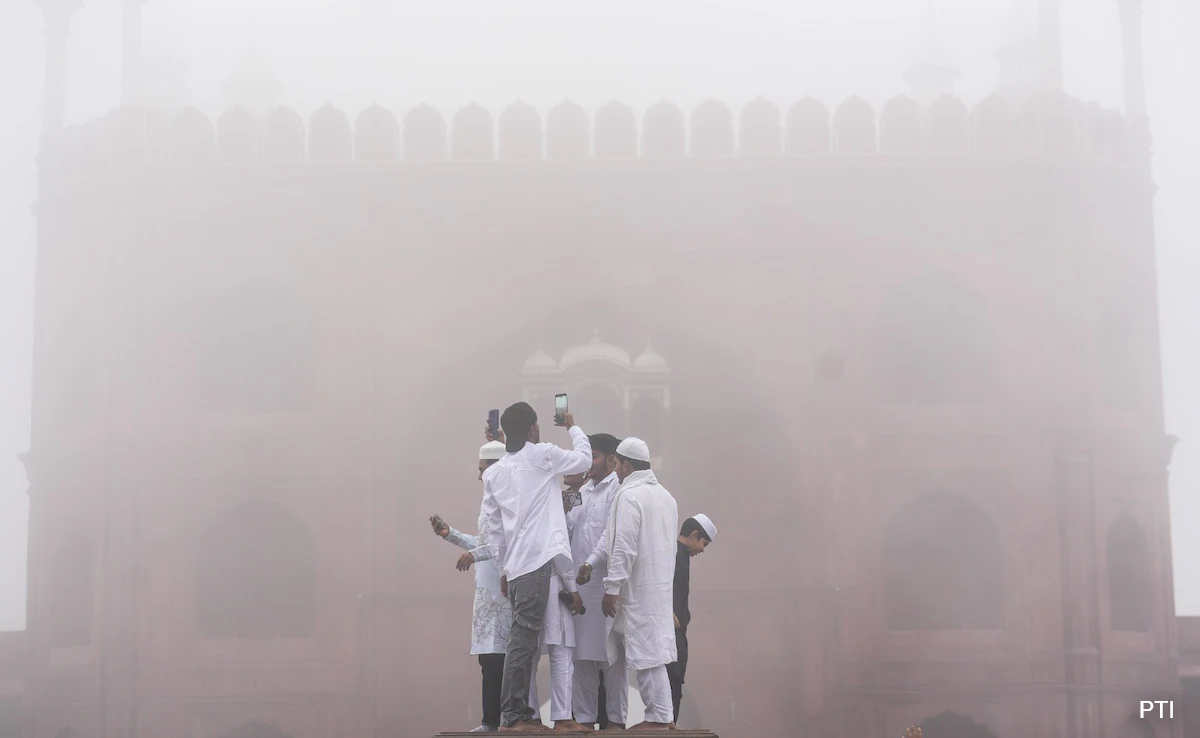
Delhi and nearby areas witnessed a hazy morning on Saturday, a day after the national capital recorded its coldest March day in six years and the cleanest air day in five months.
Following rains over the past few days, this phenomenon is uncommon for late March, when spring typically gives way to summer.
#WATCH | Uttar Pradesh: A layer of fog hovers over Noida this morning. Visuals from Sector 122. pic.twitter.com/oTlXtzzJ52
— ANI (@ANI) March 21, 2026
The pleasant surprise for Delhiites can be attributed to the sudden change in weather conditions this week.
Influence Of Western Disturbance
The ongoing western disturbance in the region is the primary contributor to increased atmospheric moisture.
The rainfall has significantly raised humidity levels, which is unusual for an otherwise dry March.
#WATCH | Uttar Pradesh | A layer of fog hovers over Ghaziabad this morning.
— ANI (@ANI) March 21, 2026
Visuals from Vaishali pic.twitter.com/55oeFlcqO0
This unseasonal haze on Saturday stems from moisture introduced by the western disturbance.
Humidity, Calm Wind Conditions
This has combined with easterly surface winds and stable atmospheric layers that prevent dispersion.
Despite daytime highs expected around 28-30 degrees Celsius, cooler morning temperatures near 15 degrees Celsius and partly cloudy skies have exacerbated particle accumulation.
Overnight cooling, along with moist easterly winds and low wind speeds (5-12 km/h), allowed moisture to condense into ground-level fog and mist.
Aerosol, Dust Interactions
The increase in moisture also enables hygroscopic growth of PM2.5 particles, causing them to absorb water and swell by up to 60%.
As a result, concentrations rise under high humidity levels, which exceeded 70% this morning.
In addition, westerly upper winds transport dust from the Thar Desert and Balochistan, which mixes with local emissions under stable atmospheric layers, forming hazy aerosols without a dominant pollution spike.
The IMD has clarified that this is not smog, but weather-amplified mist.
A similar condition was observed during the second week of March, when the haze persisted until the afternoon.
Track Latest News Live on NDTV.com and get news updates from India and around the world

