

)
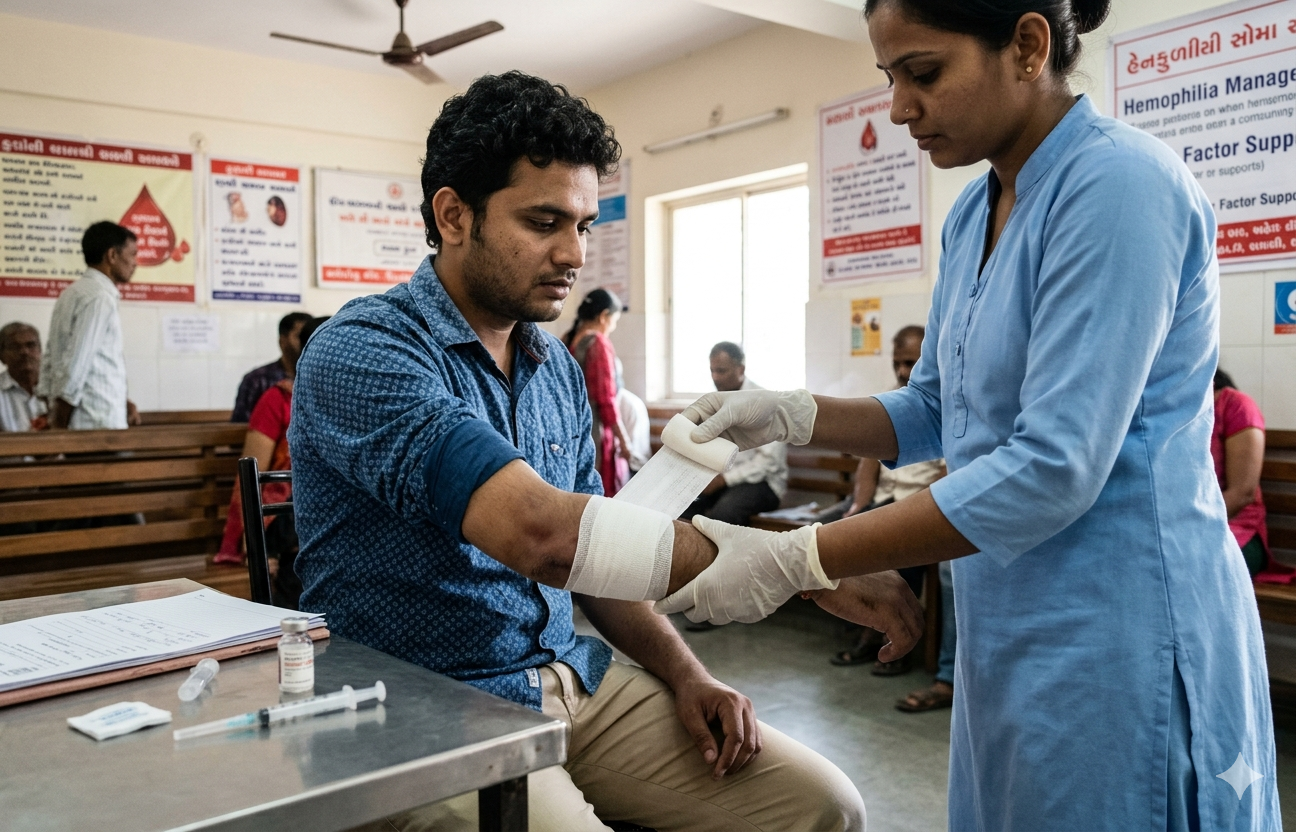
Today is World Haemophilia Day, dedicated to raising awareness about haemophilia. The rare but serious genetic bleeding disorder tends to affect men more than women. Especially the reasons behind why it affects men more than women can be understood through the global data collected by the World Federation of Haemophilia. Globally, over 210,000 people worldwide have been identified with haemophilia (types A and B combined). A report estimates that more than 400,000 people globally are likely living with haemophilia, assuming a prevalence of approximately 1 in 10,000 people. This means nearly half of the cases globally remain undiagnosed.
This represents only a portion of the global burden, as underdiagnosis remains significant in low- and middle-income countries. These figures are as per the Global Haemophilia Data Report 2024, based on a global survey. The survey also discloses that around 99% of identified patients globally are male, reflecting the X-linked inheritance pattern of haemophilia.
While in India, approximately 29,000-30,000 diagnosed haemophilia patients were recorded through WFH reporting and the Haemophilia Federation (India).
To understand why haemophilia affects more men than women, the nuance behind the disorder needs to be understood.
What Is Haemophilia?
Haemophilia is a genetic disorder that makes it harder for the blood to clot; this causes profuse bleeding. The clotting factors known as factor VIII and factor IX influence blood clotting in the human body. When the symptoms of haemophilia occur, these attributes can help you figure out how to identify the disorder:
- Prolonged bleeding
- Joint bleeds
- Easy bruising
The Role Of X Chromosomes In Haemophilia
NDTV spoke to Dr Rahul Bhargava, Principal Director and Chief, Haematology, Haematology Oncology and Bone Marrow Transplant, Fortis Memorial Research Institute, Gurugram, who explains, "The difference of haemophilia in men is primarily due to the way the condition is inherited through genes, specifically those linked to the X chromosome."
He broke down the process by saying, "Humans have two types of sex chromosomes: females have two X chromosomes (XX), while males have one X and one Y chromosome (XY)."
Haemophilia is caused by a mutation in a gene located on the X chromosome that is responsible for producing clotting factors and proteins essential for blood clotting. Because of this, haemophilia is classified as an X-linked recessive disorder, Dr Rahul Bhargava said while explaining the clinical perspective.
Also Read: Oncologists Explain Why They Prescribe Keytruda To Cancer Patients, When And How It Works
Why Men Are More Affected Than Women
Dr Rahul Bhargava said, "In males, the genetic situation is straightforward. Since they have only one X chromosome, if that single X carries the defective gene, they will develop haemophilia. There is no second X chromosome to compensate for the faulty gene. As a result, even one mutated gene is enough for the disease to manifest in males."
As the one defective gene causes the disease to develop and there is no "backup" gene in males, the incidence of haemophilia in males is higher. This factor also influences India, as it is one of the largest haemophilia populations in the world.
It also has the largest diagnosis gaps globally, due to low awareness, limited coagulation testing, and unequal access to specialist care.
Why Women Are Usually Carriers, Not Patients
Women have two X chromosomes that act as protection, and one healthy gene can often compensate for a defective gene if it is present in the body.
Some women may still have mild bleeding symptoms that can indicate the potential presence of haemophilia, which can manifest as symptoms.
When Can Women Develop Haemophilia?
There are rare scenarios that explain how women can develop haemophilia when the biological mother is a carrier, and the father can become affected. Due to skewed X-inactivation in the human body, haemophilia is manifest, but these cases are uncommon.
Dr Rahul Bhargava also explains that, "For a female to develop haemophilia, she must inherit the defective gene from both parents-one from her mother (who must at least be a carrier) and one from her father (who must have haemophilia). This combination is quite rare, which is why haemophilia is much less common in females."
Also Read: How Often Should You Check Your Blood Pressure For Your Heart's Safety? Doctor Answers
Understanding Haemophilia Through Family Inheritance
According to the research published in Research and Practice in Thrombosis, there are instances when haemophilia can be transferred through family genes. Dr Rahul Bhargava also explains, "The inheritance pattern can be better understood through family genetics, where it can transfer as follows:
If a mother is a carrier of the haemophilia gene, each son has a 50% chance of inheriting the condition, while each daughter has a 50% chance of becoming a carrier.
If a father has haemophilia, all of his daughters will inherit the defective gene and become carriers.
But none of his sons will be affected because sons inherit the Y chromosome from their father, not the X.
Why Genetics Offers More Protection to Women
Dr Rahul Bhargava points out, "Women benefit from having two X chromosomes, which provides a protective effect. Even if one gene is faulty, the second one can often compensate. Men, however, lack this redundancy, making them more vulnerable to X-linked disorders like haemophilia."
Why Awareness Matters On World Haemophilia Day
World Haemophilia Day warrants focusing efforts on the following aspects to improve the rising case load of haemophilia disorder:
- Early diagnosis
- Genetic counselling
- Timely treatment access
There is still underdiagnosis and stigma attached to the identification of the disorder, but it is necessary to make it better for people to live healthier lives.
"Haemophilia is inherited in a way that makes men particularly vulnerable because they lack a second X chromosome to counteract a defective gene," as Dr Rahul Bhargava, explains.
Haemophilia is a genetic disorder that can only be identified by medical testing. So, men need to get themselves tested if they notice the signs, and women can also benefit from testing, as they can know if they are carriers. The key is to educate yourself on haemophilia and practise the necessary care to avoid dealing with the serious bleeding consequences.
Disclaimer: This content, including advice, provides generic information only. It is in no way a substitute for a qualified medical opinion. Always consult a specialist or your own doctor for more information. NDTV does not claim responsibility for this information.