

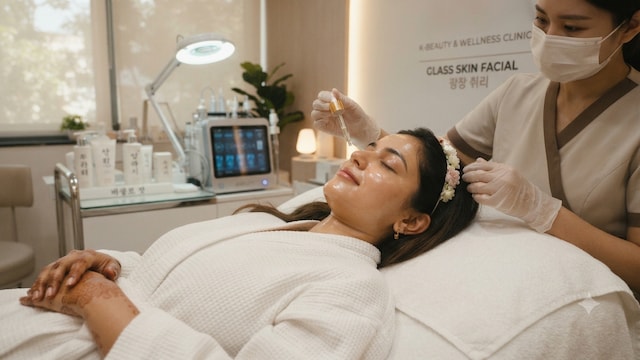
The pressure to look flawless on the wedding day has taken on a new dimension in 2026, with the glass skin trend gaining popularity among Indian brides. Inspired by the dewy, luminous complexion associated with Korean beauty routines, glass skin has become an aspirational skincare goal for women preparing for their weddings. From layering multiple serums and exfoliating acids to opting for chemical peels, laser treatments and intensive facials, many brides are willing to experiment with elaborate skincare routines to achieve a smooth, radiant appearance.
However, dermatologists caution that the pursuit of perfectly reflective, poreless skin can sometimes do more harm than good. Excessive exfoliation, combining multiple active ingredients and undergoing aggressive dermatological procedures without understanding individual skin needs can damage the skin barrier, cause irritation and even worsen pigmentation.
This is particularly relevant for Indian brides, whose skin may have varying levels of sensitivity and pigmentation susceptibility. Experts say the focus should be on achieving healthy, hydrated skin rather than chasing an unrealistic beauty standard, especially when wedding preparations already involve considerable stress and last-minute beauty treatments.
What Is Glass Skin And Why Is It Becoming Popular Among Indian Brides?
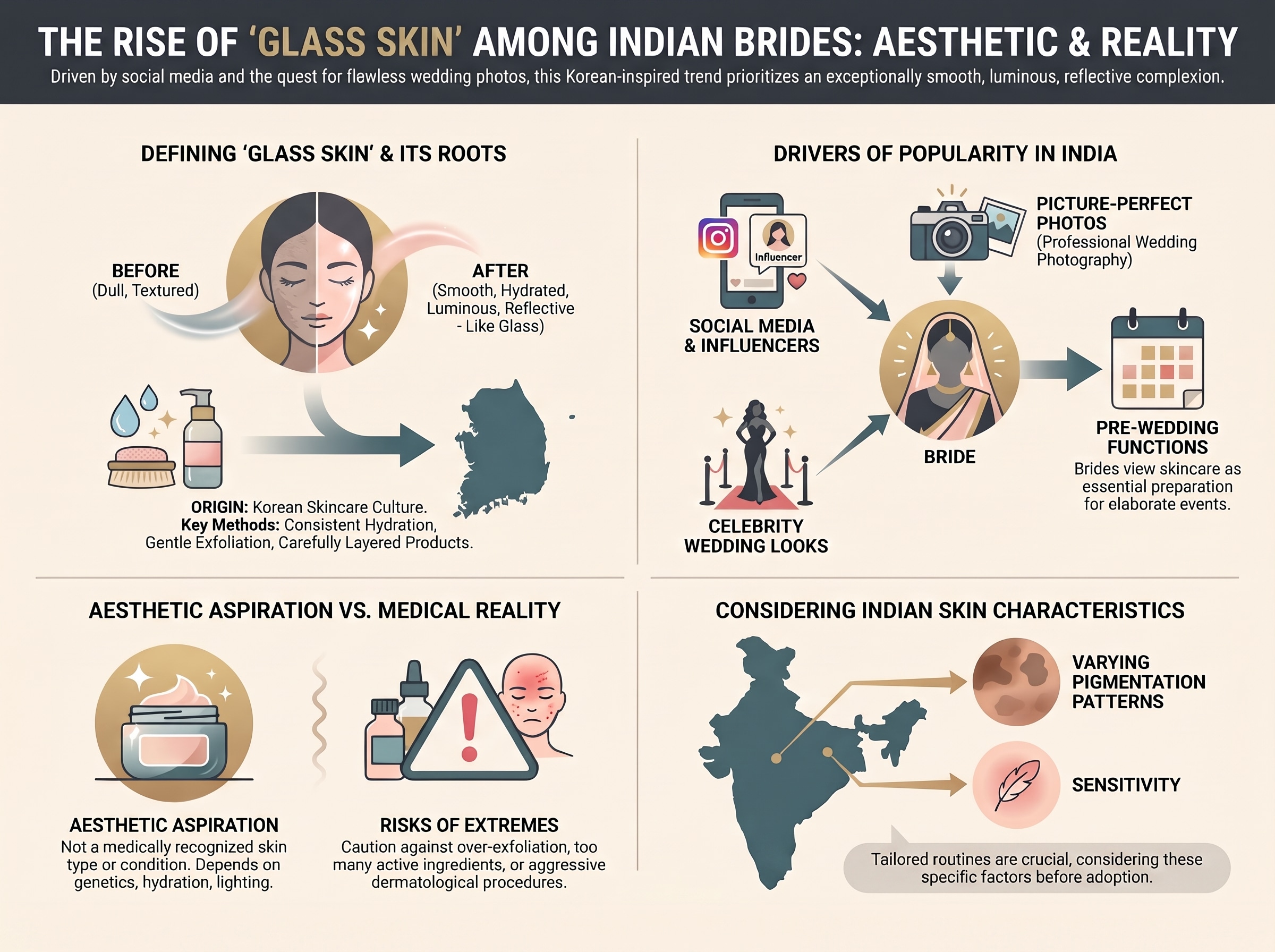
Glass skin refers to a complexion that looks exceptionally smooth, hydrated, luminous and almost reflective, resembling the appearance of glass. The trend has its roots in Korean skincare culture, where consistent hydration, gentle exfoliation and carefully layered skincare products are often associated with achieving a radiant complexion.
Its growing popularity among Indian brides reflects the increasing influence of social media, celebrity wedding looks, beauty influencers and the demand for picture-perfect wedding photographs. With pre-wedding functions, professional photography and elaborate makeup becoming important parts of Indian weddings, brides are increasingly looking at skincare as an essential part of their wedding preparation.
However, dermatologist Dr Priyanka Kuri, Consultant - Dermatology, Aster Whitefield Hospital, points out that glass skin is an aesthetic aspiration rather than a medically recognised skin type or condition.
"The glass skin phenomenon has increasingly gained momentum in the Indian wedding scenario, as brides desire to flaunt flawless skin during their special occasions. Although the desire for healthy skin is understandable, the problem arises when individuals go to the extreme with exfoliation, usage of multiple active ingredients or aggressive dermatological procedures to achieve it," she says.
She explains that the appearance of glass skin depends on several factors, including hydration, genetics and lighting. Indian skin also has its own characteristics, including varying pigmentation patterns and sensitivity, which need to be considered before adopting a skincare routine.
READ | K-Beauty Glass Skin Trend: Why It May Be Harmful For Indian Skin
Can The Glass Skin Trend Damage Your Skin Barrier?
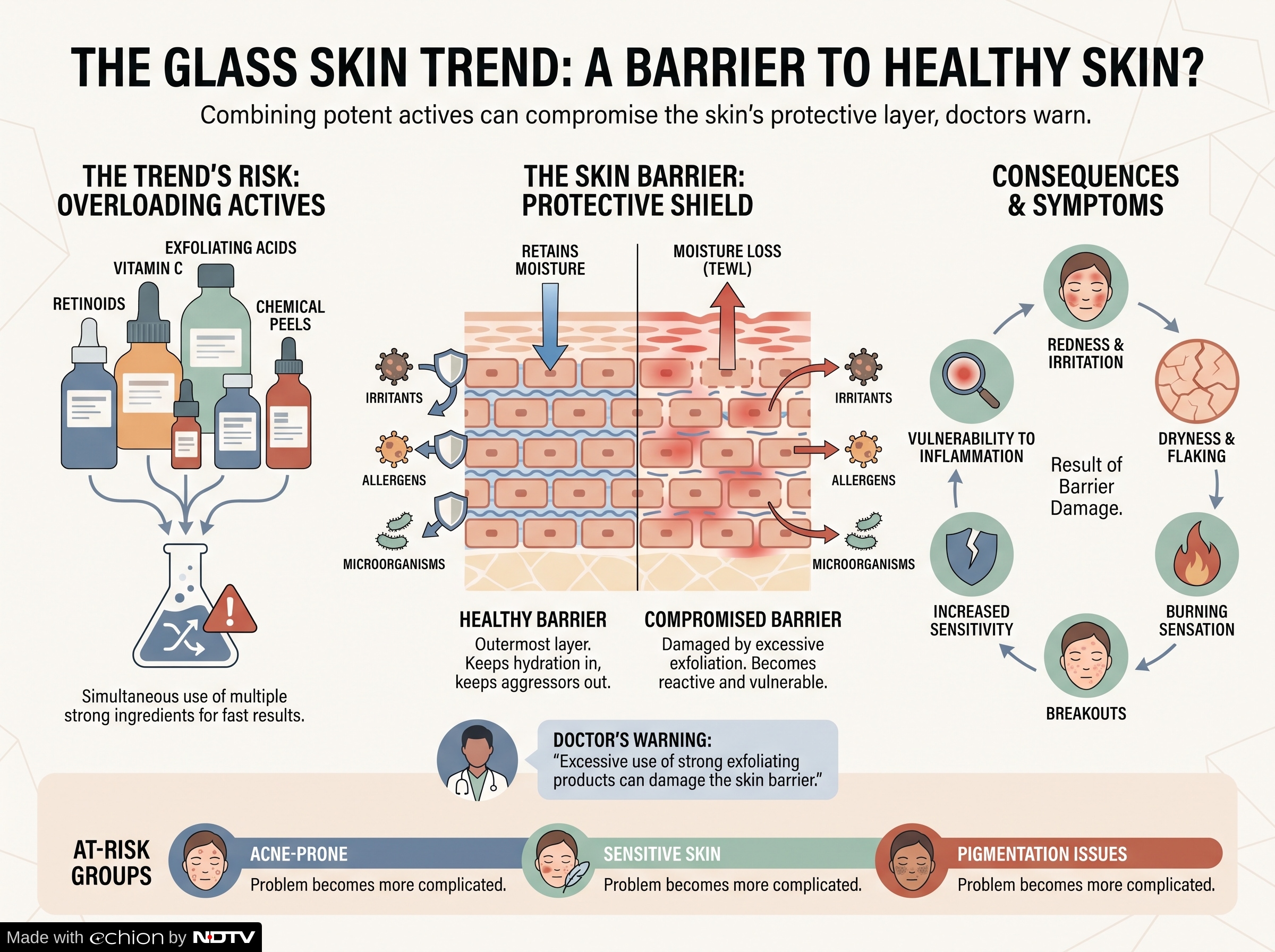
One of the biggest concerns surrounding the trend is the tendency to combine multiple skincare ingredients and treatments in the hope of achieving faster results. Exfoliating acids, retinoids and vitamin C are widely used in skincare routines. While these ingredients can offer benefits when used appropriately, introducing several potent actives simultaneously or using them too frequently can irritate the skin.
Dr Kuri warns that excessive use of strong exfoliating products can damage the skin barrier, resulting in redness, dryness, flaking, burning, irritation and increased sensitivity. The skin barrier is the outermost protective layer of the skin. It helps retain moisture and protects against external irritants, allergens and microorganisms. When this barrier is compromised, the skin can become more reactive, uncomfortable and vulnerable to inflammation.
Dr Swati Mohan, Director, Dermatology, Fortis Hospital Faridabad, echoes these concerns. "Many people try to achieve this look through frequent exfoliation, chemical peels, active skincare ingredients and multiple facial treatments. However, excessive use of exfoliating acids, retinol or other active ingredients can compromise the skin barrier, leading to redness, dryness, irritation, increased sensitivity and breakouts," she explains.
The problem can become more complicated for people who are already dealing with acne, sensitive skin or pigmentation.
Why Indian Brides Need To Be Careful About Pigmentation
Post-inflammatory hyperpigmentation is an important concern when experimenting with intensive skincare treatments, particularly among people with darker skin tones.
It occurs when inflammation or injury triggers increased melanin production, leaving dark patches or spots on the affected areas. These marks can persist for weeks or even months, potentially becoming more noticeable after an aggressive skincare treatment.
Dr Kuri cautions that Indian skin with a tendency towards pigmentation may develop post-inflammatory hyperpigmentation following irritation and inflammation. "Those who have problems with pigmentation might experience post-inflammatory hyperpigmentation after inflammation occurs, which leads to the skin acquiring dark spots for months," she says.
Chemical peels and laser treatments can also carry risks when performed without an appropriate diagnosis, procedure selection and professional supervision. According to Dr Kuri, strong chemical peels, laser treatments and other procedures undertaken without understanding the underlying skin concern can cause burns, scarring and pigmentation problems.
Dr Mohan similarly warns that aggressive or poorly timed procedures can trigger pigmentation, particularly in Indian skin tones that may be more prone to post-inflammatory hyperpigmentation. This does not mean that chemical peels, lasers or other dermatological procedures are inherently unsafe. However, their suitability depends on an individual's skin type, existing concerns, treatment history and the expertise of the professional performing them.
How Should Brides Prepare Their Skin Before The Wedding?
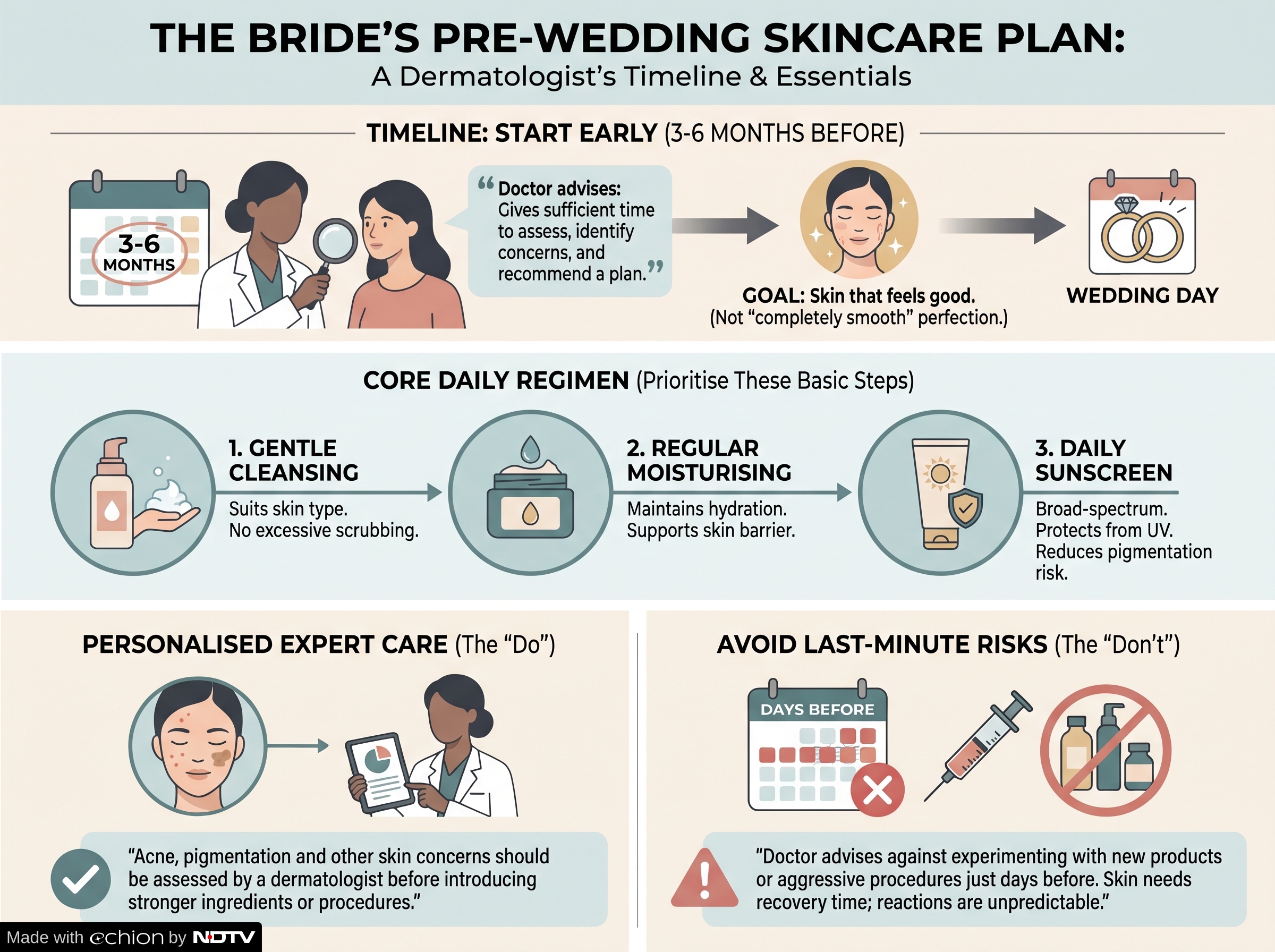
Dermatologists recommend planning skincare well in advance instead of attempting a dramatic skin transformation in the final weeks before the wedding. Dr Kuri advises brides to begin their skincare routine three to six months before the wedding. This gives a dermatologist sufficient time to assess their skin, identify concerns such as acne, pigmentation and sensitivity, and recommend an appropriate treatment plan.
"The aim of a skincare regimen should be getting skin that feels good, while achieving completely smooth skin is not a goal," she says.
A basic skincare routine should prioritise:
- Gentle cleansing: Use a cleanser suited to the skin type without excessive scrubbing or stripping away natural oils.
- Regular moisturising: A suitable moisturiser helps maintain hydration and supports the skin barrier.
- Daily sunscreen: Broad-spectrum sunscreen helps protect against ultraviolet radiation and reduces the risk of pigmentation worsening.
- Personalised treatments: Acne, pigmentation and other skin concerns should be assessed by a dermatologist before introducing stronger ingredients or procedures.
Dr Mohan also advises brides against experimenting with new skincare products or undergoing aggressive procedures just days before their wedding. "The skin needs time to recover, and even treatments that are generally safe can trigger unexpected reactions," she says.
READ | Can Indians Get Korean Glass Skin? Dermatologist Says It's Impossible
Is Poreless Skin Actually Healthy Skin?
Perhaps the biggest misconception surrounding the glass skin trend is that healthy skin must be completely smooth, poreless and reflective. In reality, pores, skin texture and natural variations are normal features of human skin. Their appearance differs depending on genetics, age, sebum production and other individual factors.
Dr Kuri emphasises that the presence of visible pores does not indicate unhealthy skin. "The objective should not be to obtain skin without pores or resembling that of glass since the presence of pores and the texture of the skin are natural phenomena. Skin does not stop being healthy just because it contains pores." She adds that healthy skin is skin that functions properly, remains moisturised and feels comfortable. Dr Mohan similarly stresses that treatments should focus on improving skin health rather than achieving an unrealistic standard of perfection.
The glass skin trend may offer Indian brides inspiration to invest in skincare, but it should not become a reason to subject their skin to excessive exfoliation, multiple active ingredients or aggressive treatments.
A consistent routine, adequate hydration, sun protection and timely dermatological advice are more valuable than chasing an overnight transformation. Ultimately, the healthiest wedding-day skin is not necessarily poreless or perfectly reflective. It is skin that is comfortable, well cared for and functioning as it should.
Disclaimer: This content including advice provides generic information only. It is in no way a substitute for a qualified medical opinion. Always consult a specialist or your own doctor for more information. NDTV does not claim responsibility for this information.