

)
Folic acid is important as a supplement during pregnancy, as it can lower the risk of neural tube defects. These types of serious birth defects happen when the neural tube that develops into the baby's brain, spinal cord and nervous system doesn't properly close during the first few weeks of pregnancy. Folic acid is a supplement that is the synthetic form of vitamin B9 and remains one of the essential nutrients before and during pregnancy. The timing, dose, and primary function need to be kept in mind, as these factors influence the formation of the most important aspects of foetal development. There are also other benefits of taking folic acid, as it is involved in rapid growth and cell division and overall health of the mother and the foetus during pregnancy.
What Is Folic Acid?
Folic acid is a supplement that has been formulated to provide vitamin B9, which the body needs to make new cells and DNA. The supplement is necessary during conception and the first few weeks of pregnancy as the baby grows rapidly during this period.
Why Is Folic Acid Important During Pregnancy?
The importance of folic acid comes from its ability to help with the development of the brain, spinal cord, and nervous system of the baby. It is used to prevent any defects that may occur during this rapid growth stage and support healthy foetal growth.
When Should You Start Taking Folic Acid?
The exact time duration of taking folic acid has been mentioned in clinical studies published in the Cochrane Database System Journal, and a doctor consultation is needed for the same. The requirement of folic acid supplements depends on factors that need a medical specialist's insight.
Before Conception
Folic acid is recommended for women who are planning their pregnancy. The main reason behind this is that vitamin B9 helps build adequate folate stores before conception.
During Early Pregnancy
The first trimester (weeks 1-12) of pregnancy needs folic acid supplementation, as the baby's neural tube closes within the first few weeks of pregnancy. The JAMA network research mentions that the baby's neural tube develops into the brain and spinal cord, which is why folic acid is needed to maintain its health.
What Is The Recommended Daily Dosage?
The recommended daily dose of folic acid supplement is about 400 to 800 mcg, or 0.4 - 0.8 mg daily, for healthy women.
This dose can be adjusted by a gynaecologist based on the requirements of the pregnant mother.
Certain medical conditions influence how much folic acid can be given to someone, so seeking a doctor's advice is necessary.
What Happens If You Don't Get Enough Folic Acid?
The risks associated with a lack of folic acid can be serious, as it could lead to:
- Neural tube defects
- Low maternal folate status
- Potential pregnancy complications
A folic acid deficiency during pregnancy can increase chances of health complications that could make it harder for the mother and baby to be healthy.
Morning Or Night: What's The Best Time To Take Folic Acid?
The best time to take a folic acid supplement depends on the medical requirement, age of the mother and the state of the pregnancy, as well as fertility status.
The timing to take folic acid has been specified in clinical guidelines; the doctor may determine the same depending on the health of the mother.
It is mentioned that taking it with food or water can enhance its absorption, which needs to be decided by the doctor.
The combination of folic acid with prenatal vitamins can be effective for some mothers, but this too needs to be determined by the doctor for safety.
Common Myths About Folic Acid
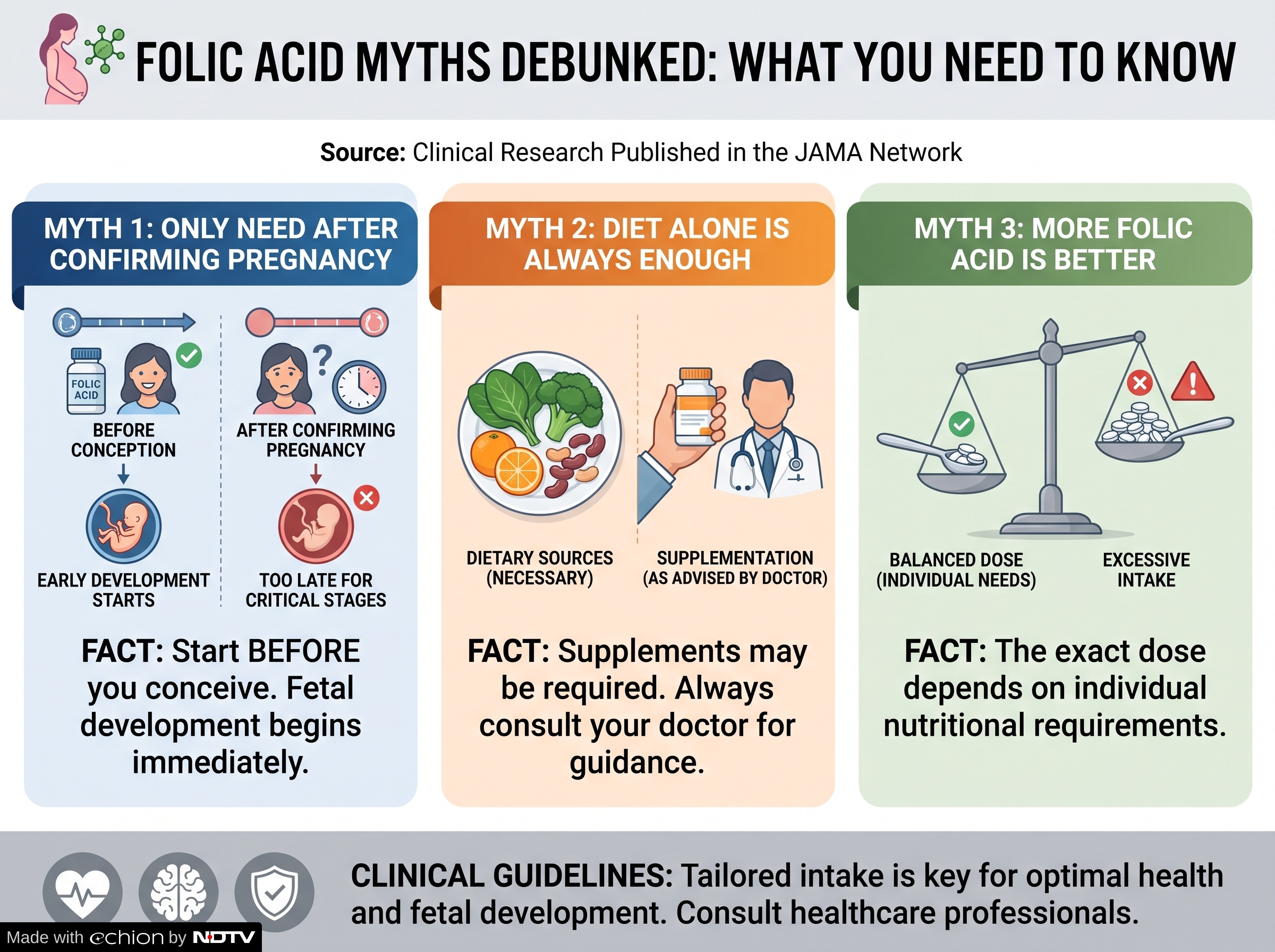
There are also myths associated with the intake of folic acid that need to be debunked. Clinical research published in the JAMA network suggests these common myths that shouldn't be believed.
Myth 1: You Only Need It After Confirming Pregnancy
Clinical guidelines suggest that folic acid supplements need to be taken before you get pregnant, as the foetal development stage starts happening as soon as you conceive.
Myth 2: Diet Alone Is Always Enough
Dietary sources of folic acid are also necessary, but supplementation is necessary when the doctor says so.
Myth 3: More Folic Acid Is Better
The exact dose of folic acid depends on how much intake is necessary based on the pregnant mother's nutritional requirement.
To support the health of your baby, folic acid is necessary. But a medical specialist can help with the exact dose, timing, and form of folic acid that you specifically need for the health of your baby.
Also Read: The Most Common Pregnancy Complications And How To Prevent Them
Disclaimer: This content including advice provides generic information only. It is in no way a substitute for a qualified medical opinion. Always consult a specialist or your own doctor for more information. NDTV does not claim responsibility for this information.