

)
Indian doctors are swapping regular table salt for a new potassium-rich version to reduce the incidence of hypertension and heart health issues. This is being done, as potassium addition to salt has the ability to reduce the damage that may have been caused by excessive sodium consumption. Sodium consumption of the average Indian exceeds the dietary guidelines set by the International Council of Medical Research (ICMR) and the National Institute of Nutrition(NIN). So the silent accumulation of excessive sodium in the body causes a proportionate increase in high blood pressure and heart disease in India.
By swapping normal table salt for potassium-rich salt as recommended by multiple doctors, a healthier dietary intervention and alternative can help improve and potentially even lower the non-communicable disease burden in India.
What Is Potassium-Rich Salt?
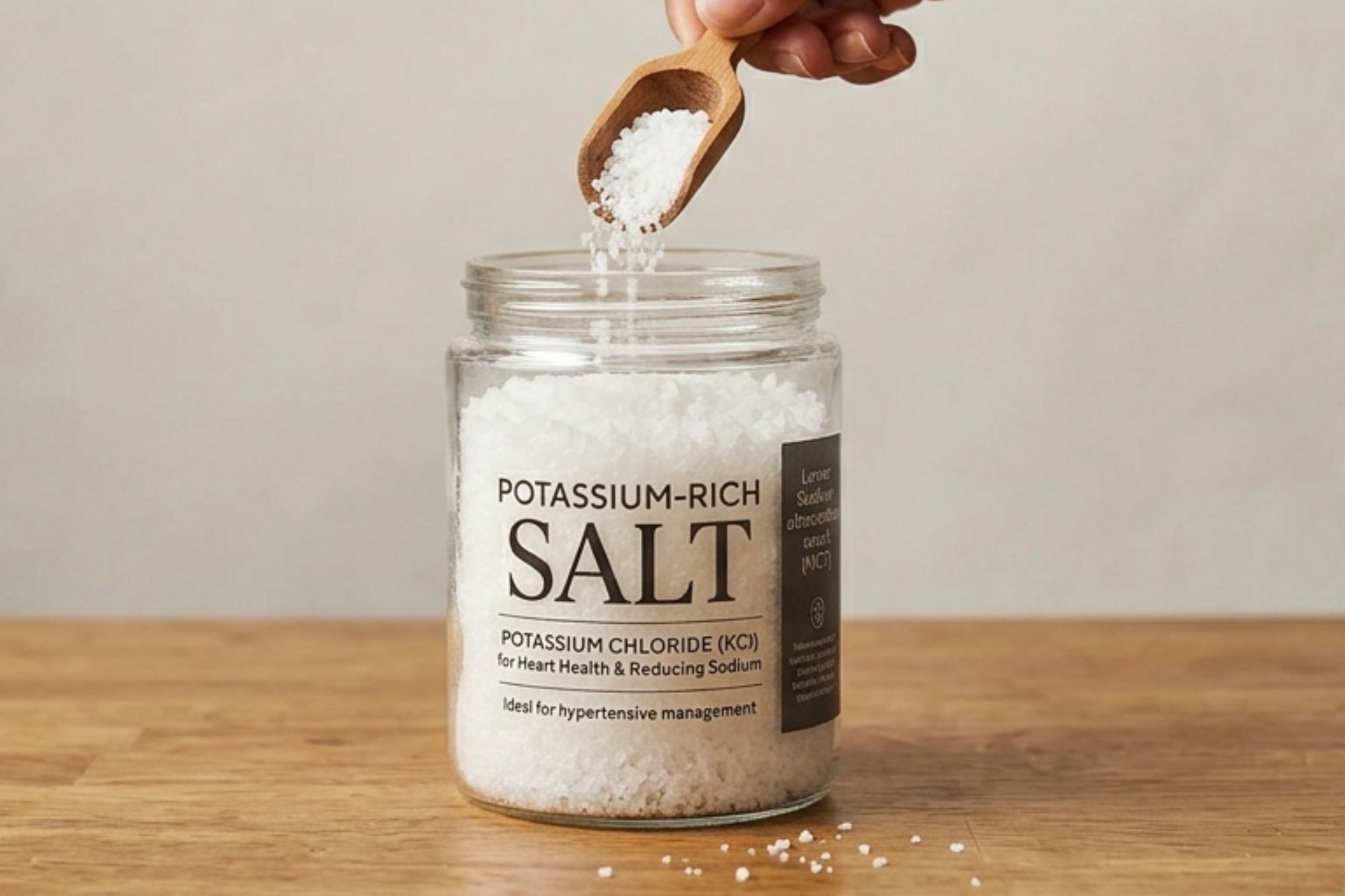
Potassium-rich salt is a type of low-sodium salt substitute (LSSS) that is composed of approximately 70-75% sodium chloride and 25-30% potassium chloride. This helps reduce sodium intake while increasing potassium consumption, thereby lowering blood pressure and reducing cardiovascular risk. The taste is similar to regular salt, but its nutritional benefits are greater, as the potassium intake of Indians is lower than the recommended dietary threshold set by ICMR and NIN.
Why Indians Consume Too Much Sodium
Current estimates show that Indians consume between 8 and 11 grams of salt (equivalent to 3.2-4.4 grams of sodium) per day, nearly double the WHO's recommended limit of 5 grams (2 grams of sodium). The estimate could be even higher as Indians consume a vast amount of processed foods, ready-to-eat meal kits, and convenience diets that disregard the use of excessive sodium mentioned on the food label.
High sodium intake is a key driver of elevated blood pressure, while potassium plays a complementary role by helping counteract sodium's effects, yet potassium intake in India remains below optimal levels.
With nearly 80% of sodium intake in India coming from salt added during cooking at the household level, experts emphasised that interventions focused on reducing salt use at home can have the greatest impact.
Also Read: Reducing Your Salt Intake Can Improve Cardiac, Kidney And Bone Health, Know How
How Potassium-Rich Salt Benefits Heart Health
Prof Vivekanand Jha, Executive Director of The George Institute for Global Health India, highlighted the strength of the evidence supporting LSSS's role in reducing adverse cardiovascular disease outcomes. He said, "High-quality research shows India's high sodium and low potassium intake is a key driver of hypertension and cardiovascular disease. Low-sodium salt substitutes address both-cutting sodium and restoring potassium, which is key to lowering blood pressure. With no change in taste and appropriate safeguards, this product is a safe, scalable solution for India's NCD prevention strategy.
The Hypertension journal also mentions that:
- Lower sodium intake helps reduce blood pressure, which can improve patient outcomes.
- Potassium helps relax blood vessels, which reduces health issues caused by vasoconstriction (contraction of blood vessels).
- Supports better heart rhythm and circulation, which boosts overall heart health.
Why Doctors Are Recommending It More Often
Prof. Vivekanand Jha, Dr Syed Imran Farooq, Dr Sailesh Mohan, Dr Meenakshi Sharma, Prof. Ambuj Roy, Dr Sachdev Meenakshi, and Dr Sandeep Mahajan collectively recommended switching to LSSS as they have seen the positive impacts of it on their patients. This is supported by a systematic review and meta-analysis of Prospective Cohort Studies from 2008-2023 that highlights that potassium intake is tied to a lower stroke risk. So, the health benefits are not limited to hypertension and heart health.
Also Read: Why A Gastroenterologist Wants You To Chew These 3 Seeds After Lunch
Who Benefits the Most From Switching?
While everyone can stand to be more mindful of their mineral intake, certain groups see a dramatic "return on investment" when they make the switch:
- People with Hypertension: Sodium pulls water into your bloodstream, increasing pressure. Potassium does the opposite; it helps relax blood vessel walls and encourages the kidneys to excrete excess sodium.
- Older Adults: As people age, the blood vessels naturally lose elasticity. Studies, including the landmark Salt Substitution and Stroke Study (SSaSS) published in the New England Journal of Medicine, found that salt substitutes significantly reduced the risk of stroke and major cardiovascular events in older participants.
- Those with High Salt Sensitivity: Some individuals are genetically predisposed to retain more sodium. For this group, even a small reduction in "white salt" can lead to a visible drop in puffiness and blood pressure readings.
- Urban Populations: If your diet relies on processed foods or "ordered-in" meals, your sodium-to-potassium ratio is likely skewed. Switching your home salt helps rebalance the scales.
Who Should Be Careful With Potassium-Rich Salt?
Despite its benefits, potassium-rich salt is not a universal solution. There are critical exceptions where this switch could be dangerous:
- Chronic Kidney Disease (CKD): The kidneys are responsible for filtering out excess potassium. If kidney function is impaired, potassium can build up in the blood (hyperkalaemia), leading to dangerous heart arrhythmias.
- Medication Interference: If you are on ACE inhibitors, ARBs, or potassium-sparing diuretics (common blood pressure meds), your body already retains more potassium. Adding more via salt could push levels into a toxic zone.
- The Golden Rule: Always consult your doctor before making the switch, especially if you have a history of renal issues or are on long-term medication.
How To Switch Safely
Making the change isn't just about buying a new box; it's about changing your relationship with the shaker.
- The Gradual Shift: Potassium chloride can sometimes have a slightly metallic aftertaste. Start by mixing your regular salt with the potassium-rich version to let your palate adjust.
- Don't Overcompensate: A common pitfall is adding more salt because it "feels lighter" or healthier. Remember, it still contains sodium. Use the same amount (or less) than you normally would.
- The "Home-Cooked" Advantage: Salt substitutes work best when you control the kitchen. Use them to season fresh vegetables, lentils, and lean proteins, which are naturally low in sodium to begin with.
Think of potassium-rich salt as a "harm reduction" tool rather than a licence to over-season. It is most effective when paired with a heart-healthy diet rich in whole foods. By making this one small adjustment in your pantry, you aren't just changing the flavour of your dinner; you're making a long-term investment in your cardiovascular longevity.
A pinch of prevention, quite literally, is worth a pound of cure.
Disclaimer: This content, including advice, provides generic information only. It is in no way a substitute for a qualified medical opinion. Always consult a specialist or your own doctor for more information. NDTV does not claim responsibility for this information.