





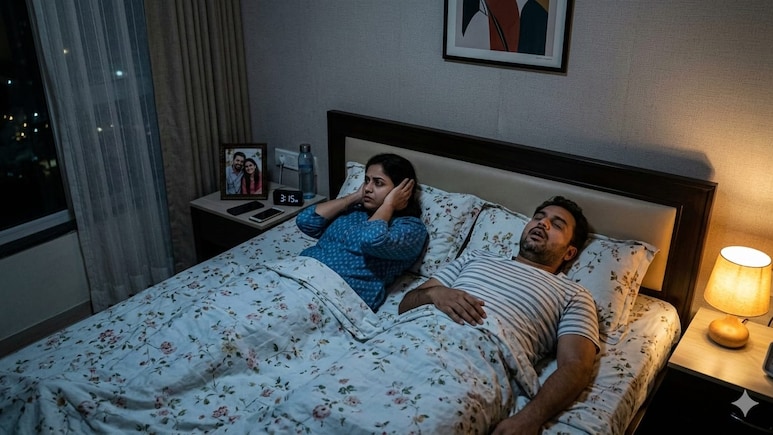
- Sleep divorce means couples sleep separately to improve sleep quality and health
- Over half of urban Indian couples now sleep apart occasionally due to snoring and schedules
- Poor sleep harms mood and relationships, making rest crucial for couple well-being
A new relationship trend called "sleep divorce" is gaining attention worldwide, and India appears to be at the forefront. The term refers to couples choosing to sleep in separate beds or even separate rooms to improve their sleep quality, rather than sharing the same bed every night. According to a recent global sleep survey cited in news reports, more than half of Indian couples now sleep separately at least occasionally, reflecting growing awareness about the importance of quality sleep. Several factors are driving this shift, including snoring, incompatible sleep schedules, work stress and lifestyle differences.
While the phrase "sleep divorce" may sound alarming, sleep experts emphasise that it does not necessarily signal relationship trouble. Instead, it can be a practical strategy for couples struggling with disrupted sleep. Medical research increasingly shows that poor sleep can negatively affect mood, emotional regulation and relationship satisfaction, making adequate rest critical for both physical and mental health.
As sleep disorders and modern lifestyle pressures rise, experts say couples are rethinking traditional sleeping arrangements. The emerging trend reflects a broader shift toward prioritising health, well-being and individual sleep needs, sometimes even if that means sleeping apart.
What Exactly Is A "Sleep Divorce"?
A sleep divorce refers to a situation where romantic partners intentionally sleep in separate beds or separate rooms to ensure better rest. Although the term may sound dramatic, the arrangement is often temporary or flexible. Some couples sleep together on weekends or special occasions while maintaining separate sleeping spaces during busy workweeks.
Sleep researchers say the concept is becoming more common as awareness about sleep health grows globally. A survey by the American Academy of Sleep Medicine found that nearly one-third of adults have tried sleeping separately to accommodate their partner's sleep habits.
Importantly, experts note that sleeping arrangements do not necessarily determine the strength of a relationship. Instead, they highlight how sleep quality and relationship health often influence each other.
Also Read: Sleeping Less Than 7 Hours? New Study Says It Can Shorten Your Lifespan
Why Many Couples Are Choosing To Sleep Apart
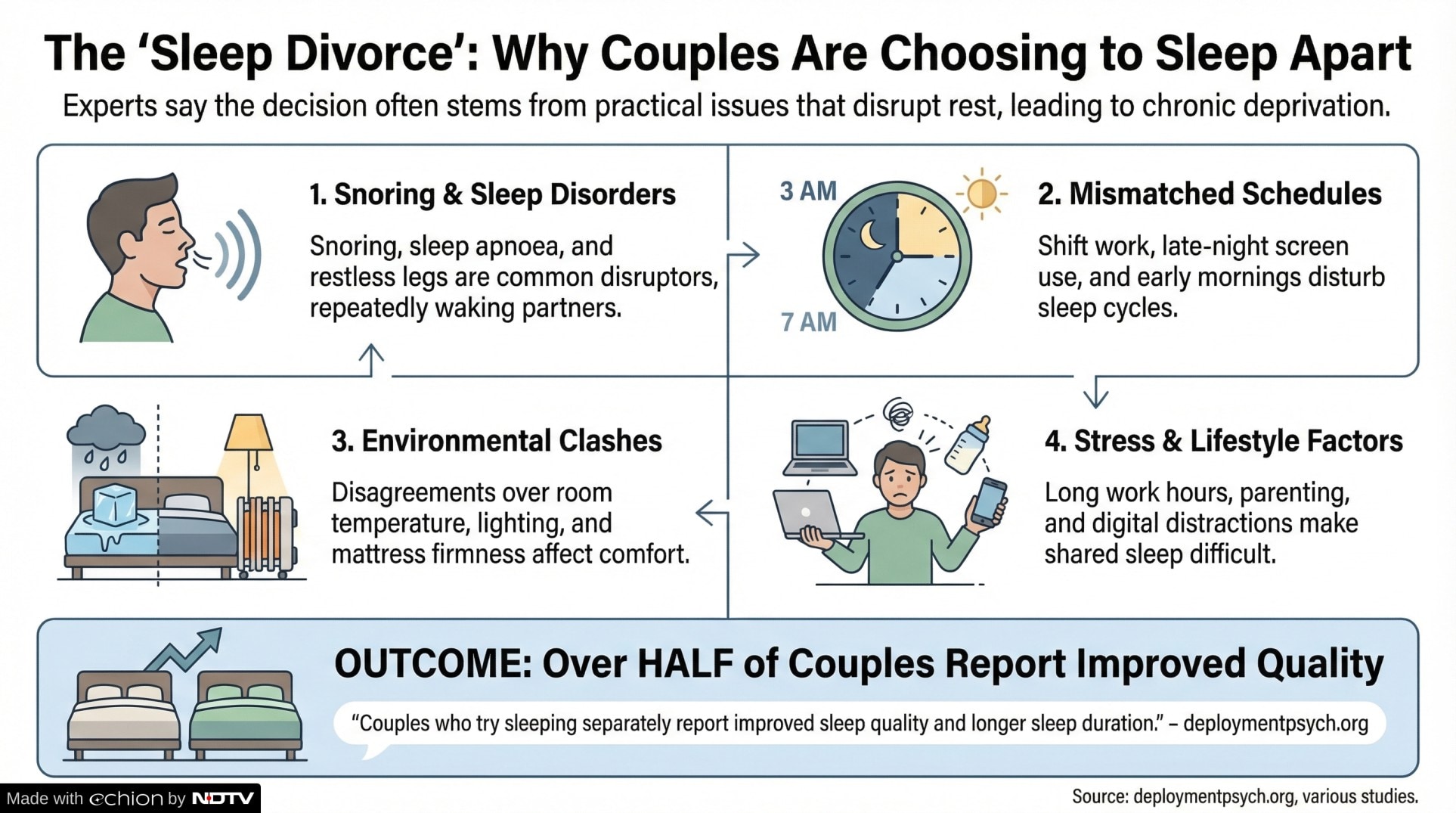
Sleep experts say the decision to sleep separately often stems from practical issues that disrupt rest.
- Snoring and sleep disorders: Snoring, sleep apnoea and restless sleep are among the most common reasons couples stop sharing a bed. These disturbances can repeatedly wake the partner during the night, leading to chronic sleep deprivation.
- Different sleep schedules: Modern lifestyles often involve mismatched routines, such as shift work, late-night screen use or early-morning schedules, which can disturb a partner's sleep cycle.
- Temperature and environment preferences: Couples frequently disagree about bedroom conditions such as room temperature, lighting or mattress firmness, which can affect sleep comfort.
- Stress and lifestyle factors: Long work hours, parenting responsibilities and digital distractions can also make shared sleep more difficult.
These challenges explain why some couples report better sleep quality when they sleep separately, as the arrangement reduces disruptions during the night. In fact, studies suggest that over half of couples who try sleeping separately report improved sleep quality and longer sleep duration.
Also Read: Are You Getting Enough Deep Sleep? Understanding REM Sleep And Why It Matters
The Health Impact Of Poor Sleep
Sleep deprivation can have serious consequences for both physical and mental health. Insufficient sleep has been linked to higher risks of cardiovascular disease, obesity, diabetes and mood disorders. Beyond physical health, poor sleep can also affect relationships. Researchers have found that after a bad night's sleep, couples are more likely to argue or experience relationship tension.
Sleep scientists say this happens because sleep loss affects emotional regulation and empathy, making conflicts more likely. At the same time, healthy sleep patterns may support stronger relationships. Research has shown that positive couple relationships are associated with better sleep quality and longer sleep duration.
This complex two-way relationship explains why couples may experiment with new sleeping arrangements to protect both their sleep and their relationship.
The Possible Downsides Of Sleeping Apart
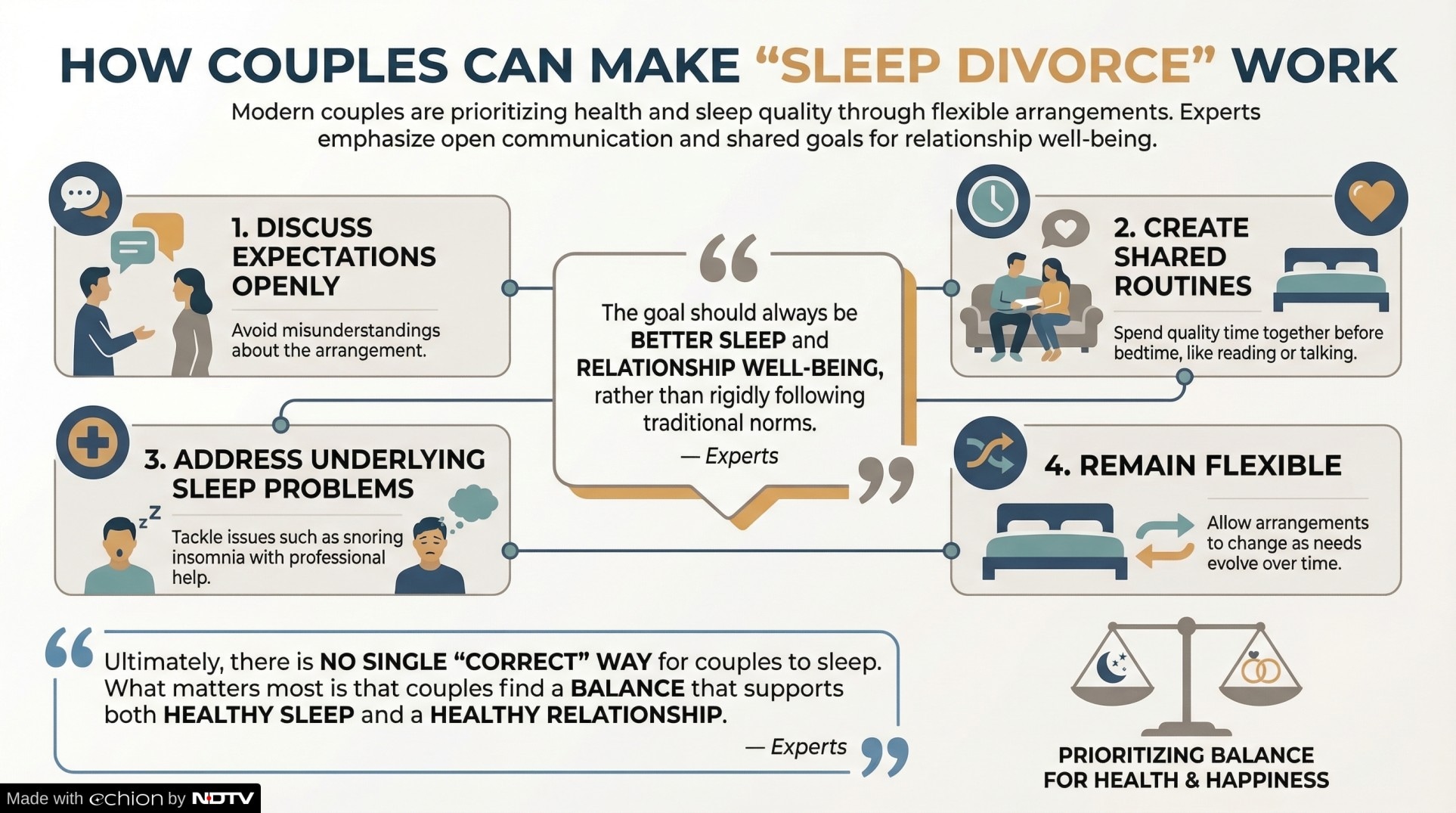
Despite its potential benefits, sleep divorce may not work for everyone.
- Some research suggests couples who sleep separately may experience higher levels of loneliness or reduced emotional closeness, especially if the arrangement is not openly discussed.
- Sleeping together can also promote bonding. Studies indicate that shared sleep may increase REM sleep, which plays an important role in emotional regulation and mental health.
- For many couples, the physical closeness of sharing a bed, such as cuddling or conversation before sleep, can strengthen intimacy.
Because of these factors, experts stress that communication and mutual agreement are essential if couples choose to sleep separately.
How Couples Can Make "Sleep Divorce" Work
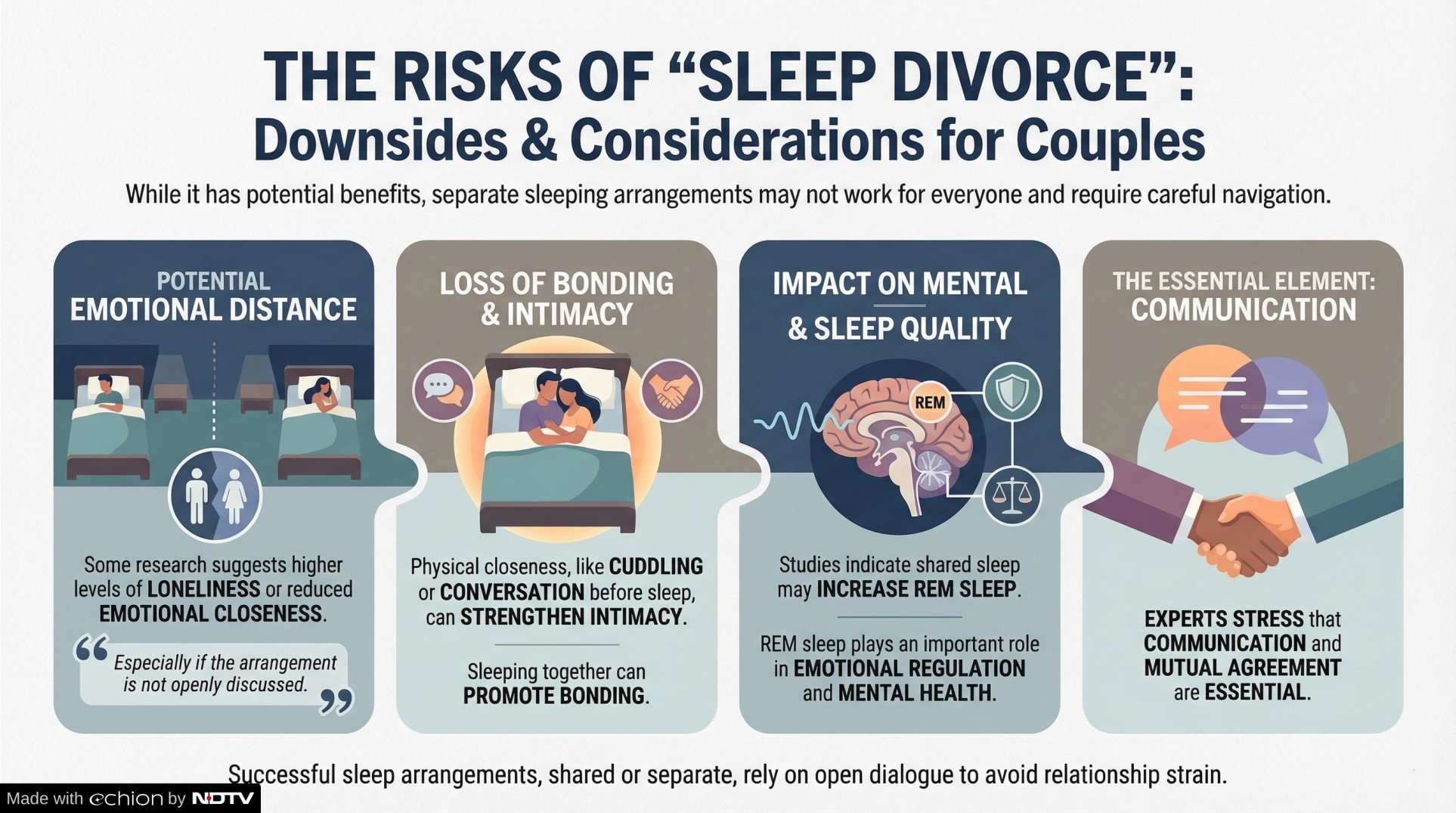
Sleep specialists suggest several strategies for couples considering separate sleeping arrangements:
- Discuss expectations openly to avoid misunderstandings.
- Create shared routines, such as spending time together before bedtime.
- Address underlying sleep problems, including snoring or insomnia.
- Remain flexible, allowing arrangements to change as needed.
Experts emphasise that the goal should always be better sleep and relationship well-being, rather than rigidly following traditional norms.
The rise of "sleep divorce" highlights how modern couples are prioritising health and sleep quality in new ways. As research continues to reveal the powerful effects of sleep on mental health, physical well-being and relationship satisfaction, sleeping arrangements are becoming more flexible and personalised.
Ultimately, experts say there is no single "correct" way for couples to sleep. For some, sharing a bed strengthens intimacy and emotional connection. For others, separate sleeping spaces may lead to deeper rest and fewer conflicts. What matters most is that couples find a balance that supports both healthy sleep and a healthy relationship.
Disclaimer: This content including advice provides generic information only. It is in no way a substitute for a qualified medical opinion. Always consult a specialist or your own doctor for more information. NDTV does not claim responsibility for this information.
Track Latest News Live on NDTV.com and get news updates from India and around the world

