

)
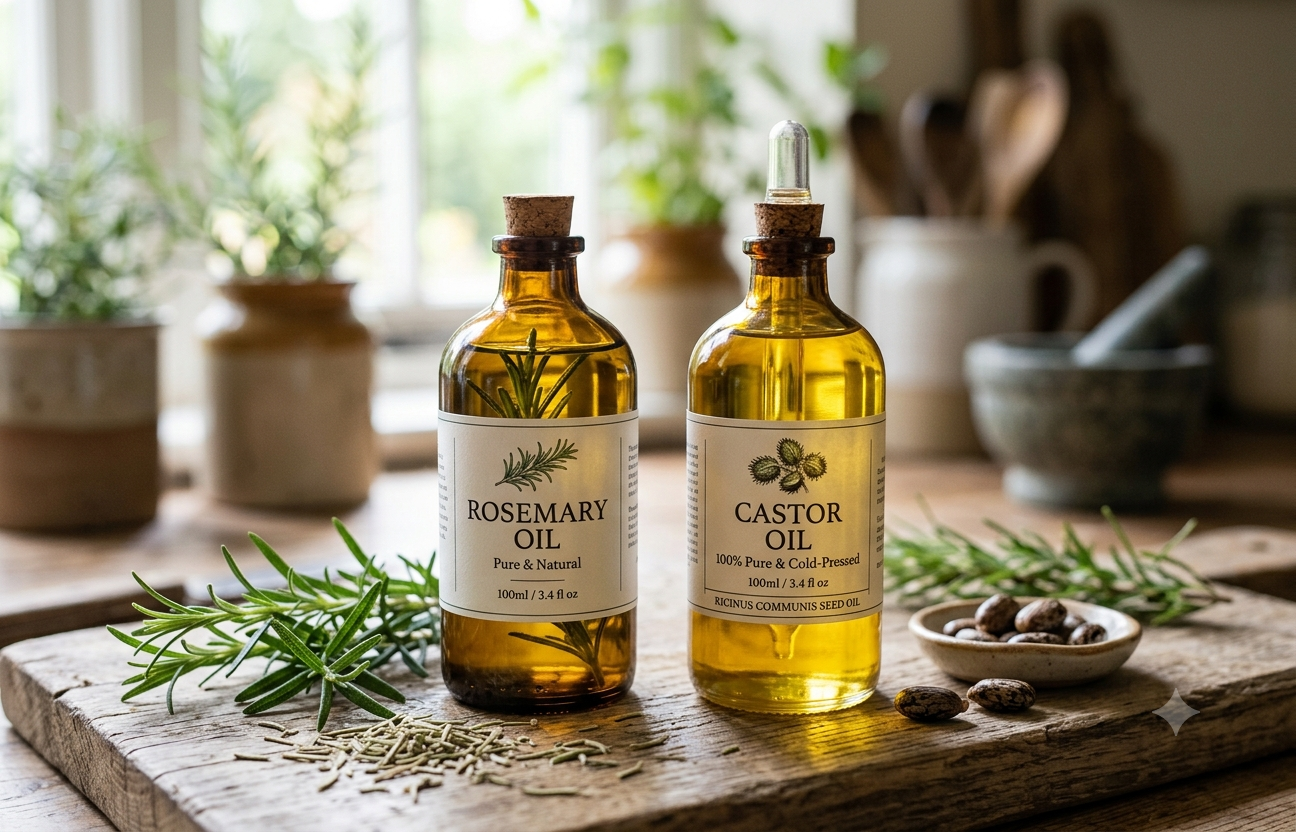
Hair loss remains one of the most common health concerns among men and women in India. Due to high levels of stress, lifestyle issues, and nutritional gaps, hair loss is affecting more and more people. Research published in the HAILO database study suggests that there are over 24,595 patients who had hair loss in 2023. This has only increased, and more and more people are getting diagnosed with hair loss, causing a spike in demand for natural alternatives that could work on reducing hair loss effectively. Two such natural remedies that have strong scientific backing are rosemary oil and castor oil.
Research published in the International Journal of Pharmaceutical Sciences suggests that rosemary oil has the ability to facilitate hair follicle growth. These are the tiny spots through which hair strands grow. Traditionally and in modern haircare products, rosemary oil is used for hair loss prevention, as it is known to reduce cell turnover, alopecia, ultraviolet damage, and ageing of hair strands. A review published in the Cureus journal highlights that castor oil has the ability to improve lustre and possibly reduce the effects of androgenic alopecia.
Why Does Hair Loss Happen In The First Place?
Hair loss happens due to a combination of factors attacking the healthy hair follicles and degrading their ability to regrow healthy hair strands. Genetics, hormonal changes, stress levels, nutritional deficiencies, thyroid disorders, and possible inflammation on the scalp cause hair loss.
If you are suffering from noticeable hair loss, then seeking medical help is necessary to root out the biological cause and address it. Your hair loss could be related to a serious health condition that needs to be identified and treated before the hair loss side effect becomes permanent.
Using hair oils can serve as a supportive measure; figuring out the root cause is key to tackling hair loss effectively.
What Makes Rosemary Oil Popular For Hair Growth?
Rosemary oil is popularised for hair growth, as the composition of rosemary has multiple health benefits related to hair health. It is known to improve blood flow to the hair follicles that get clogged due to excess sebum build-up, inflammation, or environmental dust/particulate matter.
May Improve Blood Flow To Hair Follicles
Research published in the International Journal of Pharmaceutical Sciences highlights that rosemary oil can stimulate hair growth, support hair follicle function, and reduce hair inflammation. It is possible, as rosemary oil has bioactive compounds such as the following:
- Carnosic acid
- Rosmarinic acid
- Ursolic acid
- o-pinene
- 1,8-cineole
- Camphor
These are absorbed into the scalp, as the scalp is highly permeable. There is even clinical evidence that suggests rosemary oil with 2% minoxidil in patients who have androgenetic alopecia (pattern hair loss).
Rosemary oil has emerging scientific evidence supporting hair growth, and it has been popularised due to these reasons. But it is important to note that the quality of the rosemary oil, along with its suitability, can vary based on your body's ability to absorb the properties it possesses.
What Makes Castor Oil A Hair-Care Favourite?
A review published in the Cureus journal suggests that castor oil contains ricinoleic acid that reduces the compound that causes patterned hair loss. Castor oil has a thick texture and can stick to your fingers when you apply it, so it is best to use it fixed with another hair care ingredient or as part of a hair mask.
Castor oil can moisturise the scalp and hair strands, and it is best for those who have a dry scalp.
Helps Reduce Breakage
Controlled use of castor oil can improve hair texture and may even make your hair appear thicker over prolonged usage. But it is important to note that castor oil's documented hair health benefits are linked to deep hair conditioning rather than hair regrowth.
Also Read: Are Biotin Gummies Really Helpful For Hair Growth? Dermatologist Answers
Rosemary Oil vs Castor Oil
When it comes to clinical evidence alone, rosemary oil is proven to aid in hair regrowth. Castor oil has hair conditioning benefits and can even improve the shine and lustre of hair strands.
1. Hair Fall Reduction
Hair fall needs to be understood in terms of new hair strand growth, prevention, or reduction in the hair follicles on the scalp. Rosemary oil may support follicular health, while castor oil may reduce breakage-related hair loss.
2. Scalp Health
Rosemary oil has bioactive compounds that reduce scalp inflammation, which can affect hair growth.
Castor oil may improve how hydrated the scalp is, especially in dry summers.
3. Ease of Use
Concentrated rosemary oil must be diluted in another liquid to be used on the scalp. Or you can even opt for rosemary hair oil, which contains a percentage of rosemary oil. Castor oil has a very thick consistency, which makes it harder to wash out, so multiple hair washes may be required to remove it from the scalp after it is applied for about 20-30 minutes.
Also Read: Hair Care: Spinach For Hair Growth; Here's How It Works
Which Oil Is Better For Hair Thinning?
If you notice your hair thinning, then you need to consider the factors that may be contributing to it.
For Early Hair Thinning
Rosemary oil may be better due to its ease of use and its effect on the hair strands.
For Dry, Damaged Hair
Castor oil may be beneficial for dry and damaged hair, as it has deep nourishing properties.
For Combined Benefits
Some people use both hair oils in rotation as per their haircare needs.
How To Use Rosemary Oil Safely
Rosemary oil needs to be mixed and used in a particular manner to avoid excess oil on the scalp. Here is what you need to keep in mind before using rosemary oil:
- Dilution with carrier oils, as their properties are potent.
- Patch testing is necessary as most people don't know how the hair oil will react to their scalp.
- Frequency of application should also be considered, as the prolonged effect on the scalp can differ.
- Common mistakes to avoid are related to the percentage of hair oil to the hair that you have. The amount needs to be balanced so that an excess of it is not used.
How To Use Castor Oil Without Damaging Hair
Castor oil should be used carefully to avoid over-moisturising or the thick texture that may make your hands sticky. Here are the tips that you need to follow:
- Avoid excessive use of castor oil; use a moderate amount as per the length of your hair.
- Mix with lighter oils to neutralise the heavy texture of the oil.
- Focus on the scalp and ends, as they need the most moisturisation.
- Proper washing techniques are necessary, as if castor oil remains in your scalp, then it can become very sticky and damage the hair strands.
Are There Any Side Effects?
Side effects of rosemary oil and castor oil are present, and they need to be kept in mind to keep your haircare routine safe and effective. Here is what you need to keep in mind with each of these hair oils:
Rosemary Oil
- Possible skin irritation is possible, as it is a herb whose concentration can trigger an adverse response from the scalp.
- Allergic reactions are possible, although they are rare.
Castor Oil
- Scalp buildup is possible, as it needs to be thoroughly rinsed out.
- A greasy appearance is possible as the hair strands absorb some of it when you use it.
- Contact dermatitis in sensitive individuals is possible, so use it after a doctor's consultation.
When Should You See A Dermatologist?
A dermatologist should be consulted when your hair is not growing despite altering your haircare routine or nutritional intake, and if you have a pre-existing medical condition. If hair loss is a medical side effect of a condition that you have been diagnosed with, then seeking help from a dermatologist is necessary. Here are the red flags that warrant a doctor visit:
- Sudden hair loss
- Bald patches
- Severe shedding
- Scalp pain or itching
- Hair loss after illness
To choose between castor oil and rosemary oil, the intended purpose needs to be considered. If you are looking for hair regrowth, then rosemary oil is better, but if you want to improve scalp moisture, then castor oil is better. But the choice should be influenced by the actual reason behind your hair loss.
If the goal is hair regrowth and reducing hair loss, rosemary oil currently has stronger scientific support. However, castor oil may still benefit people who need improved scalp moisture and reduced hair breakage. The best choice depends on the underlying reason for hair loss.
Disclaimer: This content including advice provides generic information only. It is in no way a substitute for a qualified medical opinion. Always consult a specialist or your own doctor for more information. NDTV does not claim responsibility for this information.