


A 31-year-old man from Indore was experiencing persistent fever, headache, and body pain for over a month. This caused him to consume a painkiller every time these symptoms presented themselves. The intake of painkillers got out of control, and he took 13 painkillers in a span of 30 days, which triggered severe kidney failure, and he ended up needing a kidney donation. Apparently, his mother donated a kidney, so his damaged kidney could be surgically replaced. This case highlights the dangers that self-medication and overuse of painkillers can cause. The health impact on your kidneys can take a toll, and those who have pre-existing medical conditions can suffer from other serious health issues.
It is commonly observed that people ignore the symptoms of serious medical issues until they need medical attention. Most people think that over-the-counter medication, especially painkillers, could resolve their medical issues easily. But the health impact could be serious, and timely medical treatment could help avoid it.
How Do Painkillers Affect The Kidneys?
Overuse of painkillers can affect the kidneys, as these NSAIDs (non-steroidal anti-inflammatory drugs) could result in kidney injury. Knowing this is important, as commonly used painkillers such as paracetamol, ibuprofen, diclofenac, naproxen, aceclofenac, mefenamic acid, and etoricoxib could cause kidney issues if overused. The main function of painkillers is to reduce pain and inflammation in the body, but their direct impact on the kidneys needs to be understood to be careful.
Impact On Kidney Blood Flow
Research published in Pharmacology Research and Perspectives suggests that painkillers block the enzymes that could reduce lipid compounds.
As a result, blood flow to the kidneys can be reduced, and their normal function of filtering waste and fluid intake can also be affected.
Long-term kidney damage is also a possibility, as medication such as painkillers needs to be controlled.
What Is Self-Medication And Why Is It Dangerous?
Self-medication refers to the usage of over-the-counter medication for health issues. The risk associated with self-medication is that most people start taking these medications without proper clinical assessment and diagnosis.
It could also mask serious illnesses that are causing symptoms that need medical treatment for long-term relief.
Note: The possibility of multiple medications interacting with each other is far greater in self-medication.
Early Signs Your Kidneys May Be In Trouble
One of the major problems with kidney damage is the silent nature of the issue. It can happen without showing any visible signs, and only when the damage is significant does the sign actually present itself. The signs that your kidneys may be affected by self-medication could be:
- Swelling in feet and ankles, medically known as 'edema'
- Reduced urine output or visible changes in urination patterns
- Fatigue or weakness
- Nausea
- Vomiting
- Loss of appetite
- Breathlessness
- High blood pressure
- Itchy or dry skin
- Mental confusion
Who Is Most At Risk Of Painkiller-Induced Kidney Damage?
The risk of painkiller-induced kidney damage is far greater in those who suffer from age-related kidney function weakness and those who are dealing with medical conditions such as:
- Diabetes
- Hypertension
- Chronic kidney disease
- Dehydration
- Those on doctor-prescribed multiple medications
Other Organs That Can Be Harmed By Painkiller Overuse
Besides kidney damage, the other organs that could be harmed by painkiller overuse could be the liver, stomach, and heart. Each of these organs is dealing with the internal impact of the formulation of painkillers. Here is how each of these organs can be affected:
- Liver damage can occur if too much paracetamol is consumed for symptoms.
- Long-term painkiller overuse could also affect the digestive tract and cause stomach ulcers as well as internal intestinal bleeding.
- The heart can also be impacted, as painkillers directly affect blood flow, blood pressure and the balance of fluids, leading to significant health risks.
How To Take Painkillers Safely
The safe usage of painkillers needs to follow the proper medical protocol wherein:
- Following the prescribed dosage is necessary, as the severity of the health issue should decide how much medication is needed.
- Avoiding combining drugs without medical guidance can prove dangerous.
- Stay hydrated, as your body is currently fighting a medical issue.
- Do not use painkillers for prolonged periods, as your organs could suffer.
- Consult a doctor if symptoms persist beyond a few days, as a serious medical issue is to blame.
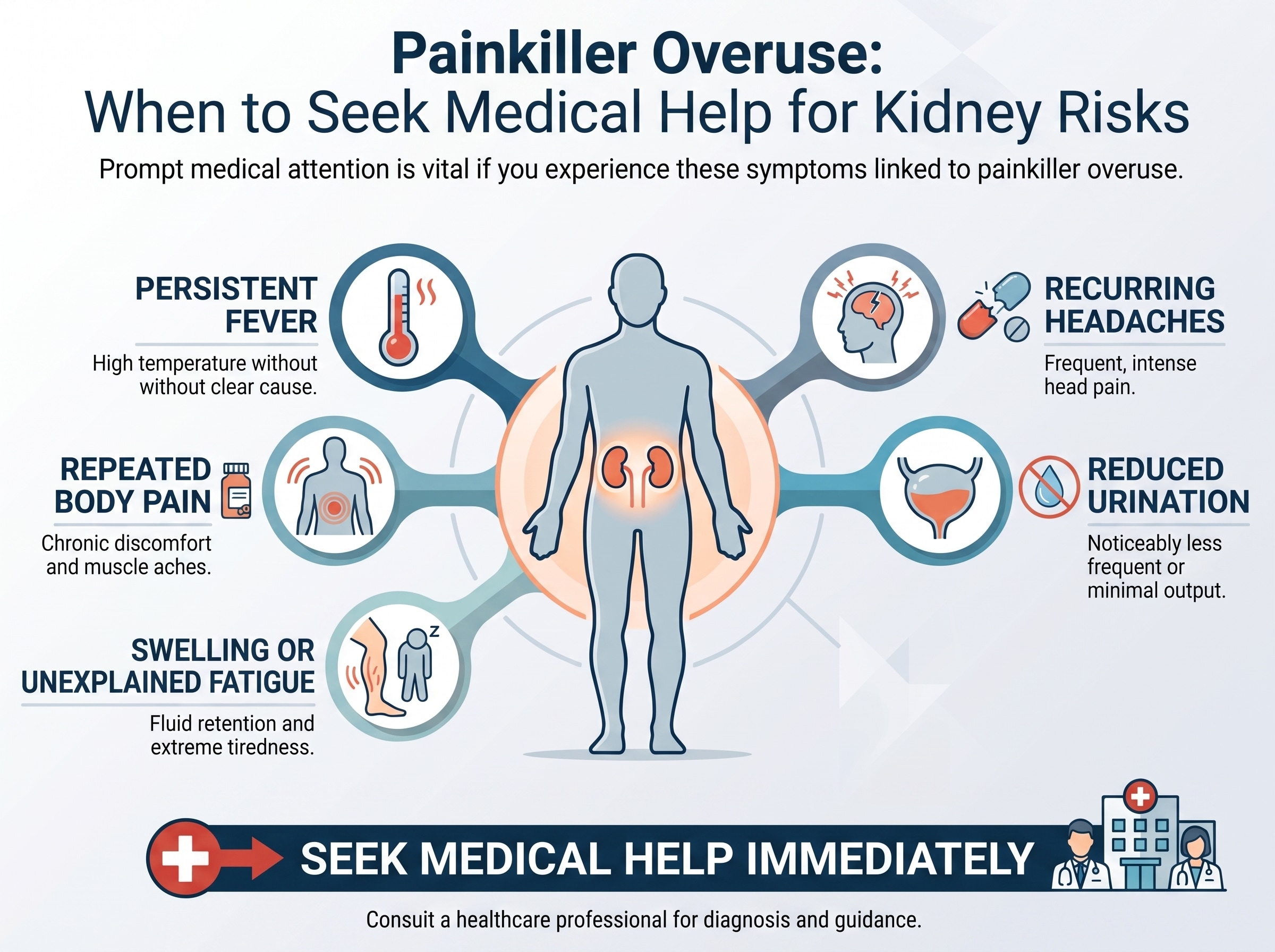
When Should You Seek Medical Help?
The need for medical help becomes necessary if symptoms such as the following are experienced:
- Persistent fever
- Recurring headaches
- Repeated body pain
- Reduced urination
- Swelling or unexplained fatigue
The case of painkiller overuse resulting in severe kidney failure is a cause for use of caution while deciding how many painkillers are necessary. A doctor should be consulted so a safe dose is taken and relief from symptoms is possible.
Also Read: Are Your Kidneys Safe? New Meta-Analysis Reveals A Fast-Spreading Silent Crisis
Disclaimer: This content including advice provides generic information only. It is in no way a substitute for a qualified medical opinion. Always consult a specialist or your own doctor for more information. NDTV does not claim responsibility for this information.