

)
Exercise is an important part of a healthy lifestyle, but should you continue working out when you have H1N1 influenza? While staying active can benefit overall health, exercising during an active flu infection may put additional stress on the body and make you feel worse. H1N1 influenza can cause symptoms such as fever, body aches, fatigue, cough and breathing difficulties. During an infection, the body is already working hard to fight the virus and recover. Adding an intense workout to the mix can increase the demand on the heart, lungs and muscles. According to Dr Chirag Tandon, Director, Internal Medicine, ShardaCare-Healthcity, it is important to listen to your body and avoid exercise when flu symptoms are significant.
Should You Exercise When You Have H1N1?
"Exercise is usually beneficial for overall health, but when you have H1N1 influenza, pushing through a workout can delay recovery and, in some cases, worsen symptoms," Dr Tandon says. Influenza can cause fever, fatigue, muscle aches and respiratory symptoms. Exercise naturally increases heart rate, breathing rate and body temperature. When these demands are added to the stress of an infection, symptoms can become more difficult to manage. For this reason, exercising through significant flu symptoms is generally not advisable.
Fever Is A Clear Sign To Skip The Gym
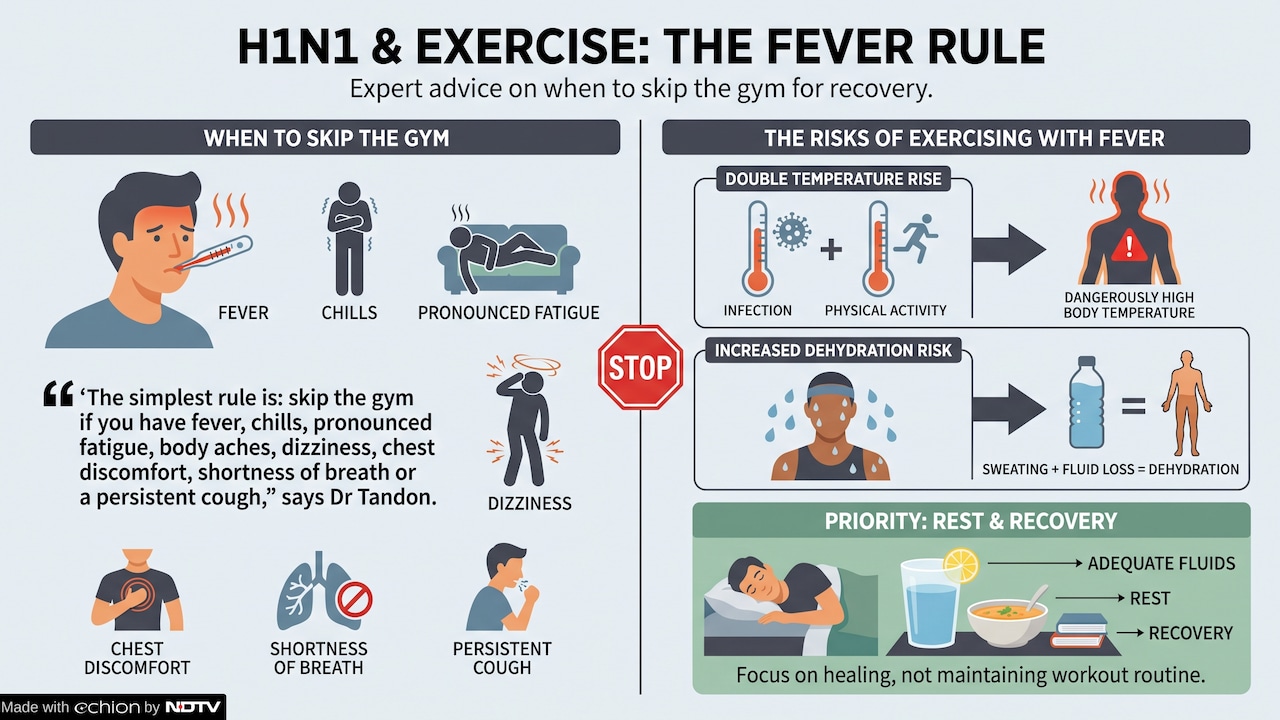
One of the strongest reasons to avoid exercise during H1N1 is fever. "The simplest rule is: skip the gym if you have fever, chills, pronounced fatigue, body aches, dizziness, chest discomfort, shortness of breath or a persistent cough," says Dr Tandon. Exercising with a fever can be particularly problematic because both the infection and physical activity can raise body temperature. Sweating during exercise can also contribute to fluid loss, increasing the risk of dehydration. If you have a fever, the priority should be rest, adequate fluids and recovery rather than trying to maintain your usual workout routine.
You Could Also Spread The Infection
There is another reason to stay away from the gym while you have active influenza protecting other people. Influenza can spread through respiratory droplets and close contact. A gym is a shared indoor environment where people exercise in close proximity and frequently touch common surfaces and equipment. Going to the gym while infectious could therefore expose other people to the virus.
What About Exercise After The Fever Is Gone?
Feeling better after the fever settles does not necessarily mean your body has completely recovered. "Even after the fever settles, do not immediately return to intense training," Dr Tandon advises. After an infection, the body may still need time to regain energy and strength. Prioritise adequate sleep, fluids and nutritious food before returning to your regular exercise routine. Once you feel clearly better, restart gradually. A short walk or gentle stretching can be a better starting point than immediately returning to heavy weight training, running or high-intensity workouts.
Increase Workout Intensity Gradually
If light activity does not bring back symptoms, you can slowly increase the duration and intensity of your workouts. Avoid trying to compensate for missed gym sessions by suddenly exercising harder or for longer. Give your body time to readjust.
"Begin with light activity such as a short walk or gentle stretching before progressing to your usual workout," Dr Tandon says. If fatigue, coughing, dizziness or other symptoms return, stop exercising and give yourself more time to recover.
When Should You Seek Medical Help?
Some symptoms should not be ignored, particularly if they occur during or after an influenza infection. "Chest pain, significant breathing difficulty, confusion, severe weakness or persistent high fever warrants prompt medical attention," says Dr Tandon. People with underlying conditions such as asthma, heart disease or other chronic illnesses may also need additional medical guidance before returning to exercise. Taking a break from the gym when you have H1N1 does not mean losing your fitness progress. In fact, allowing the body to rest can be an important part of recovery.
"When H1N1 is active, rest is not a sign of weakness it is part of recovery," Dr Tandon says. Instead of pushing through illness, focus on sleep, hydration, adequate nutrition and recovery. Once symptoms have clearly improved, gradually return to physical activity and pay attention to how your body responds. Remember, a few days away from the gym are unlikely to undo your fitness progress, but exercising intensely while sick can work against your recovery.
Disclaimer: This content including advice provides generic information only. It is in no way a substitute for a qualified medical opinion. Always consult a specialist or your own doctor for more information. NDTV does not claim responsibility for this information.