

)
Whether you are hitting the gym six days a week or just getting started with strength training, one golden rule remains unchanged: muscle isn't just built on the weight floor, but it's built in the kitchen. While the internet is flooded with extreme bulk-and-cut trends, clinical nutritionists and hospital dietitians advocate for a far more balanced, sustainable approach to hypertrophy. Building lean muscle tissue requires a strategic combination of a mild calorie surplus, precise macronutrient distribution, and consistent nutrient timing. There is an expert-backed guide to structuring a daily diet plan optimised for natural muscle growth, tailored to fit everyday Indian meals that you can implement.
Nutritionists Share What To Eat Every Day For Muscle Gain
Before jumping into meal prep, leading hospital dietitians highlight three fundamental principles every fitness enthusiast must master. Firstly, in order to build muscle without adding unnecessary body fat, target a daily surplus of 300 to 500 calories above your Total Daily Energy Expenditure (TDEE). Secondly, hit your protein target consistently by aiming for 1.6 to 2.2 grams of protein per kilogram of body weight daily. Muscle protein synthesis works best when this intake is distributed across 4 to 5 meals rather than dumped into a single heavy dinner.
Thirdly, carbs are not the enemy; they replenish muscle glycogen reserves, fuel heavy workouts, and prevent your body from breaking down existing muscle tissue for energy.
What The Experts Say: Hospital Nutritionists Weigh In
"Protein intake within 30 minutes post-workout aids recovery, while eating light carbs 1-2 hours before exercise can be beneficial to sustain workout energy," notes Dr Priyanka Rohatgi, Clinical Nutrition and Dietetician at Apollo Hospitals, Bengaluru.
She adds, "Muscle protein synthesis increases significantly post-workout, and glycogen stores need quick replenishment to reduce muscle soreness and repair tissue."
"Cutting carbohydrates aggressively while strength training leaves you under-fuelled, which directly limits how hard you can train and how well you recover," explains senior dietitian Dr Priyanka Rohatgi.
She also says, "Distribution across three to four meals produces better muscle protein synthesis throughout the day than eating one or two large meals."
What To Eat Every Day: 7-Day High-Protein Sample Meal Plan
This routine offers practical, balanced options for both vegetarians and non-vegetarians using everyday kitchen staples:
8:00 AM - Breakfast
Vegetarian Option: 2 Paneer and Oats Cheelas or Stuffed Paneer Paratha and 1 glass whole milk
Non-Vegetarian Option: 3 Boiled/Scrambled Eggs, 2 Whole Wheat Toast slices and 1 glass whole milk
11:00 AM - Mid-Morning Snack
Vegetarian Option: 1 bowl Greek yoghurt topped with almonds, walnuts, and chia seeds
Non-Vegetarian Option: Fruit Smoothie with 1 scoop whey protein, banana, and peanut butter
1:30 PM - Lunch
Vegetarian Option: 1.5 cups brown rice or 2 multigrain rotis, 1 bowl rajma/chole, 100 g paneer/tofu and salad
Non-Vegetarian Option: 2 Multigrain Rotis or 1 cup Brown Rice + 150g Grilled Chicken Breast/Fish Curry + Dal and Salad
5:00 PM - Pre-Workout / Evening Snack
Vegetarian Option: 1 cup Roasted Makhana or Sprouts Chaat and 1 Banana or Peanut Butter Toast
Non-Vegetarian Option: 2 Boiled Egg Whites, 1 Banana and Black Coffee
7:00 PM - Post-Workout
Vegetarian Option: 1 scoop of whey/soy protein isolate mixed in water or milk and 1 fruit
Non-Vegetarian Option: 1 scoop of whey protein isolate with water and 1 fruit
8:30 PM - Dinner
Vegetarian Option: 2 Whole Wheat Rotis, 1 bowl Soya Chunk/Paneer Curry, Mixed Vegetables and Curd
Non-Vegetarian Option: 2 Whole Wheat Rotis, 150g Baked Fish or Lean Chicken Curry and Mixed Vegetables
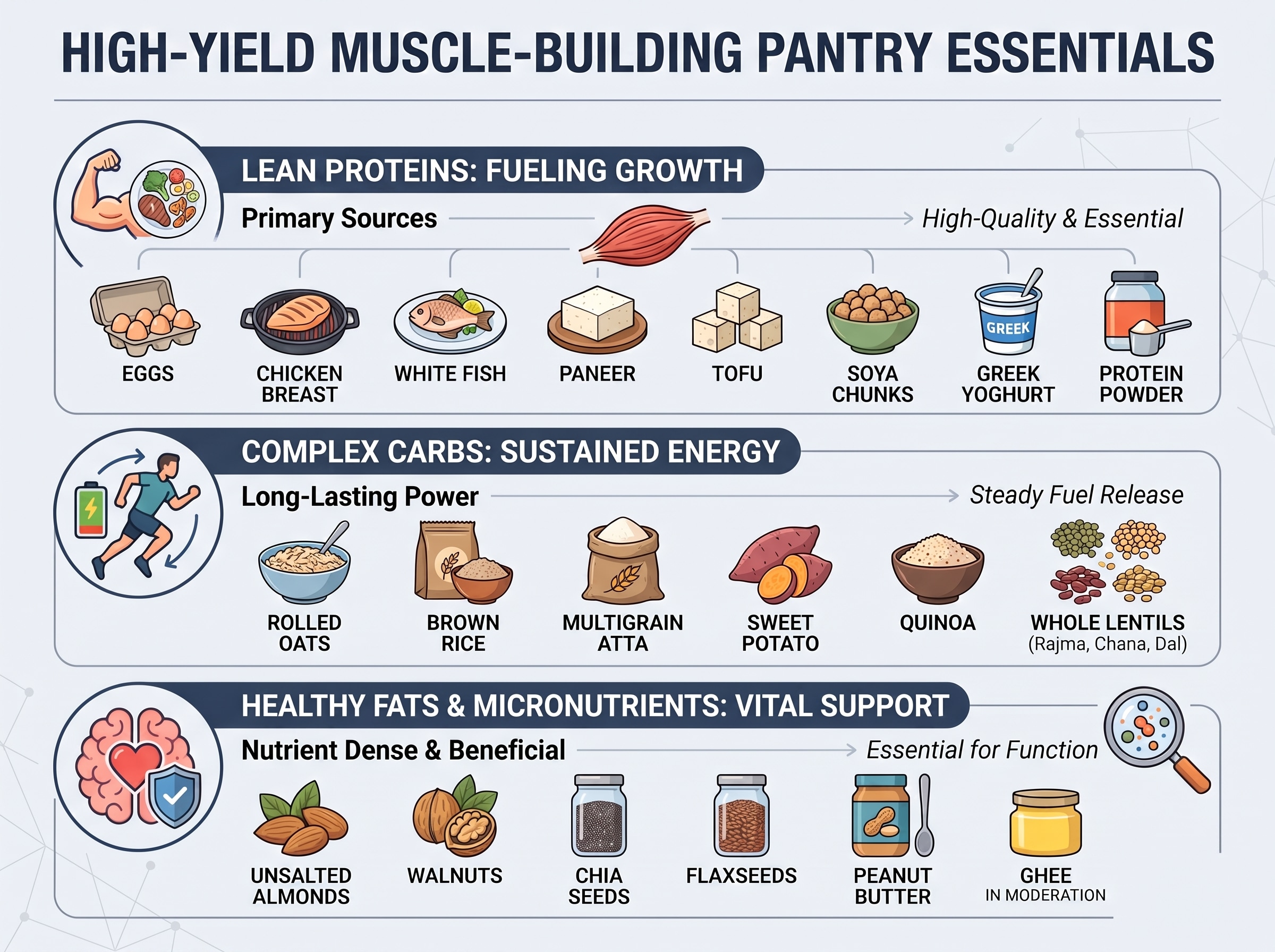
High-Yield Muscle-Building Foods For Your Pantry
- Lean Proteins: Eggs, chicken breast, white fish, paneer, tofu, soya chunks, Greek yoghurt, and high-quality protein powder.
- Complex Carbs: Rolled oats, brown rice, multigrain atta, sweet potatoes, quinoa, and whole lentils (rajma, chana, dal).
- Healthy Fats and Micronutrients: Unsalted almonds, walnuts, chia seeds, flaxseeds, peanut butter, and ghee in moderation.
Clinical Nutritionist Tips for Faster Muscle Recovery
Dr Anita Jatana, Senior Clinical Dietitian, Apollo Hospitals, shares tips for faster muscle recovery:
- Time Your Carbs Around Workouts: Consuming a fast-digesting carb (like a banana or toast) 30 to 45 minutes before exercise boosts output, while post-workout carbs help push protein into damaged muscle fibres.
- Hydration Fuels Hypertrophy: Muscle cells are roughly 75% water. Drinking 3.5 to 4 litres of water daily keeps muscles looking full, transports critical electrolytes, and prevents exercise-induced cramping.
- Prioritise 7-8 Hours Of Rest: Deep sleep triggers the body's natural human growth hormone (GH) release, making nightly rest as critical as your protein intake.
Gaining muscle depends on sticking to the fundamentals and following through a rigid diet plan that can support your fitness and exercise goals.
Also Read: What Happens To Your Body When You Eat Acai Berries Every Day?
Disclaimer: This content including advice provides generic information only. It is in no way a substitute for a qualified medical opinion. Always consult a specialist or your own doctor for more information. NDTV does not claim responsibility for this information.