

)
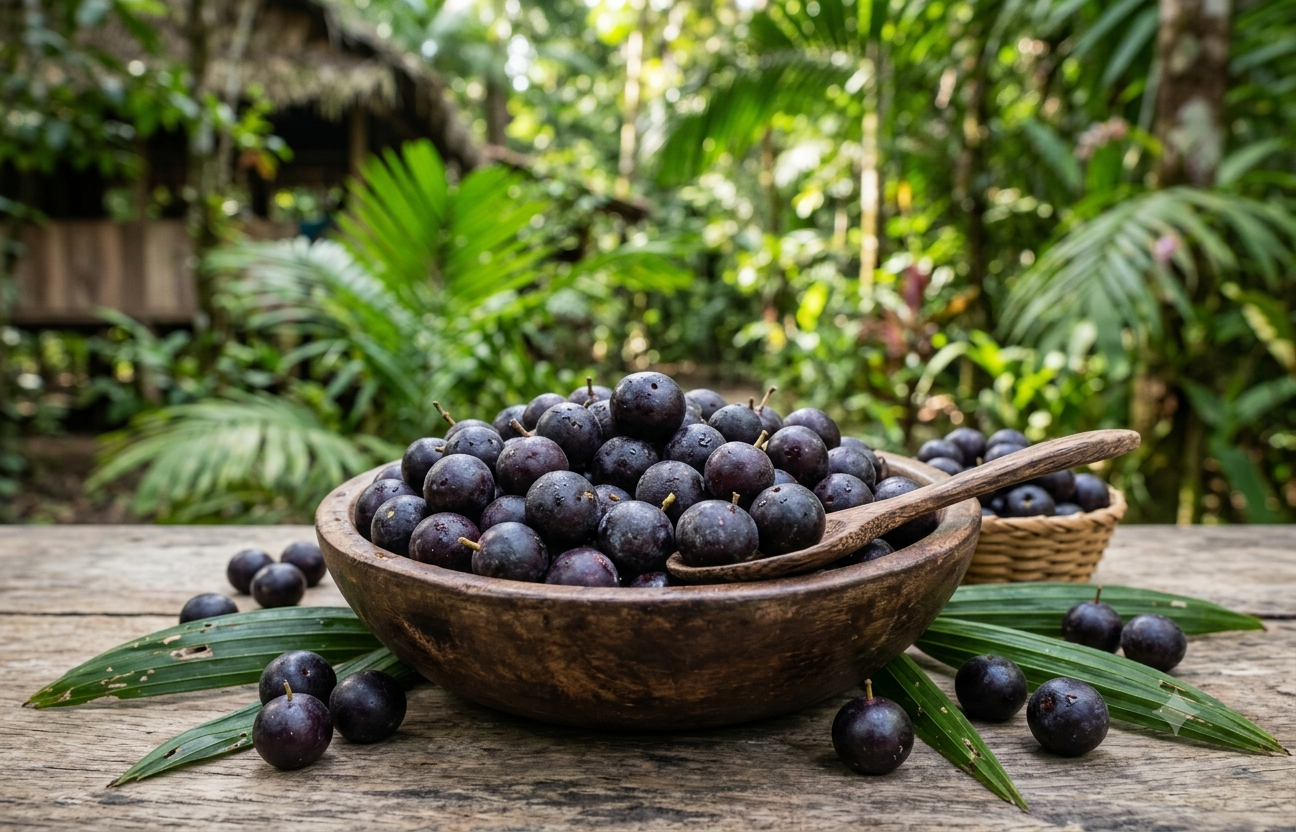
Acai berries have become a popular superfood due to their potent dose of antioxidants. The vibrant bowls of acai berries have also been popularised, which has made it trending to consume the berries daily. But the science behind it also exists, as the Plant Foods for Human Nutrition journal documents that acai berries contain anthocyanins, flavonoids, and phenolic compounds that make it a potent dose of antioxidants. Furthermore, acai berries are easily available in fresh and frozen form for daily consumption and can be combined with probiotic-rich dahi for a healthy breakfast option. This daily habit could prove useful for those who are looking to boost their antioxidant dose and minimise their daily oxidative stress, which can internally age their organs.
What Are Acai Berries?
Acai berries have origins in the Amazon rainforest and are nutrient-dense berries that contain anthocyanins, fibre and healthy fats. The free radical damage that happens on a daily basis when people are exposed to pollutants, dust, or environmental ageing factors can be reduced by the intake of acai berries. The cell-protecting function of acai berries makes them beneficial for daily consumption, and that is not all, as the berries also have other health benefits.
Nutritional Value Of Acai Berries
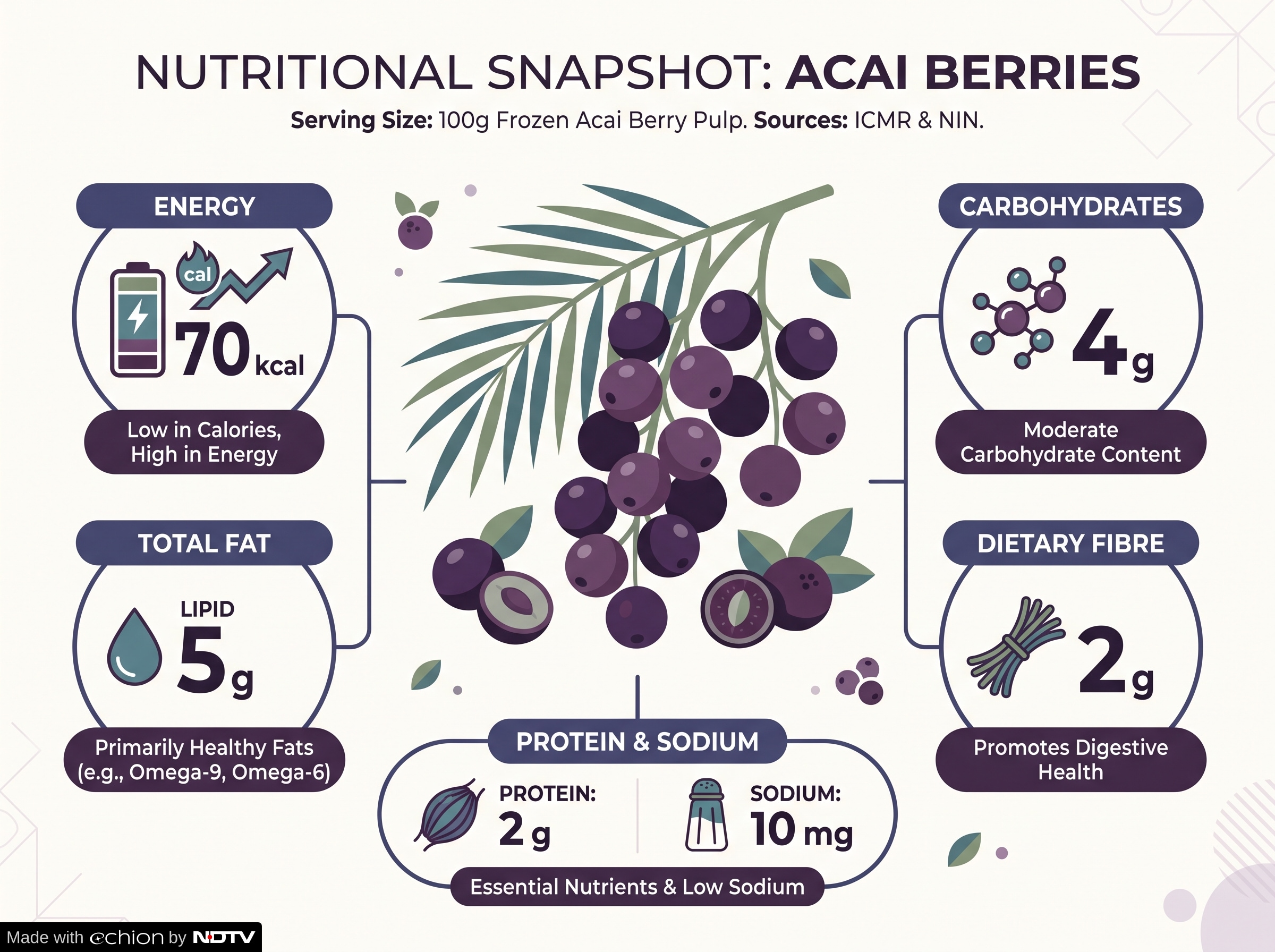
About 100 g of the frozen form of acai berry pulp has the following nutritional values according to the Indian Council of Medical Research (ICMR) and National Institute of Nutrition (NIN):
- Energy: 70 kcal
- Protein: 2 g
- Total Fat: 5 g
- Carbohydrates: 4 g
- Dietary Fibre: 2 g
- Sodium: 10 mg
The key nutrients in acai berries that make them a superfood can be attributed to their high fibre, healthy fats, vitamin E, polyphenols, anthocyanins, and mineral content.
Why Antioxidants Matter
When the daily exposure to oxidative stress is heightened, the risk of chronic disease can increase exponentially. Thus, controlling the daily oxidative stress is essential, and consuming acai berries daily could be a way to do so.
What Happens To Your Body When You Eat Acai Berries Every Day?
The daily consumption of acai berries can help your body by providing essential healthy components that can help your body function better. When controlled doses of acai berries are a part of your diet, your internal immunity can also be strengthened, and thus, your risk of developing chronic disease can be minimised.
1. A Powerful Antioxidant Boost
The nutritional component known as anthocyanins, particularly cyanidin-3-glucoside and cyanidin-3-rutinoside, is behind the oxidative stress-lowering capabilities.
2. May Support Better Heart Health
The Journal of Cardiovascular Pharmacology suggests that acai berries' high polyphenol content can actively support heart health by boosting these aspects:
- Increase nitric oxide production to relax blood vessels
- Reduce oxidative stress
- Have antihypertensive effects
3. Could Help Reduce Inflammation
It could also be used to reduce inflammation in the body, as unchecked acute inflammation can increase risk of serious disease.
4. Supports Gut Health
The ample fibre content in acai berries can support the gut by promoting digestive capabilities and improving the gut microbiota.
5. May Promote Healthy Skin
The skin barrier can benefit from the high antioxidant dose and offer protection to its outermost barrier.
6. Could Support Brain Function
The Journal of Herbmed Pharmacology has documented that daily consumption of acai berries can improve cognitive health, as it can reduce inflammation and protect the powerhouse of the cells. Furthermore, there is clinical evidence that suggests that acai berries can improve memory and boost cognition.
7. May Aid Weight Management
The Nutrients Journal has pinpointed that acai berries can improve fullness as they contain fibre. Instead of indulging in elaborate breakfast spreads, a main meal alongside a glass of acai berry smoothie could offer antioxidants and make you full.
Are There Any Side Effects Of Eating Acai Berries Every Day?
The side effects of eating acai berries every day are limited to the form of consumption. If you are consuming the commercial ready-made version, then added sugars can cause a blood sugar spike. Here are some additional side-effects that you need to be aware of:
- Controlling your portion size is essential.
- People who have berry allergies need to be as careful as possible, as allergic reactions can be triggered.
- Interactions with certain health conditions wherein the absorption capabilities of the gut are compromised.
Who Should Eat Acai Berries With Caution?
Acai berries should be cautiously consumed, as they can cause issues in people:
- Those who have berry allergies need to be especially careful.
- Individuals managing blood sugar levels need to be careful of the sugar content in an acai bowl.
- Those relying on packaged acai products high in sugar need to switch to unsweetened versions.
Best Ways To Add Acai Berries To Your Diet
Acai berries can be smartly added to your diet by using their frozen pulp and turning it into easily consumable things:
- Smoothies
- Acai bowls
- Yoghurt toppings
- Oatmeal
- Homemade frozen desserts
How Much Acai Is Enough?
The exact dose of acai berries depends on your daily exposure to ageing factors and oxidative stress that you need to control. This is why moderation is key and enforcing a balanced dietary pattern is necessary to balance the intake of acai berries in your diet.
Daily consumption of acai berries is related to their antioxidant and other nutritional components. You need to focus on moderating its dose and balancing its intake on a daily basis to safely get benefits from its nutritional content.
Disclaimer: This content including advice provides generic information only. It is in no way a substitute for a qualified medical opinion. Always consult a specialist or your own doctor for more information. NDTV does not claim responsibility for this information.