

Floodwaters from Nepal entering Bihar can create health risks that go beyond the immediate threat of waterlogging and displacement. According to a recent report, fish swept into Bihar by floodwaters from Nepal may pose health risks, the state government has warned, advising locals not to catch, sell, or consume them until the flood situation stabilises. Following flash floods in Nepal, water from the Trishuli River has been flowing into Bihar through the Gandak and Kosi rivers, causing water levels to rise across several northern districts. Authorities say unfamiliar fish species have been spotted in flood-affected areas, and reports suggest that some people fell ill after consuming them. As a precaution, officials have urged the public to avoid handling or eating these fish until normal conditions are restored.
Floods are among the most devastating natural calamities, affecting millions of people every year through loss of life, displacement, damage to infrastructure, and threats to public health. As per World Health Organisation between 1998 and 2017, floods affected more than 2 billion people worldwide, making them one of the most common and devastating natural disasters. The concern has gained attention after unfamiliar fish were reportedly found in parts of Bihar following the movement of floodwaters from Nepal. Authorities have advised people against buying, selling or consuming fish caught from floodwaters until affected water bodies return to normal. But fish is not the only concern. Floodwater can carry sewage, animal waste, agricultural contaminants, and other pollutants, potentially contaminating food and drinking water. According to Dr Manoj Yadav, Consultant - Gastroenterology, Sarvodaya Hospital, Sector-8, Faridabad, the health implications of flooding can extend downstream because rivers originating in or flowing through Nepal eventually enter Bihar.
How Can Nepal's Floodwater Affect Bihar?
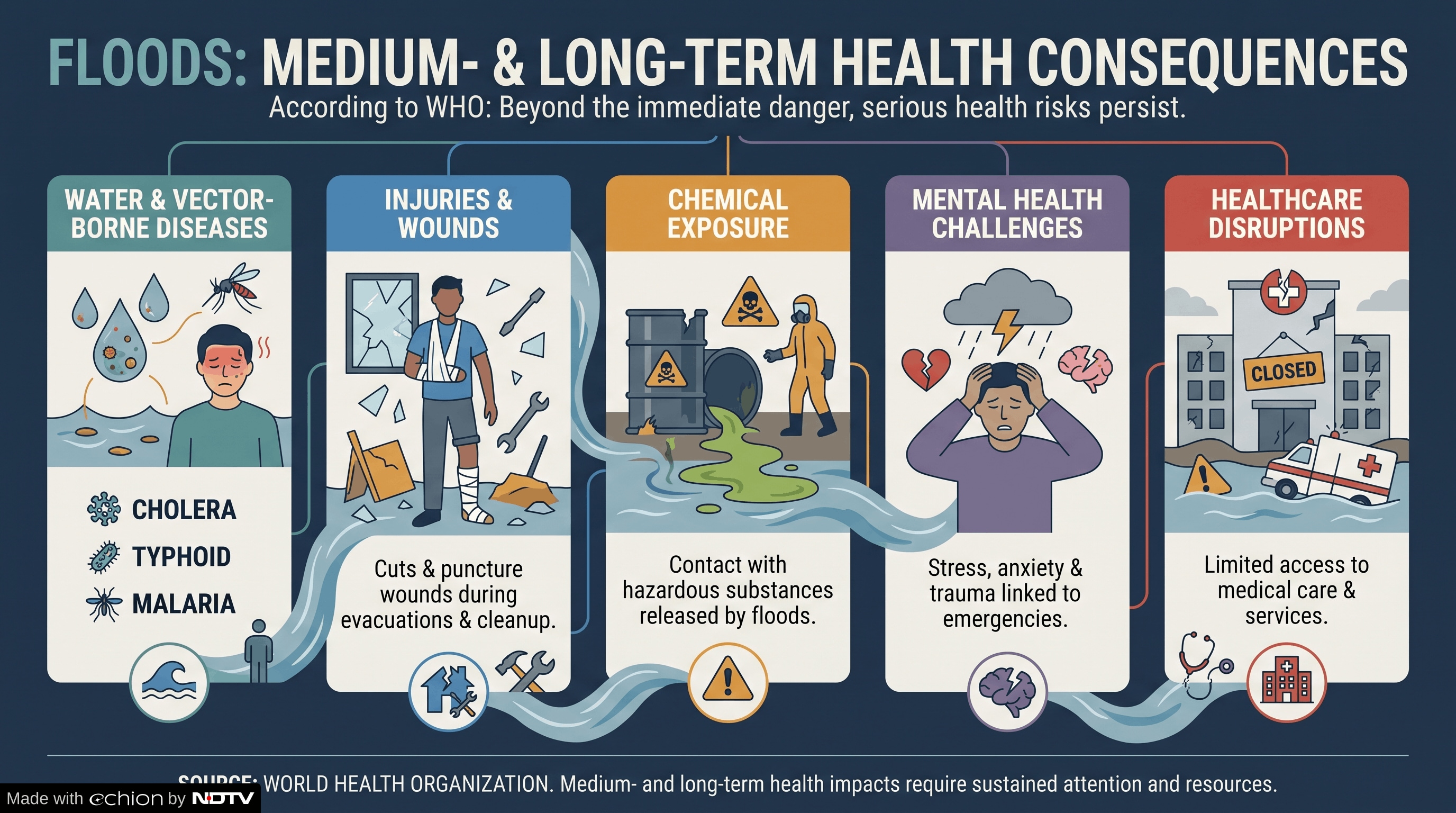
According to WHO, floods can have serious medium- and long-term health consequences, including the spread of water- and vector-borne diseases such as cholera, typhoid and malaria, injuries like cuts and puncture wounds during evacuations and cleanup efforts, exposure to hazardous chemicals, mental health challenges linked to emergency situations, and disruptions to healthcare systems and services that leave communities with limited access to medical care.
Rivers such as the Gandak and Kosi flow downstream into Bihar. During severe flooding, rapidly moving water can carry mud, sewage, animal waste, dead organisms, agricultural contaminants and other debris. When this water enters ponds, rivers and other local water bodies, it can contaminate sources that communities depend on for drinking water, cooking and food. Dr Yadav explains that from a gastroenterology perspective, the biggest concern is the increased risk of food- and water-borne infections.
Also read: Nepal's Floodwater Is Flowing Into Bihar: The Health Risks Are Just Beginning
Contaminated Food Can Cause Stomach Infections
Food that comes into contact with contaminated floodwater can become unsafe to eat. Such food may harbour bacteria, viruses and parasites that can cause acute gastroenteritis. Symptoms may include diarrhoea, vomiting, abdominal cramps, fever and dehydration. The risk is not limited to food that is visibly dirty. Contamination may not always change the appearance, smell or taste of food. This makes it particularly important to avoid consuming food that has been exposed to floodwater, even if it appears normal after cleaning.
"Doctors claim that it is not the question of the variety of fish that is at issue, but the environment in which they traveled. During the floods, mixing of river water, ponds, drainage channels, and sewage channels is a possibility, making fish and other aquatic creatures exposed to all these environmental elements like sewage water, fecal matter of animals, dead animals, mud, etc," says Dr. Yogesh kumar Chhabra, Director- Nephrology, Fortis Hospital, Shalimar Bagh. "Doctors have warned that consumption of food can result in vomiting, diarrhea, stomach cramps, nausea and fever. Extreme sickness will result in dehydration especially in the young children, elderly and vulnerable people. Doctors have also noted that despite thorough cooking which kills most of the germs; it cannot ensure safety if the food has been contaminated with chemicals that are unknown," Dr Chhabra adds.
Why Is Floodwater Fish A Concern?
Fish displaced from rivers, ponds and other water bodies may come into contact with sewage, animal waste and decaying organisms during flooding. This can increase the possibility of contamination. Dr Yadav says the recent concern over unfamiliar fish appearing in Bihar after floodwaters from Nepal is particularly relevant because aquatic animals may have been exposed to contaminated environments. Authorities have therefore advised people not to buy, sell or consume fish caught directly from floodwaters until affected water bodies return to normal. People should avoid assuming that cooking alone makes fish caught from contaminated floodwater safe.
What Other Infections Can Spread Through Contaminated Water?
Flooding can increase exposure to pathogens that cause several gastrointestinal and other infections. Contaminated water can increase the risk of illnesses such as cholera, typhoid and hepatitis A and E. These infections can cause symptoms ranging from diarrhoea and vomiting to fever, abdominal discomfort and, in some cases, more serious complications.
Children, older adults and people with weakened immunity can be particularly vulnerable to dehydration and complications from gastrointestinal infections. According to Dr. Sanjay Kumar, Senior Director Cardiology, Fortis Hospital, Faridabad, the contaminated food could carry bacteria, virus or parasites which would result in symptoms such as vomiting, fever and diarrhoea. In the case of severe illness, there would be an excretion of fluids as well as electrolytes like potassium and sodium from the body which would have an impact on the normal heartbeat of the heart. The other issue that might become an additional health risk is the loss of fluids due to frequent vomiting and diarrhoea. This situation may lead to low blood pressure and inability to ensure the normal flow of blood throughout the body. The increased strain on the heart may become a serious issue for individuals who have any kind of heart diseases or suffer from heart failure.
Avoid Raw And Undercooked Food
During and after flooding, extra caution is needed with food preparation. People should avoid raw or inadequately cooked food, particularly foods that may have been exposed to contaminated water. Street food can also become risky if ingredients, utensils, cooking surfaces or water supplies have been contaminated during flood conditions. Fresh produce that has come into contact with floodwater should not be consumed unless it is considered safe according to local public-health guidance.
Drink Safe Water
Safe drinking water is one of the most important precautions during flooding. Water from potentially contaminated sources should not be consumed without appropriate treatment. Boiling water or using a reliable method of disinfection can help make drinking water safer. Water used for cooking, brushing teeth and preparing beverages should also come from a safe source.
Keep Food-Preparation Areas Clean
Floodwater can contaminate kitchen surfaces, utensils, storage containers and other objects. Food-preparation surfaces and utensils should therefore be thoroughly cleaned and disinfected after possible exposure. Hands should also be washed regularly, particularly before preparing or eating food and after using the toilet or handling potentially contaminated material.
"Consumers should stay away from fish caught from the floods and stick to the food supply whose safety has been confirmed. Anyone who gets symptoms like vomiting, diarrhea, stomach pains, dizziness, and difficulty breathing after consuming such food should consult a doctor immediately," says Chhabra says.
Watch Out For Signs Of Infection
People who consume potentially contaminated food or water should pay attention to symptoms. Persistent diarrhoea, repeated vomiting, severe abdominal pain, high fever or blood in the stools requires medical attention.
Signs of dehydration, such as very little urination, extreme weakness, dizziness, excessive thirst or unusual drowsiness, should also not be ignored. Severe dehydration can become dangerous, particularly in children and older adults.
Flooding can disrupt food and water safety long after the immediate water levels begin to fall. In Bihar, the downstream movement of floodwater from rivers flowing through Nepal can potentially introduce contaminants into local water bodies and food sources. The concern is therefore not limited to fish caught from floodwaters. Food exposed to contaminated water, unsafe drinking water and poorly handled street food can all increase the risk of gastrointestinal infections. Avoiding floodwater fish, drinking safely treated water, eating thoroughly cooked food, maintaining kitchen hygiene and seeking medical attention for persistent or severe symptoms can help reduce the health risks associated with contaminated food and water.
Disclaimer: This content including advice provides generic information only. It is in no way a substitute for a qualified medical opinion. Always consult a specialist or your own doctor for more information. NDTV does not claim responsibility for this information.