

)
PCOS, or Polycystic Ovarian Syndrome, has been renamed Polyendocrine Metabolic Ovarian Syndrome, or PMOS, in May of 2026 due to its vast effects on health. Currently, 1 in 8 women globally are effected by PMOS, while in India around 11.3% of women suffer from the reproductive health disorder, which makes the prevalence roughly 1 in 9. Despite having a normal body mass index, the condition can affect women in the form of symptoms that can range from irregular periods, infrequent periods, missed periods, or heavy menstrual bleeding when periods occur.
PCOS signs of PMOS include excess androgen syndrome, increased facial and body hair, acne or persistent syndrome, oily skin, and thinning hair or hair loss. Alongside these signs, fertility-related issues such as difficulty conceiving, irregular or absent ovulation, and infertility are also present. The renaming of the syndrome primarily took place as the condition also affects metabolism in the form of insulin resistance, increased risk of prediabetes or type 2 diabetes, darkened skin patches and skin tags. That is not all; weight-related issues such as excessive weight gain or difficulty losing weight are also common. Some women who are affected by PMOS also show symptoms such as fatigue, mood changes, anxiety, depression, sleep disturbances, and even pelvic discomfort.
What Is Lean PCOS?
Dr Palak Dewaan, Consultant - Gynaecology, RG Hospitals, Faridabad, explains, "One of the biggest misconceptions about PCOS is that it only affects women who are overweight. While weight gain is common in many women with PCOS, a significant number of women have a normal BMI and can still experience the hormonal and metabolic changes associated with the condition. This is often referred to as "lean PCOS."
He adds, "PCOS does not look the same in every woman. A woman with lean PCOS may experience irregular periods, acne, excessive facial or body hair, thinning of hair, and infertility-related difficulty conceiving."
Dr Palak Dewaan pinpoints, "Some may have only a few symptoms, which is why the condition can sometimes go undiagnosed for years."
Can Thin Women Really Have PCOS?
He also highlights, "What is important to understand is that body weight is not the only factor when it comes to PCOS. Even women who appear to have hair and infertility-related issues can have hormonal imbalances or insulin resistance."
"Insulin resistance is commonly associated with obesity, but it can also be present in women with lean PCOS. This can affect hormone levels and ovulation and may increase the risk of metabolic issues over time, explains Dr Palak Dewaan.
Furthermore, clinical research published in the JAMA network mentions that PMOS affects women with a normal body mass index, as a majority of Indian women don't have obesity but have PMOS.
Common Symptoms Of Lean PCOS
Lean PMOS can result in symptoms that could be related to menstruation, facial features, reproductive issues, and hormonal problems. The most common symptoms include:
- Irregular or missed periods
- Acne and oily skin
- Excess facial or body hair
- Hair thinning or hair fall
- Difficulty conceiving
- Unexplained hormonal symptoms
Why Lean PCOS Often Goes Undiagnosed
Lean PCOS often goes undiagnosed, as the symptoms of the condition may be mild in nature and most women don't fit the typical profile.
The delay in diagnosis can affect the fertility outcomes and metabolic health of women, causing long-term impact on their health.
Insulin Resistance And Lean PCOS: The Important Connection
Dr Palak Dewaan explains, "When we talk about PCOS, most people immediately think of irregular periods, acne, unwanted facial hair or difficulty conceiving. However, PCOS is not just a reproductive health condition. For many women, it also has a strong connection with metabolic health, particularly insulin resistance."
He adds, "Insulin is a hormone that helps the body use glucose, or sugar, from the blood for energy. When the body does not respond effectively to insulin, it may produce more insulin to compensate. This is known as insulin resistance.
"In women with PCOS, higher insulin levels can contribute to increased production of androgens, or male hormones. This can interfere with normal ovulation and contribute to symptoms such as irregular periods, acne and excessive facial or body hair, highlights Dr Palak Dewaan.
He also pinpoints, "The important thing to remember is that insulin resistance may not always cause obvious symptoms. Many women may not realise there is a problem until they undergo a medical evaluation. Over time, insulin resistance can increase the risk of prediabetes and type 2 diabetes. It may also be linked to other metabolic concerns."
Can You Have Insulin Resistance Without Being Overweight?
Dr Palak Dewaan warns, "Weight is certainly one factor, but insulin resistance can also occur in women who are not overweight. This is why women with PCOS should not focus only on their menstrual cycles or visible symptoms. Their overall metabolic health also needs attention."
Why Blood Sugar Health Matters In PCOS
Blood sugar health matters in PCOS, as the Lancet Journal explains its impact on metabolism. The potential risks associated with PCOS are its apparent elevated risk of metabolic disorders such as prediabetes, type 2 diabetes, heart and metabolic complications, and ovulation problems.
How Is Lean PCOS Diagnosed?
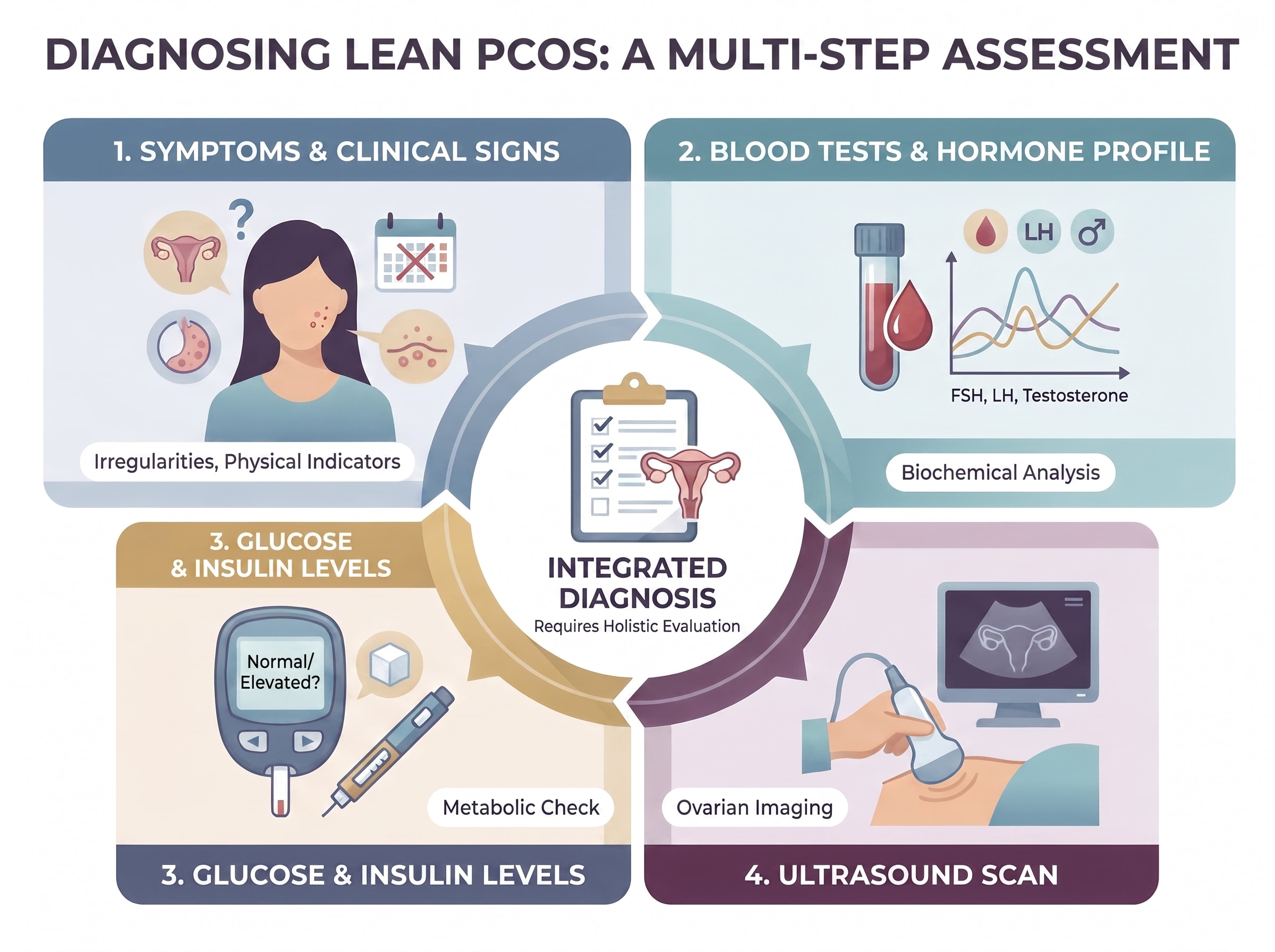
The exact diagnosis of lean PCOS can only happen when the doctors can assess the complete menstrual history and certain other factors, such as:
- Symptoms
- Blood tests
- Hormone profile
- Glucose and insulin levels
- Ultrasound scan
Conditions That Need To Be Ruled Out
The medical conditions that may need to be ruled out that can cause similar symptoms could be:
- Thyroid disorders
- Hyperprolactinaemia
- Other hormonal conditions
Can Lean PCOS Affect Fertility?
The Journal of Diabetes and Metabolic Disorders has pointed out that PMOS could result in reduced fertility by:
- Irregular ovulation
- Challenges with conception
The early diagnosis of PMOS is essential, as there can be a long-term impact on the health of those who are affected.
Treatment For Lean PCOS
Dr Palak Dewaan explains, "Simple lifestyle measures can make a meaningful difference."
He explains these types of treatment options work:
- Regular physical activity
- A balanced diet rich in fibre and protein
- Limiting highly processed foods and refined sugars
- Getting adequate sleep and managing stress can all help improve insulin sensitivity
He adds, "In some cases, medication may also be advised based on the individual's symptoms and metabolic profile."
"PCOS management should be holistic. It is not just about making periods regular or treating acne. Understanding what is happening inside the body, including blood sugar and metabolic health, is equally important," explains Dr Palak Dewaan.
When Should You See A Doctor?
A doctor consultation is essential when an individual experiences any of these signs:
- Irregular periods
- Persistent acne
- Excessive hair growth
- Hair thinning
- Fertility concerns
Dr Palak Dewaan concludes, "Early assessment and regular follow-up can help identify potential risks and allow women to take timely steps towards protecting both their reproductive and long-term health."
Also Read: National Nutrition Week: Add These Foods To Your Diet, And You Shouldn't Need Too Many Supplements
Disclaimer: This content including advice provides generic information only. It is in no way a substitute for a qualified medical opinion. Always consult a specialist or your own doctor for more information. NDTV does not claim responsibility for this information.