

)
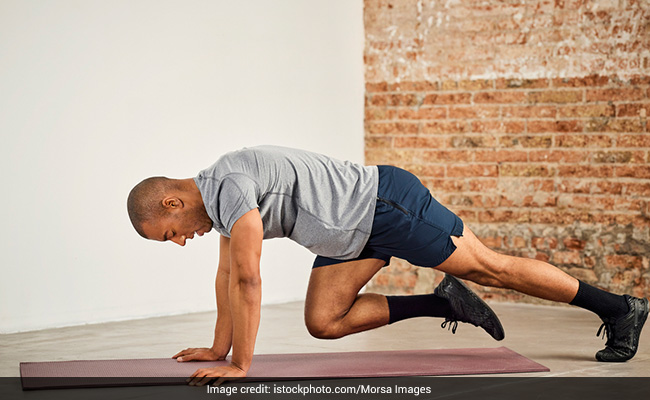
Think you need a gym membership or a rack full of weights to build muscle? Not necessarily. Your own body weight can provide enough resistance to challenge your muscles, improve strength and build lean muscle when the exercises are performed consistently and progressively. Whether you are travelling, working out at home or simply don't enjoy the gym, bodyweight exercises can form the foundation of an effective strength-training routine. The key is to make the exercises progressively harder rather than simply doing hundreds of repetitions. Here are seven bodyweight exercises that can help you train different muscle groups without requiring weights or gym equipment.
1. Push-Ups
Push-ups are one of the simplest and easiest ways to train the upper body using your own body weight. They primarily work the chest, shoulders and triceps, while the abdominal and back muscles also work to keep the body stable. Start in a high-plank position with your hands slightly wider than your shoulders. Keep your body in a straight line and lower your chest towards the floor while bending your elbows. Push yourself back up without allowing your hips to drop. If standard push-ups become easy, you can increase the challenge with variations such as close-grip, decline or paused push-ups.
2. Squats
You don't need a barbell to challenge your legs. Bodyweight squats primarily target the quadriceps and glutes while also involving the hamstrings and core. Stand with your feet roughly shoulder-width apart. Push your hips back and bend your knees to lower your body while keeping your chest lifted. Push through your feet to return to the starting position. Once regular squats become easy, try slower repetitions, pause squats or single-leg variations to increase the challenge.
3. Pull-Ups
If you have access to a sturdy pull-up bar, pull-ups are an excellent bodyweight exercise for developing the back and arms. They primarily work the latissimus dorsi, while the biceps, shoulders and core also contribute. Grip the bar firmly and pull your body upwards until your chin reaches or passes the bar. Lower yourself under control rather than simply dropping down. If you cannot perform a full pull-up yet, assisted variations and controlled negative repetitions can help you build the required strength.
4. Lunges
Lunges are another effective way to train the lower body without weights. They work the quadriceps, glutes and hamstrings while also challenging balance and stability. Stand upright and take a step forward. Lower your body until both knees are bent, keeping your front knee controlled and your torso upright. Push through the front foot to return to the starting position and repeat on the other side. Reverse lunges can be a useful variation if forward lunges feel uncomfortable.
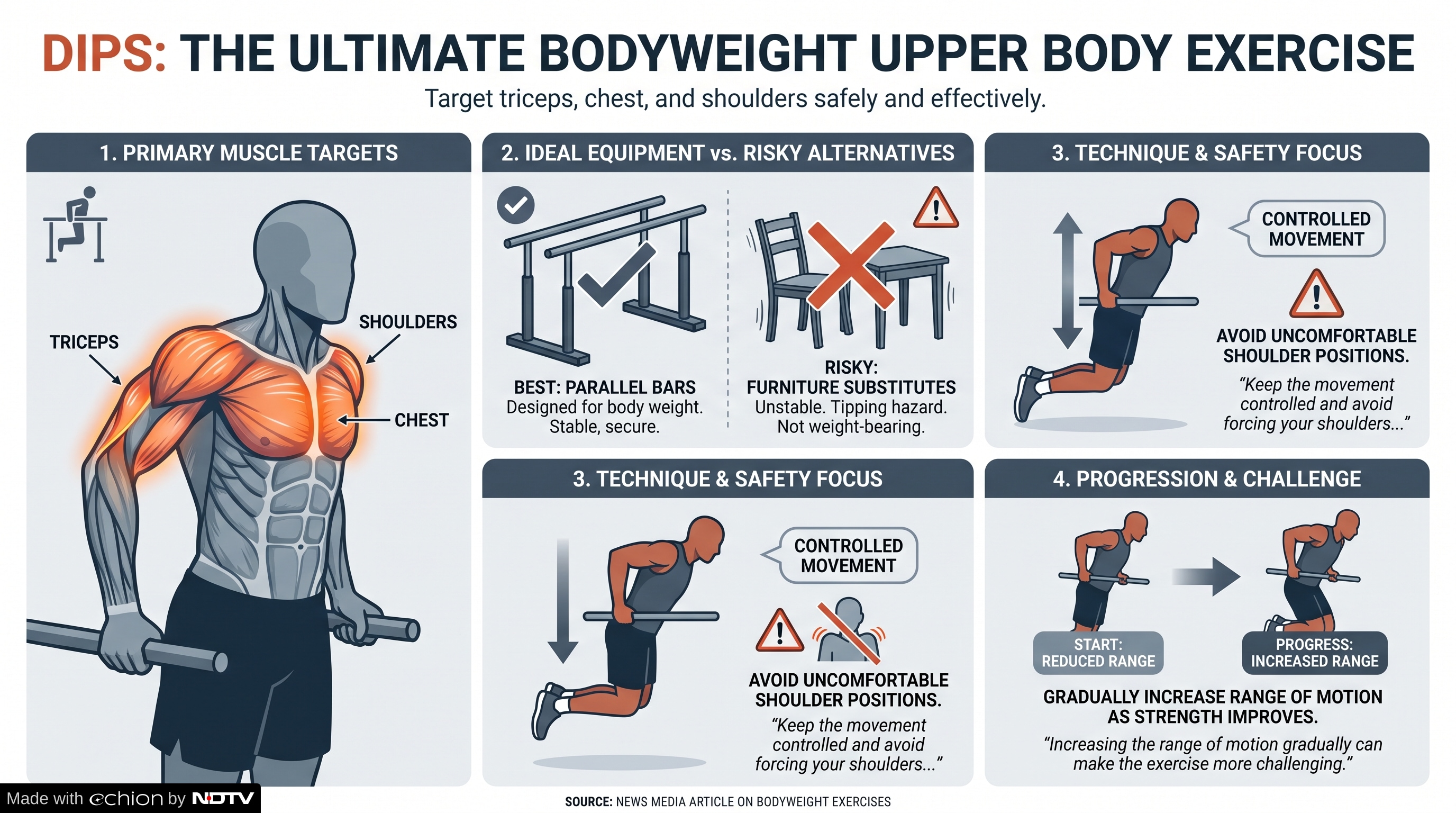
5. Dips
Dips are the best workout to otarget the triceps, chest and shoulders using your body weight. If you have access to parallel bars, they can be performed without additional equipment. At home, however, using furniture as a substitute can be risky unless it is specifically designed to support your body weight and cannot move or tip. Keep the movement controlled and avoid forcing your shoulders into uncomfortable positions. As your strength improves, increasing the range of motion gradually can make the exercise more challenging.
6. Glute Bridges
Your lower body workout doesn't have to stop at squats and lunges. Glute bridges primarily target the glute muscles and can also involve the hamstrings and core. Lie on your back with your knees bent and feet flat on the floor. Keep your feet stable and drive your hips upwards while squeezing your glutes. Pause briefly at the top before lowering your hips slowly. To make the movement more challenging, you can progress to single-leg glute bridges.
7. Pike Push-Ups
Want to challenge your shoulders without dumbbells? Pike push-ups are worth adding to your routine. Sart in a position where your hips are raised and your body forms an inverted V. Bend your elbows and lower your head towards the floor while keeping your hips elevated. Push back up to the starting position.
The exercise places greater emphasis on the shoulders compared with a traditional push-up and can be progressed gradually as your strength improves.
How To Build Muscle With Bodyweight Exercises
Simply performing bodyweight exercises every day does not automatically result in muscle growth. Your muscles need a sufficiently challenging training stimulus. Start with a number of repetitions that makes the final few repetitions challenging while allowing you to maintain proper form. Over time, you can increase repetitions, add sets, slow down the movement, introduce pauses or progress to a more difficult variation.
For example, once 15-20 regular push-ups become relatively easy, you could move to a more challenging variation rather than endlessly increasing repetitions. Recovery also matters. Muscles need time to repair and adapt after resistance training, so avoid training the same muscle groups hard every day.
Don't Forget Protein And Recovery
Exercise is only one part of building muscle. Adequate protein intake provides the amino acids required for muscle repair and growth. Include protein-rich foods such as eggs, dairy, paneer, chicken, fish, soy, beans and lentils as part of a balanced diet. Sleep and recovery are equally important. Consistently getting enough sleep and allowing muscles to recover between demanding workouts can help support your training progress.
You don't need an expensive gym membership or a collection of weights to start strength training. Push-ups, squats, pull-ups, lunges, dips, glute bridges and pike push-ups can provide a challenging full-body workout using little or no equipment. The secret is progressive overload, consistency, proper technique, adequate nutrition and recovery. So, if the gym isn't an option today, don't use that as an excuse to skip your workout. Your own body can be the first piece of fitness equipment you need.
Disclaimer: This content including advice provides generic information only. It is in no way a substitute for a qualified medical opinion. Always consult a specialist or your own doctor for more information. NDTV does not claim responsibility for this information.