

India's health spending story has changed significantly over the past decade. In 2013-14, households paid nearly two-thirds (64.2 percent) of the country's total health expenditure directly from their pockets, while the government's share stood at just 28.6percent. By 2023-24, government spending had risen to 43.5 percent of total health expenditure, almost matching households' share, which fell to 42.7 percent. The numbers suggest that public funding has played a bigger role in easing the financial burden of healthcare on families.
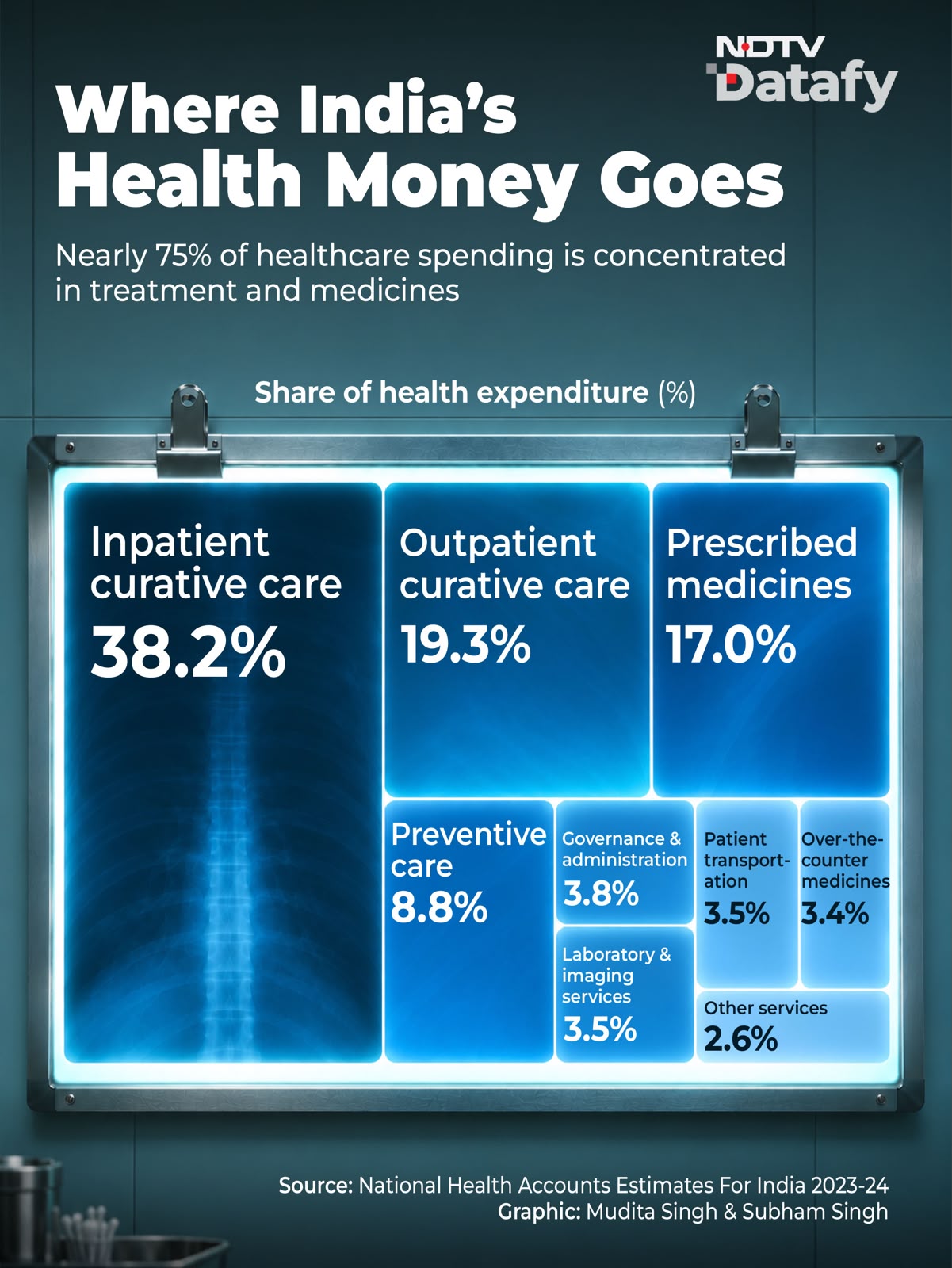
But while the source of funding is changing, the nature of healthcare spending remains largely the same. Hospital treatment continues to account for the largest share of health expenditure. In 2023-24, inpatient care alone consumed ₹3.19 lakh crore, or 38.2 percent of current health expenditure, while outpatient care accounted for another ₹1.61 lakh crore. Medicines were the third-largest expense, with Indians spending nearly ₹1.71 lakh crore on prescription and over-the-counter drugs. Together, treatment and medicines absorbed nearly four out of every five rupees spent on healthcare.
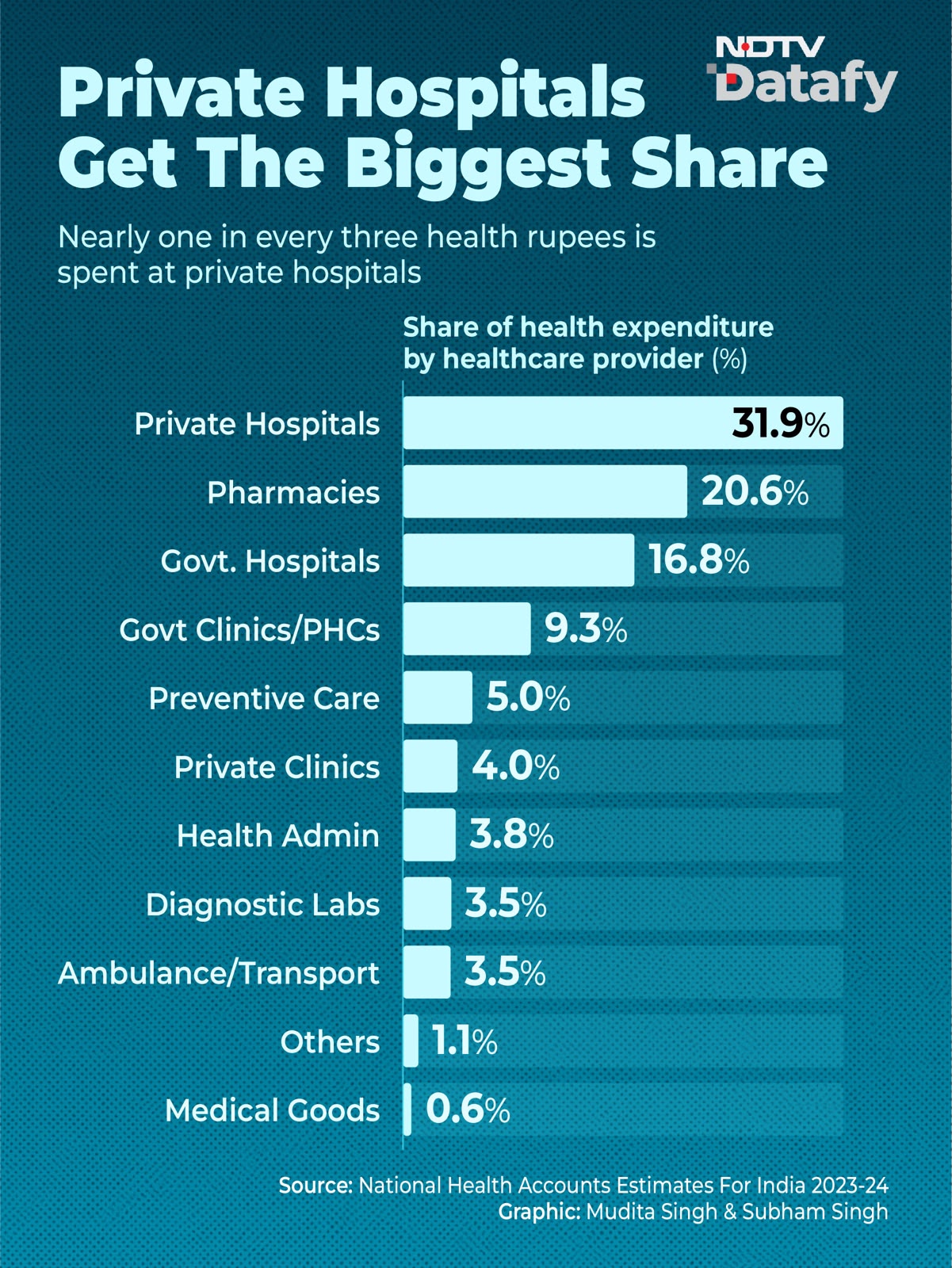
The money is also flowing disproportionately towards private healthcare providers. Private hospitals accounted for nearly one-third (31.9 percent) of current health expenditure, the largest share among all providers. Pharmacies followed with 20.6 percent, while government hospitals accounted for 16.8percent. Government clinics, PHCs and dispensaries together received another 9.3 percent. In other words, more than half of India's healthcare spending ultimately went to private hospitals and pharmacies.
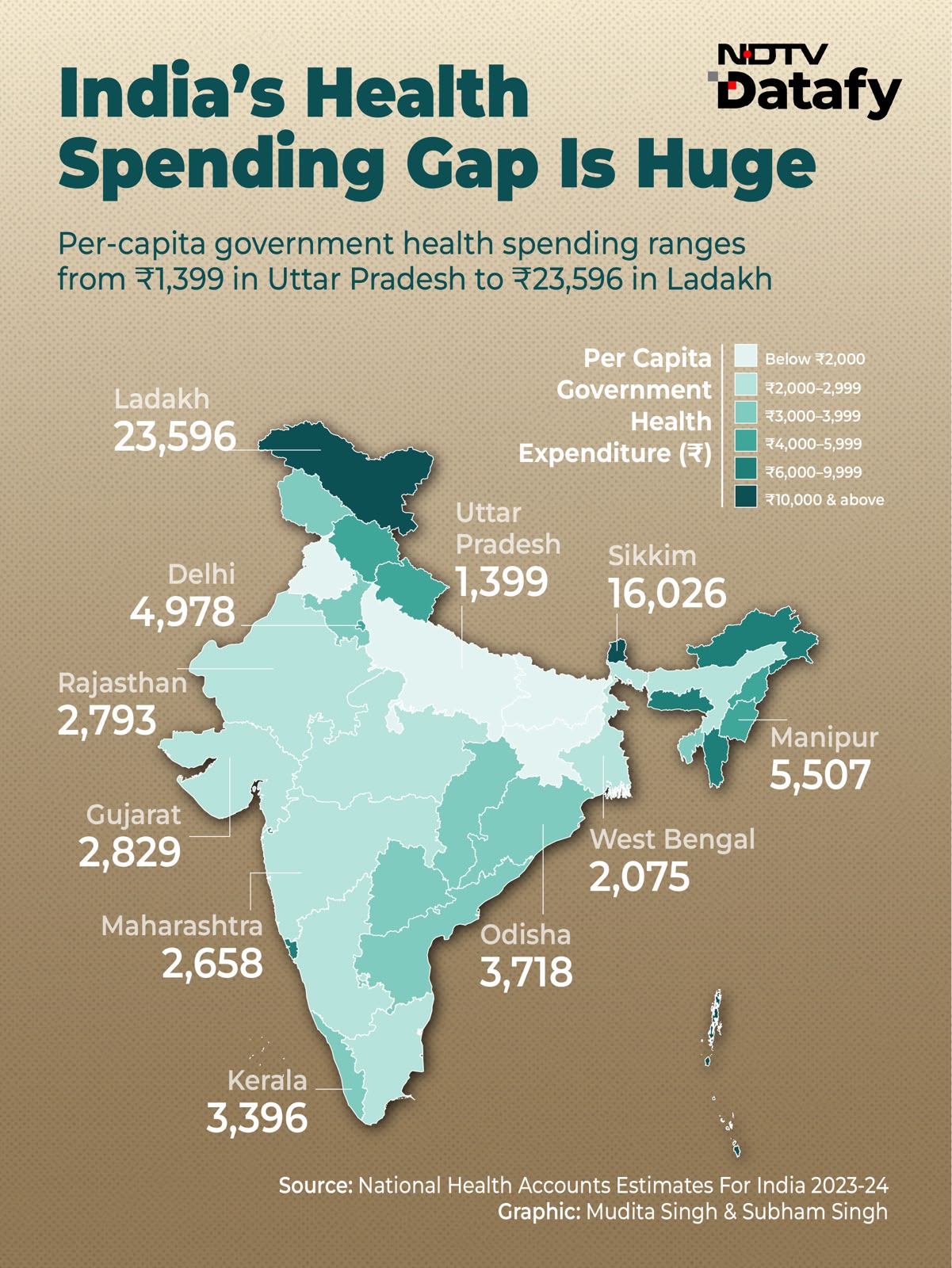
Public investment in healthcare also varies sharply across the country. Per-capita government health expenditure ranged from just ₹1,399 in Uttar Pradesh and ₹1,604 in Jharkhand to ₹16,026 in Sikkim and over ₹31,000 in Lakshadweep. Among large states, Kerala, Chhattisgarh, Uttarakhand and Odisha spent substantially more per resident than Bihar, Uttar Pradesh and Jharkhand. The wide gap highlights how access to publicly funded healthcare can differ depending on where people live.
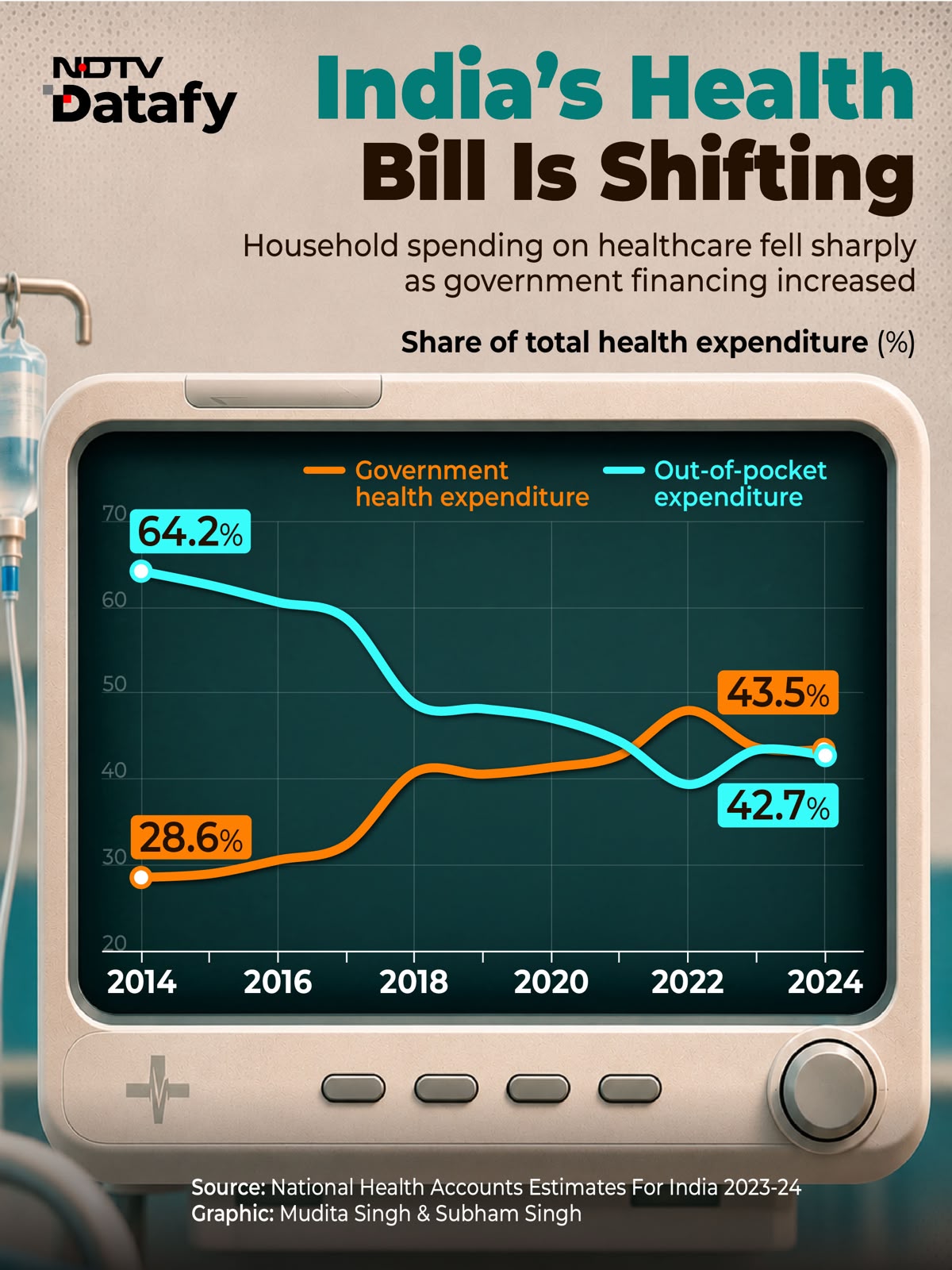
Taken together, the data shows that India has moved towards greater public financing of healthcare over the last decade. However, hospital treatment, medicines and private healthcare providers continue to dominate spending patterns, while substantial differences in government spending persist across states and Union Territories.
Disclaimer: This content including advice provides generic information only. It is in no way a substitute for a qualified medical opinion. Always consult a specialist or your own doctor for more information. NDTV does not claim responsibility for this information.