

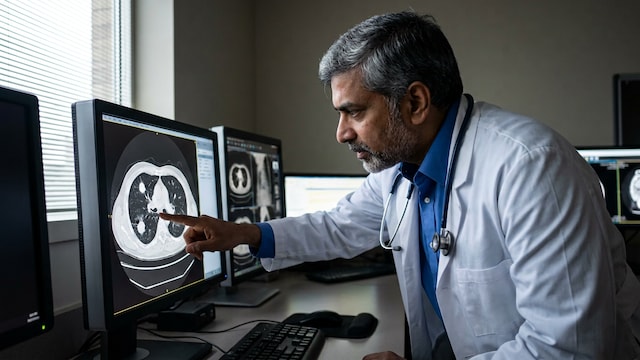
A lung nodule is a small spot or abnormal growth seen in the lung, usually detected accidentally during imaging tests such as a chest CT scan. Hearing the term can be worrying because a nodule may sometimes be linked to lung cancer. However, finding a lung nodule does not automatically mean that a person has cancer. Many nodules are harmless and may develop because of a past infection, inflammation or scarring in the lungs.
Doctors look at several factors before deciding what a lung nodule means and whether it needs further testing. Its size, shape, location, density and growth pattern can provide important clues. A person's age, smoking history, previous cancer and other risk factors also matter. While some suspicious nodules may need tests such as a PET-CT or biopsy, smaller and low-risk nodules can often be safely monitored through follow-up scans.
What Exactly Is A Lung Nodule?
According to Dr Vikas Mittal, Director - Pulmonology at the CK Birla Hospital, Delhi, a lung nodule is a small abnormality or growth in the lung that is often detected incidentally on a CT scan of the chest or thorax.
"Most lung nodules are harmless and can arise from various infections or scarring of the lung," Dr Mittal explains. However, some nodules may require further evaluation to rule out cancer. A nodule is generally assessed based on its appearance and how it behaves over time. A stable nodule that does not grow may be less concerning than one that shows changes on follow-up imaging.
Does Every Lung Nodule Mean Cancer?
No, a lung nodule can have several causes, and cancer is only one possibility. Previous lung infections can leave behind scars or small areas of inflammation that appear as nodules on scans. Some nodules may also be related to other non-cancerous conditions.
At the same time, doctors do not ignore a lung nodule because some can be an early sign of lung cancer. Dr Tejinder Kataria, Chairperson - Radiation Oncology, Medanta Hospital, Gurugram, says a lung nodule "may be one of the first symptoms of lung cancer," which is why it is important to evaluate it carefully. It is important to distinguish between benign and potentially malignant nodules rather than assuming that every nodule is cancerous.
Factors That Determine Whether A Nodule Is Risky
Doctors consider several factors before deciding what should happen next:
- Size: Larger nodules may need closer evaluation than very small ones. Size is one of the important factors that is used to estimate the risk of cancer.
- Shape and appearance: The edges and overall appearance of a nodule on a scan can provide clues about whether it is likely to be benign or suspicious.
- Density: Whether a nodule appears solid, partly solid or has other characteristics on imaging can help doctors decide the next step.
- Growth: Changes in the size of a nodule over time are important. A nodule that grows on follow-up scans may need further investigation.
- Location: Where the nodule is situated in the lung is also considered along with its other imaging characteristics.
- Smoking history: People who smoke or have smoked may have a higher risk of lung cancer, hence, making careful evaluation is very important.
- Age and medical history: Age, previous cancer and other health-related risk factors can affect the overall assessment.
Dr Mittal says the decision about further investigation depends on "the size, shape, position, density, and growth of the nodule" along with factors such as age, smoking habits and other risk factors.
When Is A Biopsy Needed?
A biopsy involves taking a small sample of tissue from the nodule so that it can be examined for cancer cells. But it is not automatically required for every lung nodule. If a nodule is small and appears to have a low risk of being cancerous, doctors may recommend monitoring it with repeat imaging instead. This allows them to check whether it remains stable or changes over time.
If a nodule looks more suspicious, additional tests may be recommended. These can include a PET-CT, which can provide more information about the activity of a suspicious area, or a biopsy to examine the tissue directly. In some cases, surgery may also be considered, particularly when the level of suspicion is high or when other investigations suggest cancer.
Why Is Early Evaluation Important
Although many lung nodules are harmless, a suspicious nodule should not be ignored. Dr Kataria says assessing the nodule from an oncology perspective is important, particularly when a person has risk factors such as smoking or a previous history of cancer.
The aim is not to biopsy every nodule, but to identify which ones need closer attention. "An early and correct evaluation of lung cancer is important in terms of available treatment options for patients because it helps to identify the disease on time," added Dr Kataria.
Disclaimer: This content including advice provides generic information only. It is in no way a substitute for a qualified medical opinion. Always consult a specialist or your own doctor for more information. NDTV does not claim responsibility for this information.