

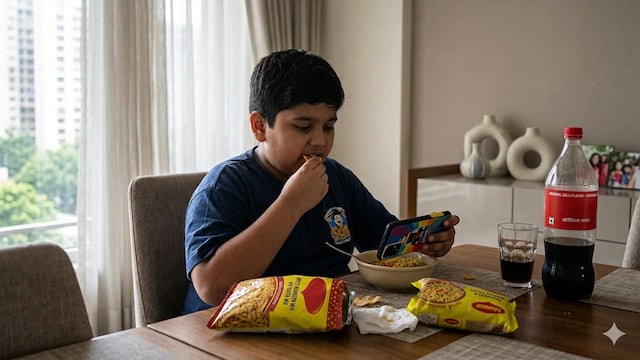
A new study published in JAMA Network Open suggests that higher consumption of ultra-processed foods (UPFs) may be associated with brain responses linked to weight gain in children.
Researchers studied 46 children, with an average age of 8.7 years, using functional MRI scans to examine their responses to food-related cues. Children with higher UPF intake showed greater responses in the dorsal striatum, a brain region involved in reward and motivation. These responses were associated with increases in body mass index (BMI) and body fat over the following year.
The researchers caution that the small, observational study establishes an association, not proof that ultra-processed foods directly alter children's brains or cause weight gain.
'The debate must move beyond obesity'
Dr Arun Gupta, public health expert and convenor of Nutrition Advocacy for Public Interest (NAPi), said the findings raise concerns beyond childhood obesity.
"This study moves the debate from obesity to addiction. Ultra-processed foods are not just making children gain weight; they may also be changing the way their brains respond to food," Gupta said.
He added that food marketing needed greater scrutiny. "This is no longer just a debate about personal choice or parental responsibility. We need to examine how food products are designed, marketed and advertised to children."
Gupta called for policies restricting advertisements for foods high in fat, salt and sugar aimed at children, highlighting the use of cartoon characters, celebrity endorsements and promotional offers to influence their choices.
'The goal is not to make children fearful of food'
READ | India's Increasing Waistline: Lancet Warns Obesity Is The Century's Biggest Avoidable Health Threat
Dr Anand Narayanan, Consultant - Paediatrics at Sarvodaya Hospital, said the findings underline the importance of developing healthy eating habits early in life.
Speaking to NDTV he said "Ultra-processed foods are increasingly common in children's diets, including packaged snacks, sugary cereals, instant noodles, biscuits and ready-to-eat meals. Narayanan emphasised that while families should limit their frequency, the aim should be to encourage balanced eating rather than create anxiety around food choices.
Parents should offer balanced, home-cooked meals containing fruits, vegetables, whole grains, pulses and adequate protein, while encouraging physical activity, sufficient sleep and consistent meal routines."
The goal he reiterated is not to make children fearful of food, but to help them develop a balanced relationship with eating and make healthier choices as they grow.
READ | WHO's New Childhood Obesity Guidelines: What Indian Parents Need To Know
The findings nevertheless add to calls for greater attention to children's food environments, eating habits and exposure to unhealthy food marketing.
Disclaimer: This content including advice provides generic information only. It is in no way a substitute for a qualified medical opinion. Always consult a specialist or your own doctor for more information. NDTV does not claim responsibility for this information.