

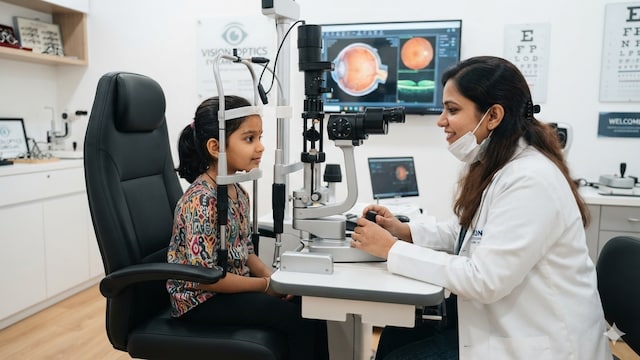
Most people think about their eyes only when something goes wrong. By then, some conditions may take away vision that will not come back. World Sight Day, on 8 October, is a good time to reverse that order. This year's theme is 'LoveYourEyes.' It puts people, personal stories and community action at the centre, so that eye care is accessible, available and affordable to everyone.
India's last national survey shows why these matter. Among people over 50, nearly 93 per cent of blindness was avoidable, and cataract alone caused two in three cases. Most of that sight was lost to conditions we already know how to treat or prevent.
Childhood: Protect the Growing Eye
Myopia is rising fast among Indian children. The eyeball grows too long, light focuses in front of the retina, and distant objects blur. Long hours of close work and too little time outdoors both push this along.
The most effective protection is daylight. Trials suggest about two hours outdoors a day lowers the chance that a child becomes myopic. Researchers believe bright light triggers dopamine release in the retina, which slows the eye's growth. A bright classroom or a seat near a window does not give the same effect.
During homework, use the 20-20-20 rule. Every 20 minutes, look at something 20 feet away for 20 seconds. It rests the focusing muscles and costs nothing.
Do not wait for a child to complain. Children adapt. They squint, sit closer to the board, or assume everyone sees it blurred. Book a first eye check before school entry, and earlier if you notice the child squinting, sitting close to the TV, or a head tilt. Lazy eye (amblyopia) can be treated only while the visual system is still developing.
If your child is already myopic, ask your doctor about myopia control. Low-dose atropine drops and specially designed lenses can slow progression, under a specialist's supervision.
READ | Late-Night Scrolling Is Slowly Harming Your Eyes: Follow These Tips To Safeguard Your Vision
Your 20s and 30s: The screen years
Screens change how you blink. In front of a display, the rate drops sharply, often by half or more. The tear film breaks up, and eyes turn gritty and tired. Blink on purpose. Place the monitor slightly below eye level so the eyelids cover more of the eye's surface. The 20-20-20 rule works for adults too.
Blue-light glasses are a popular purchase. Reviews of the evidence find they do little for eye strain. Spend that money on an eye examination instead. Strain often comes from a small uncorrected refractive error or a focusing problem that glasses can fix.
Redness-relief drops are the second trap. They shrink blood vessels for a few hours, then the redness returns worse. If your eyes feel dry, use preservative-free lubricating drops. Never use a steroid eye drop unless an ophthalmologist has prescribed it and is monitoring you. Steroid drops bought at a pharmacy counter can cause glaucoma and cataracts.
Your 40s and 50s: The decade people skip
Reading glasses arrive around 40, and many people assume that is the only change. It is also when glaucoma begins to appear. Early glaucoma causes no pain and no blurring. Peripheral vision goes first, and the brain fills in the gaps. By the time a person notices, the damage is permanent.
Get a comprehensive eye examination by 40. Go earlier if you have diabetes, a family history of glaucoma, high myopia, or long-term steroid use. A pressure reading alone is not enough. Many Asian patients develop glaucoma at normal eye pressure, so the optic nerve must be checked with imaging and visual field testing.
Diabetes needs its own reminder. Diabetic retinopathy is not a disease of old age. Anyone with diabetes needs a dilated retinal examination every year, starting at diagnosis in type 2 diabetes. The retina can be damaged badly before vision blurs.
READ | Steroid Overuse And Retina Damage: A Side Effect Few Talk About
60 and beyond
A common belief at this age is that reading fine means the eyes are healthy. Reading tests only the centre of vision. The conditions that dominate later life can damage the rest of the eye for years before that changes.
Cataract clouds the lens. Look for glare and halos around lights at night, washed-out colours, and a spectacle number that keeps changing. It is also the encouraging diagnosis in this age group, because surgery restores sight for most people.
Age-related macular degeneration (AMD) affects central vision, the part you use to read and recognise faces. Straight lines that look wavy are an early warning. Cover one eye at a time and look at a door frame or an Amsler grid. Smoking is the strongest modifiable risk factor for AMD, so quitting matters. Special vitamins and oxidants may help, but use them only when recommended by your doctor.
Glaucoma and diabetic retinopathy, discussed above, remain just as relevant here.
Self-checks cannot replace a clinic visit. After 60, see an ophthalmologist every year, especially if you have diabetes, glaucoma, AMD or a family history of eye diseases. The examination should include a pressure check, an optic nerve assessment and a dilated retinal evaluation. Keep blood pressure and blood sugar under control, and wear UV-blocking sunglasses outdoors.
READ | Can Your Eyes Predict A Heart Attack? What Your Retinal Scan Actually Reveals
At any age
Dry eye now affects teenagers and young adults as well. Warm compresses, gentle lid cleaning, a humidifier and regular blinking breaks help more than drinking extra water, which has little proven effect. See a doctor if grittiness persists.
Allergies make eyes itch, and rubbing them damages the cornea. It can also worsen keratoconus. Use a cold compress and drops your doctor has prescribed.
Injuries happen at work, on the sports field and at home. Wear polycarbonate protective eyewear for sports, home repairs and handling harsh cleaning agents. If a chemical splashes into the eye, rinse with clean running water for at least 15 minutes, do not rub, and go straight to an emergency department.
The bottom line
Eye care costs less than most people expect, and is easily accessible. Send children outdoors every day. Get your comprehensive eye examination at 40. Screen your retina every year if you have diabetes. See an ophthalmologist every year after 60. Ignore any product that promises to fix your eyes in a week, and avoid self-medication, especially steroid eye drops. Do not wait for things to get better if your eyes are uncomfortable; ask your eye doctor for advice.
Disclaimer: The opinions expressed within this article are the personal opinions of the author. NDTV is not responsible for the accuracy, completeness, suitability, or validity of any information on this article. All information is provided on an as-is basis. The information, facts or opinions appearing in the article do not reflect the views of NDTV and NDTV does not assume any responsibility or liability for the same.