

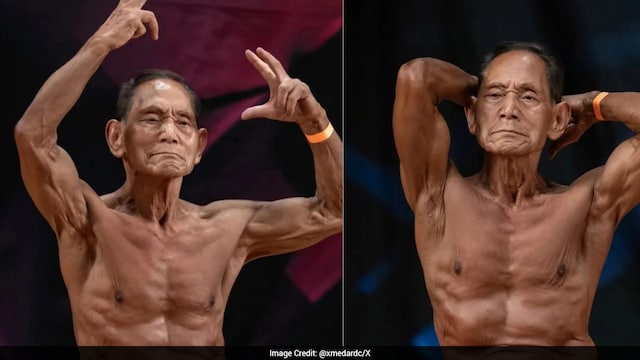
At an age when many people begin to slow down physically, Japanese bodybuilder Koshisuke Kanazawa is still lifting weights, completing sets of pull-ups and competing on the bodybuilding stage. The 90-year-old recently celebrated another milestone in his remarkable sporting career by winning the 85-plus category at the Japan Masters Bodybuilding Championships, adding yet another national title to his collection. What makes his achievement particularly impressive is that Kanazawa has spent decades building and maintaining his physique. From training for several hours a day in his youth to adapting his workouts and eating habits as he grows older, his journey reflects a lifetime of discipline and consistency. He has also made changes to his routine to accommodate his body's changing needs, showing why fitness in older age is not simply about continuing to exercise but knowing when and how to adapt.
Who Is Koshisuke Kanazawa, The 90-Year-Old Japanese Bodybuilder?
Born in 1936 in Shimane prefecture, Japan, Kanazawa initially dreamed of becoming an Olympic swimmer. As a high school student, he excelled in the 1,500-metre freestyle. However, a muscular problem eventually put an end to his Olympic ambitions. Rather than giving up on competitive sport, he turned his attention to bodybuilding. His decision was not immediately welcomed by his family. While his mother remained supportive, his father was opposed to the idea, believing that young men should focus on working. Kanazawa, however, was determined to become one of Japan's best bodybuilders. He spent the next five years dedicating himself to training, reportedly exercising for as long as six hours a day. During this period, he lived a relatively secluded life and relied on simple meals prepared by his mother. Money earned from occasional work delivering electrical appliances went towards buying milk and cheese.
His dedication eventually paid off. At 24, Kanazawa won the Mister Japan title, a feat he repeated three years later. His competitive journey also took him to the international stage. In 1967, he competed in the Mr Universe competition in Montreal, where he finished fourth in an event that also featured Arnold Schwarzenegger and bodybuilding champion Sergio Oliva. He subsequently continued competing in masters bodybuilding and has won six World Masters championships since turning 80. His latest national title, won in the 85-plus category, demonstrates that competitive bodybuilding has remained an important part of his life even at 90.
READ | Want To Know If Your Muscles Are Ageing Well? Try These Tests In Under A Minute
What Is Koshisuke Kanazawa's Diet?
Kanazawa attributes much of his longevity and physical fitness to clean living and a disciplined diet. He has never smoked or consumed alcohol and gave up meat and fish decades ago. As reported by The Guardian, his meals are relatively simple and largely plant-based. His regular food choices include brown rice, furikake, natto and miso soup, into which he adds a couple of raw eggs. Natto, a traditional Japanese food made from fermented soybeans, is a source of plant protein. Brown rice provides carbohydrates and fibre, while eggs contribute protein and other essential nutrients. Kanazawa has also adjusted his protein intake over the years. He reportedly used to consume six protein shakes a day but has reduced this to three, explaining that drinking such large quantities of liquid has become harder as he has aged.
His approach highlights the importance he places on maintaining nutrition while recognising that dietary habits may need to change with age. However, his personal diet should not be treated as a universal template for older adults. Nutritional requirements vary depending on an individual's health, activity levels, medical conditions and nutritional needs. Older adults looking to maintain muscle mass should focus on getting adequate protein and a balanced diet, ideally with guidance from a qualified healthcare professional or dietitian.
What Does His Workout Routine Look Like At 90?
Kanazawa's physique is the result of decades of consistent strength training. Even at 90, he continues to exercise and perform movements such as pull-ups and leg presses. However, his current workout routine is different from the one he followed during his younger years. He no longer performs squats or bench presses and has moved away from free weights. Instead, he prefers using gym machines, which allow him to continue strength training while making adjustments according to his physical capabilities. His approach reflects an important aspect of exercising in older age: the need to modify training rather than blindly follow the same routine throughout life.
Strength training can help older adults maintain muscle mass, support mobility and preserve physical independence. However, the intensity, exercise selection and frequency should be adapted to an individual's fitness level, joint health, balance and medical history.
For someone who has trained for decades, like Kanazawa, these adjustments allow him to remain active without necessarily pushing his body in the same way he did as a young athlete.
Why Strength Training Matters As You Age
Ageing is naturally associated with a gradual decline in muscle mass, strength and physical function. This process, known as sarcopenia, can affect mobility, balance and the ability to carry out everyday activities. Regular resistance exercise is one of the important ways to help counter muscle loss associated with ageing. Exercises using resistance bands, weights or gym machines can help preserve strength and support functional fitness. For older adults who are new to exercise, however, beginning with an intense bodybuilding routine is not advisable. Starting gradually, focusing on proper technique and allowing adequate recovery are important.
The World Health Organization recommends that adults aged 65 and above undertake at least 150 to 300 minutes of moderate-intensity aerobic physical activity each week, alongside muscle-strengthening activities involving major muscle groups on at least two days. Older adults should also incorporate activities that improve balance and functional strength. People with existing health conditions, mobility limitations or a history of injuries should consult a healthcare professional before starting a new exercise programme.
The Importance Of Adapting Fitness Goals With Age
One of the most interesting aspects of Kanazawa's journey is not simply that he continues to lift weights at 90, but that he has learnt to change his approach. He no longer follows the same training routine he did in his twenties or thirties. He has reduced his protein shakes, moved away from certain heavy exercises and chosen equipment that he feels works better for his body. His philosophy is straightforward: do what is best for the body at the age you are.
That is an important lesson for anyone trying to remain physically active over the years. Fitness does not have to mean lifting heavier weights or constantly pushing personal records. Maintaining strength, mobility, balance and independence can be equally meaningful goals.
Kanazawa's story is a reminder that age does not necessarily mean giving up on physical activity or competitive ambitions. His decades-long commitment to training, relatively simple eating habits and willingness to adapt his routine have helped him remain connected to the sport he chose as a young man. At 90, he is still competing, still training and, by his own account, not ready to call time on his bodybuilding career.