

)
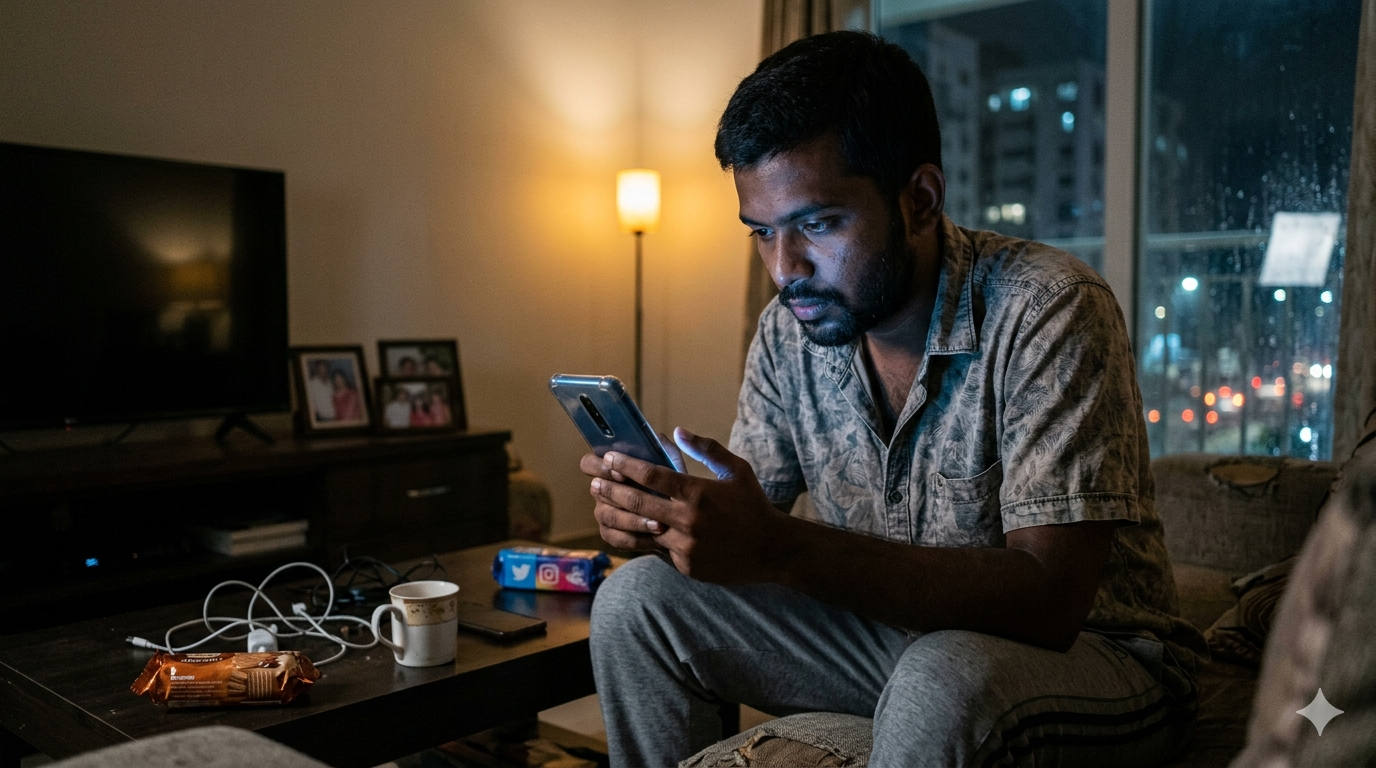
It's 11:45 PM. The room is dark, and the only light is your phone screen, inches from your face. You tell yourself you're checking one last notification. Forty-five minutes later, you're still scrolling.
The conversation has moved past "screens are bad for you." Screens are essential for modern living, most of our lives are online. What matters now is how we use screens in the dark, and the specific strain that habit puts on the eyes.
We've normalised the digital midnight oil. Most of the worry goes toward how it wrecks sleep. Less attention goes to what it does to the surface of the eye itself, and that toll is real.
The Dark-Mode Trap
Blue light suppresses melatonin and delays sleep. That part of the story is well established. But the damage isn't limited to sleeplessness.
Switch your phone to Dark Mode and scroll in a pitch-black room, and your pupils dilate wide to pull in whatever light they can. When bright text or images flash against that dark background, the contrast hits the eye harder than it would in a lit room. Add the downward, hunched posture most people scroll in, and the eyes are under steady strain before the tiredness even sets in.
Sleep-Wake Disruption
Blue light isn't the only circadian factor at play here; timing matters as much as wavelength. Scrolling in bed pushes the brain's "it's still daytime" signal later, delaying the release of melatonin and shifting the whole sleep-wake cycle back. The sleep that follows often starts later and runs shorter, and it tends to be lighter and more fragmented too. Tired eyes the next morning aren't a coincidence; they're the direct result of a shortened, disrupted sleep cycle the night before.
Poor sleep is also linked, in research, to low mood and anxiety, so the eye strain from late-night scrolling rarely arrives alone.
Incomplete Blinking and Dry Eye
Eyes that feel gritty or heavy after an hour of night-scrolling aren't just tired. Something physical is happening on the ocular surface.
A normal blink rate is around 15 to 20 times a minute. Each blink spreads a fresh layer of tears, oil, water and mucus across the cornea. Screen use cuts that rate sharply, sometimes to a third of normal.
Worse, screen use also increases incomplete blinks: the lids don't fully meet, so the meibomian glands (the oil glands along the eyelid margin) don't get the squeeze they need to release oil properly. This oil is essential to tear film health and prevents the evaporation of tears. Research links this pattern to roughly double the risk of dry eye disease. The lower third of the cornea stays exposed longer, tears evaporate faster, and over time the ocular surface starts showing the fine damage typical of chronic dry eye.
The Headache That Isn't Stress
A dull ache around the temples or behind the eyes by 9 PM often gets blamed on work stress. Frequently, it's convergence fatigue instead.
Holding a phone 10 to 12 inches from the face demands two things of the eyes at once: the lens has to reshape to keep text sharp (accommodation), and the eye muscles have to pull both eyes inward to stay locked on one close point (convergence). During the day, the eyes shift focus constantly between near and far. During a late-night scrolling session, they stay locked near for long stretches. By the time the phone goes down, those muscles are cramping, and that strain is felt as a headache along the brow and temples.
Protecting Your Eyes Without Giving Up Your Phone
- Keep a soft light on. Never scroll on a bright screen in a fully dark room; it removes the high-contrast shock to dilated pupils.
- Hold the phone at arm's length where possible, and switch on warm/night-shift colour settings after dark.
- Follow the 20-20-20 rule: every 20 minutes, look at something 20 feet away for 20 seconds.
- Think and Blink: Blink deliberately and fully every few minutes to reset the tear film.
- Keep preservative-free artificial tears on the nightstand if dryness is a recurring problem.
If the ache is one-sided, comes with flashes or floaters, or vision blurs (with or without redness of the eyes), and doesn't clear, that isn't screen strain. See an eye doctor the same day.
Your eyes can handle a phone at night. They just weren't built to stare at a small, bright light source in total darkness for an hour at a stretch.
Disclaimer: The opinions expressed within this article are the personal opinions of the author. NDTV is not responsible for the accuracy, completeness, suitability, or validity of any information on this article. All information is provided on an as-is basis. The information, facts or opinions appearing in the article do not reflect the views of NDTV and NDTV does not assume any responsibility or liability for the same.