

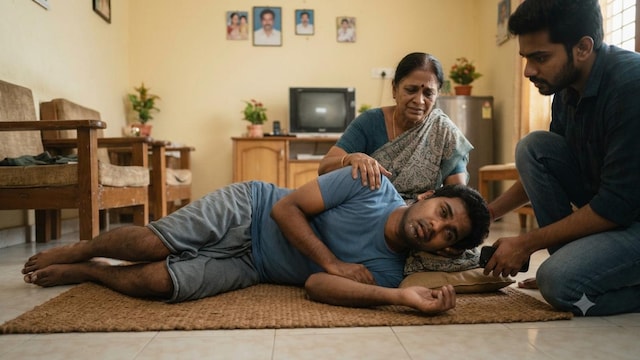
A seizure in case of epliepsy can be a frightening experience, not only for the person experiencing it but also for family members and bystanders. The sudden jerking movements, loss of awareness and temporary inability to respond can leave people unsure about what to do. However, knowing how to respond immediately after a seizure can help prevent injuries, protect the person's airway and ensure timely medical attention. The most important thing is to remain calm, protect the person from injury and monitor their breathing. While many seizures stop on their own within a few minutes, the period immediately afterwards is equally important because the person may remain confused, drowsy or disoriented. According to Dr (Col) Joy Dev Mukherji, Chairman and Head, Neurology, Max Hospital, Saket, the priority after a seizure is to protect the person and ensure normal breathing. Bystanders should note how long the seizure lasts, remove nearby objects that could cause injury and avoid restraining the person or putting anything inside their mouth. Here is a minute-by-minute guide to what you should do after someone experiences a seizure.
First Minute: Ensure Safety And Protect The Person
Dr Gaurav Batra, Principal Consultant, Neurosurgery, Yashoda Medicity, Indirapuram, emphasises the importance of staying calm and ensuring the person's safety. He explains that appropriate positioning, observation and reassurance during recovery can help prevent complications. Once a seizure begins, stay with the person and look for anything nearby that could cause injury. Move sharp, hard or dangerous objects away and place something soft, such as a folded towel or clothing, under their head if possible. Do not attempt to hold the person down or restrict their movements during the seizure. Restraining someone experiencing involuntary muscle contractions can cause injuries.
"It is equally important not to put fingers, spoons, cloth or any other object inside their mouth. A person cannot swallow their tongue during a seizure, and putting something inside the mouth can cause choking or dental injuries. If possible, note when the seizure started. Recording its duration is important because a seizure lasting five minutes or longer is a medical emergency," Dr Batra adds.
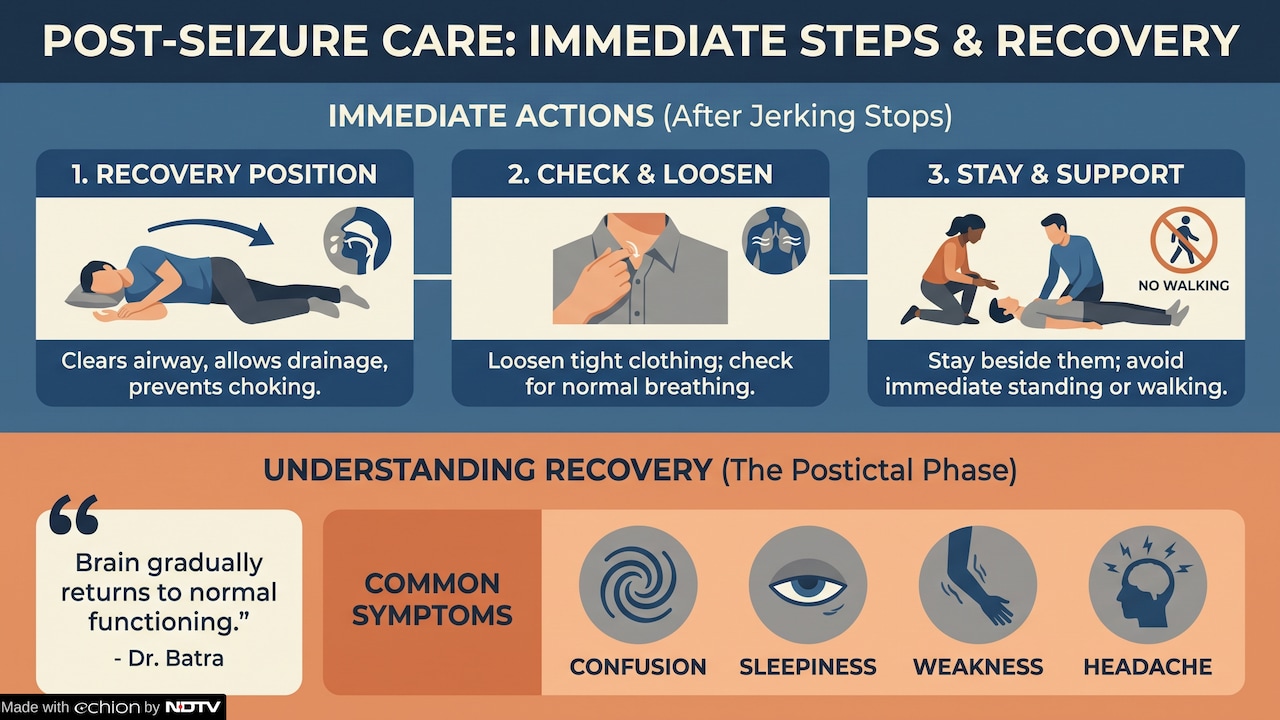
What To Do Right After A Seizure
Next 1-5 Minutes: Position The Person And Check Breathing
Once the jerking movements stop, gently turn the person onto their side, preferably into the recovery position. This helps keep the airway clear and allows saliva or vomit to drain out of the mouth, reducing the risk of choking. Loosen tight clothing around the neck and check whether the person is breathing normally. Stay beside them and avoid attempting to make them stand up or walk immediately. According to Dr Batra, the person may experience confusion, sleepiness, weakness or a headache after a seizure. This recovery period is medically known as the postictal phase, during which the brain gradually returns to its normal functioning. Do not offer food, water or oral medication until the person is fully awake and able to swallow safely. If they have a prescribed seizure rescue medication, follow their individual emergency care plan.
Next 5-10 Minutes: Monitor Recovery And Reassure
After the seizure stops, the person may not immediately recognise their surroundings or understand what has happened. They may appear confused, speak incoherently, feel exhausted or have difficulty responding to questions. Dr Batra advises staying with the person and reassuring them during this period. Avoid crowding them with too many people or asking repeated questions. Observe whether they are gradually regaining consciousness, responding to their name and breathing normally. Allow them to rest and recover without forcing them to get up.
If the person remains unconscious, has difficulty breathing, develops a serious injury or experiences another seizure before regaining consciousness, seek emergency medical assistance immediately.
After 10-15 Minutes: Assess The Person And Seek Medical Help When Needed
Recovery time can vary depending on the type and duration of the seizure. Some people regain awareness within minutes, while others may remain tired or confused for longer. Check whether the person is becoming more alert and responding normally. If they are not recovering as expected, seek medical evaluation.
According to Dr Mukherji, a seizure lasting five minutes or longer requires emergency medical assistance. Emergency help is also necessary if another seizure occurs before the person regains consciousness, breathing becomes difficult or the person sustains a significant injury. A first-ever seizure also requires urgent medical assessment, even if the person appears to have recovered completely. Importantly, do not assume that someone is safe simply because the jerking movements have stopped. Their breathing, responsiveness and overall condition need to be assessed.
When Should You See A Neurosurgeon Following A Seizure?
Not every person who experiences a seizure needs surgery or a neurosurgical consultation. However, specialist evaluation may be necessary when seizures are associated with structural abnormalities in the brain. According to Dr Batra, these may include brain tumours, vascular abnormalities, previous brain injuries, scarring or other structural abnormalities that could contribute to seizure activity. Patients who continue experiencing seizures despite taking two or more appropriate anti-seizure medications may also require evaluation at a specialised epilepsy centre. This condition may indicate drug-resistant epilepsy, for which further investigations and treatment options need to be considered.
What Does A Neurosurgeon Do In Such Cases?
A neurosurgeon evaluates whether an underlying structural problem in the brain could be responsible for recurrent seizures. This assessment may involve reviewing the patient's medical history, brain imaging and electroencephalography (EEG) findings. MRI and CT scans help identify structural abnormalities, while an EEG records electrical activity in the brain and can help identify patterns associated with seizures. If medications fail to control seizures, selected patients may be evaluated for epilepsy surgery. The decision depends on the cause of seizures, their location in the brain, the patient's overall health and the potential benefits and risks of surgery. Not everyone with recurrent seizures is a candidate for surgery. A multidisciplinary epilepsy team, which may include neurologists, epileptologists and neurosurgeons, determines the most appropriate treatment approach.
Knowing what to do after a seizure can make an important difference to a person's safety and recovery. Stay calm, remove nearby hazards, protect the head, turn the person onto their side once the jerking stops and monitor their breathing. Never restrain someone during a seizure or put anything inside their mouth. Most importantly, remember that a seizure lasting five minutes or longer, repeated seizures without recovery, breathing difficulties or a first-ever seizure requires urgent medical attention. The key message is simple: Protect, position and reassure. Allow the person time to recover, and do not delay medical assistance when warning signs appear.
Disclaimer: This content including advice provides generic information only. It is in no way a substitute for a qualified medical opinion. Always consult a specialist or your own doctor for more information. NDTV does not claim responsibility for this information.