

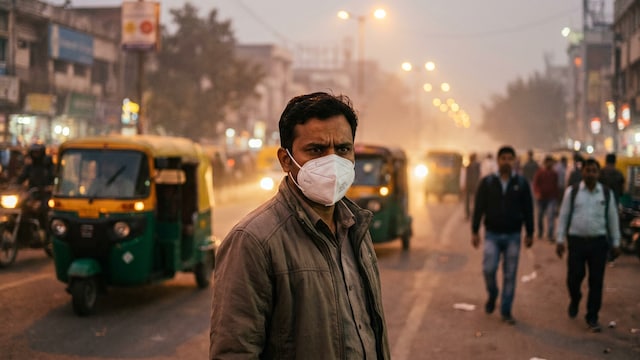
Air pollution levels are rising across several cities in India, and wearing a mask is an important precaution for people stepping outdoors. A lot of people wear N95 masks to reduce their exposure to polluted air. However, simply wearing a mask does not mean your lungs are completely protected. The type of mask you choose, how well it fits your face and how you use it can all affect its ability to filter harmful particles.
Polluted air usually has a mixture of fine particulate matter, dust, smoke and other pollutants that can affect respiratory health. Fine particles, particularly PM2.5, are small enough to travel deep into the lungs and may even enter the bloodstream. Prolonged exposure can worsen asthma, irritate the airways and increase the risk of heart and lung diseases. The best thing one can do is reduce exposure to polluted air, however, that is not always possible. Using an N95 mask can help lower the amount of harmful particles you breathe in, but make sure you wear it correctly and know its limitations.
How Does An N95 Mask Protect You From Air Pollution?
An N95 mask filters at least 95% of airborne particles. It uses specialised filter material to trap tiny particles, including many of the fine particles found in polluted air. This makes the mask useful when pollution levels are high. Unlike cloth masks or ordinary surgical masks, a well-fitted N95 can provide better protection against airborne particulate pollution.
However, the 95% filtration rating applies to the filter under specified test conditions. The actual protection may depend on how well the mask fits your face and whether air leaks around the edges.
Why Is The Fit Of Your Mask Important?
Even a high-quality N95 mask may give you limited protection if it does not fit your face properly. Air can enter through gaps around the nose, cheeks and chin instead of passing through the filter. This allows polluted particles to enter your respiratory system. To get a better fit, press the nose clip against your nose and make sure the mask covers your nose, mouth and chin. The straps should hold it firmly in place without leaving gaps.
Does An N95 Mask Protect Against All Air Pollutants?
An N95 mask is designed to filter airborne particles, including fine particulate matter such as PM2.5. However, it does not protect against every harmful substance present in polluted air. Air pollution may have gases such as nitrogen dioxide, sulphur dioxide, carbon monoxide and ground-level ozone. An N95 mask does not filter these gases or vapours.
This means that the mask can reduce your exposure to some of the most harmful particles in polluted air, but it cannot remove all the risks linked to air pollution.
How Should You Wear An N95 Mask?
It is important to use an N95 mask correctly so that it gives you optimal protection. Here are some of the precautionary steps you must follow.
- Check the mask before use: Make sure it is not torn, damaged or visibly dirty. Make sure that the straps are in good condition
- Cover your nose and chin: The mask should fit securely over your nose, mouth and chin throughout the time you wear it
- Avoid touching it frequently: Repeatedly adjusting the mask can disturb its fit. Wash your hands before putting it on and after removing it
- Replace it when needed: Change the mask if it becomes wet, dirty, damaged or difficult to breathe through, or if its straps become loose
- Do not wash it: Disposable N95 masks should not be washed, as this can damage their filtering material. Follow the instructions for use and disposal
What Else Can You Do To Protect Your Lungs From Air Pollution?
Wearing an N95 mask is only one part of lowering your exposure to polluted air. When pollution levels are high, spend less time outdoors, particularly near busy roads and construction sites. Also, check the Air Quality Index (AQI) before planning outdoor activities. If air quality is poor, avoid strenuous exercise outdoors.
When you're at home, keep windows and doors closed when outdoor pollution is high. Also, consider using an air purifier with a high-efficiency particulate air (HEPA) filter. Keep indoor pollution low by avoiding smoking and limiting activities that generate smoke. People with asthma, chronic lung disease, heart conditions and other health concerns should take particular care during severe air pollution.
Disclaimer: This content including advice provides generic information only. It is in no way a substitute for a qualified medical opinion. Always consult a specialist or your own doctor for more information. NDTV does not claim responsibility for this information.