

)
'Heart attack' and 'cardiac arrest' are terms that are used to refer to medical emergencies wherein the heart's function stops suddenly. But medically they are different, as in one condition the heart is unable to beat due to a lack of blood supply, and in the other the heart stops beating suddenly. There are stark differences between the two medical emergencies, which factor into the first aid that should be given to save a life. If someone experiences a heart attack, then the first aid is different from that for someone who is in cardiac arrest. The American Heart Association mentions that in a heart attack, a blocked artery stops blood from reaching a section of the heart. This blocked artery needs to be reopened medically, as if it is delayed, the section of the heart where it connects will start to die. While a cardiac arrest is sudden and occurs with warning, electrical failure in the heart causes an irregular heartbeat (arrhythmia). Early recognition of a heart attack or a cardiac arrest is important for the survival of the patient.
Heart Attack And Cardiac Arrest: Why The Difference Matters
To get a deeper insight, NDTV spoke to Dr Amit Kumar, Associate Director and Head, Interventional Cardiology, Sarvodaya Hospital, Sector 8, Faridabad, who explains, " Heart attack and cardiac arrest are often used interchangeably, but they are two very different medical emergencies. Understanding the difference can save lives, as the response required for each condition is not the same."
In a heart attack, emergency medical aid is necessary, but the time taken to administer it can vary. The effect on successful recovery depends accordingly. While in a cardiac arrest, immediate medical attention within minutes is needed to avoid death. The two heart conditions are linked, as heart attack and cardiac arrest happen in succession with each other. After a heart attack, an individual can suffer from a sudden cardiac arrest. The medical conditions that increase the chances of a heart attack and cardiac arrest are:
- Cardiomyopathy
- Heart failure
- Arrhythmias, particularly ventricular fibrillation
- Congenital heart defects
- Infections
Dr Amit Kumar adds, "While a heart attack is caused by a blockage that prevents blood flow to the heart muscle, a cardiac arrest occurs when the heart suddenly stops beating effectively due to an electrical malfunction. A heart attack can sometimes trigger a cardiac arrest, but not every heart attack leads to one."
What Is A Heart Attack?
During a heart attack, the arteries that connect the various portions of the heart muscle don't receive blood flow. It is referred to as 'myocardial infarction', and it can be recognised by being aware of the early symptoms. Men's and women's heart attack symptoms differ, and some people also experience silent heart attacks, which need to be caught at the right time to preserve heart function.
Common Heart Attack Symptoms In Men
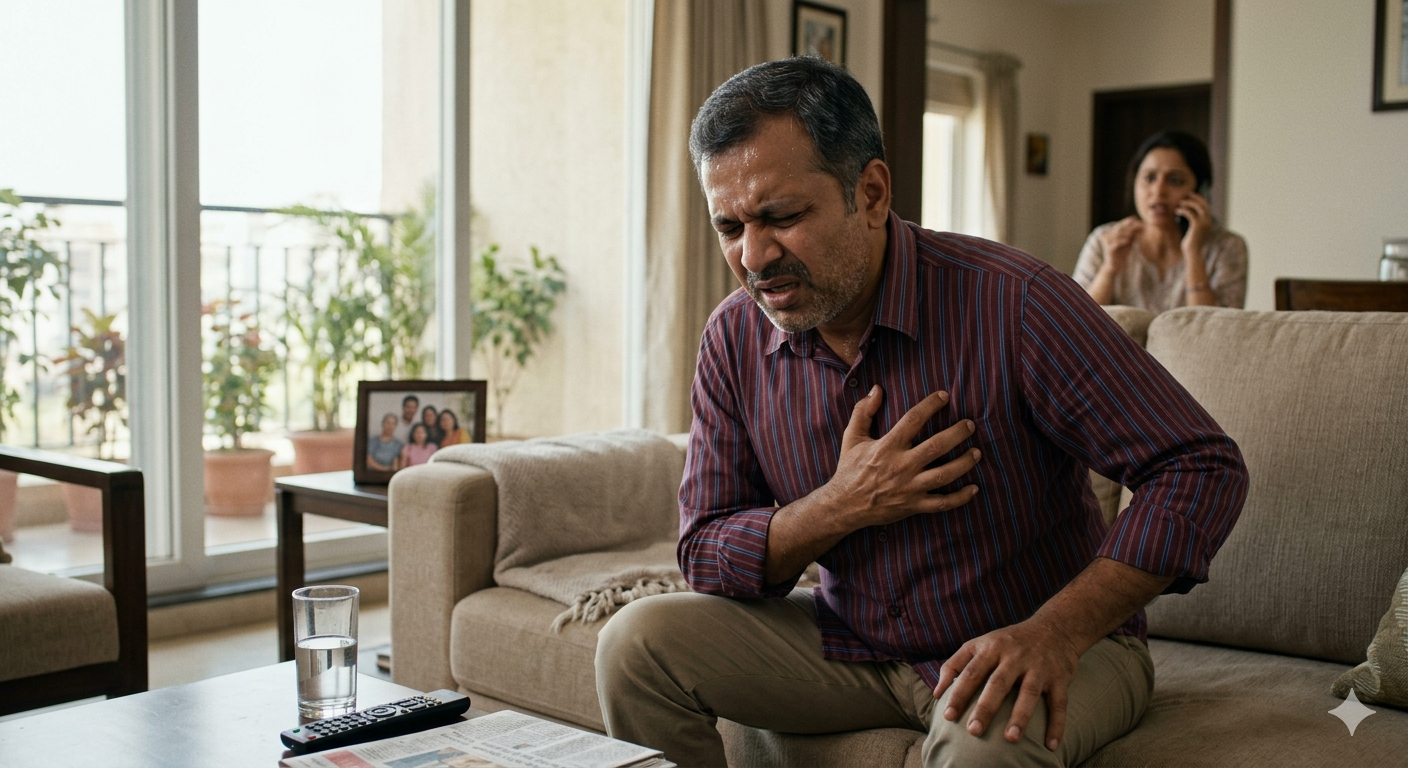
Dr Amit Kumar warns, "A person experiencing a heart attack is usually conscious and may complain of severe chest pain or pressure; pain radiating to the left arm, jaw, neck, or back; shortness of breath; nausea; sweating; dizziness; or unexplained fatigue."
- Chest pain or pressure
- Pain spreading to the arm, jaw, back, or neck.
- Shortness of breath
- Cold sweats
- Nausea
- Dizziness
Common Heart Attack Symptoms In Women
Dr Kumar highlights, "Women, older adults, and people with diabetes may have less typical symptoms, such as indigestion, unusual tiredness, or breathlessness. In such cases, immediate medical attention is critical."
The American Heart Association pinpoints uncomfortable pressure, squeezing, fullness, or pain in the centre of your chest. It may last more than a few minutes or go away and come back.
Pain or discomfort in one of the following:
- Arms (one or both)
- Back
- Neck
- Jaw
- Stomach
- Shortness of breath with or without chest discomfort.
Other signs, including:
- Breaking out in a cold sweat
- Nausea
- Lightheadedness
What Is Cardiac Arrest?
Cardiac arrest happens when there is a sudden electrical malfunction in the heart, causing the heart to stop beating. The lack of blood pumping affects the entire body, and the person loses consciousness. A cardiac arrest also needs immediate medical attention, as an individual can die if there are delays.
Signs Of Cardiac Arrest
- Sudden collapse
- No pulse
- No breathing or only gasping
- Loss of consciousness
Dr Amit Kumar highlights, "Call emergency medical services right away; keep the person calm; and help them sit comfortably while waiting for professional care" if you suspect a cardiac event.
Heart Attack vs Cardiac Arrest: Key Differences
Difference 1: Cause
A heart attack occurs when there is a blood circulation problem, while a cardiac arrest occurs due to an electrical malfunction.
Difference 2: Consciousness
Patients with a heart attack often remain awake, while those with cardiac arrest immediately lose consciousness and become unresponsive.
Difference 3: Urgency
Both medical emergencies require medical attention, but cardiac arrest is fatal if medical attention is not received.
Can A Heart Attack Trigger Cardiac Arrest?
Yes, during the heart recovery process in the case of severe heart attacks, when the natural rhythm of the heart is disrupted, it can happen. Sudden heart attack patients tend to collapse as they are suffering from the effects of underlying heart disease.
When Should You Give CPR?
On World CPR day, you need to know when to make use of this method to save a life. CPR, or cardiopulmonary resuscitation, is necessary for patients in cardiac arrest as the heart has stopped beating. You need to immediately start CPR if:
- The patient is unresponsive.
- The patient is not breathing normally.
- There are no signs of blood circulation.
Do Not Delay Emergency Care
You need to call emergency services immediately, as medical personnel will take time to reach your destination.
In the meantime, start doing deep chest compressions while help is on the way.
Interlock your fingers and start compressions just where the ribs start.
How To Perform Hands-Only CPR
CPR using your hands needs to follow a proper procedure to keep blood pumping through the body. Here is what you need to do in sequence:
Step 1: Check Responsiveness
Tap the shoulders of the patient and check if they are awake or responding. Call their name out loudly to check their senses.
Step 2: Call Emergency Services
Immediately call local health authorities for help, as medical attention is necessary.
Step 3: Begin Chest Compressions
Start doing chest compressions in the centre of the chest, push hard and fast, and then start counting. The speed should be 100-120 chest compressions per minute for any impact.
Step 4: Continue Until Help Arrives
You need to continue with chest compressions to make sure the heart is able to pump blood to the rest of the body. Dr Kumar explains, "Continue until emergency responders arrive or an automated external defibrillator (AED) is available. If an AED is nearby, switch it on immediately and follow its voice instructions."
Dr Amit Kumar highlights, "Public awareness of CPR is vital because many cardiac arrests occur outside hospitals, often at home or in public places. Even basic CPR performed by a bystander can double or even triple a person's chances of survival."
He notes, "Every individual should consider learning CPR through certified training programmes, as the knowledge and confidence to act in those crucial first minutes can make the difference between life and death."
What Is An AED, And How Does It Help?
An AED is important, as it can restore normal heart rhythm as it provides a controlled electrical shock. It should be used in the case of cardiac arrest, as the heart's rhythm needs to be restored to avoid death.
AEDs should be available in all public spaces for public safety, as a medical emergency may strike at any time.
Who Is At Higher Risk Of Heart Attack Or Cardiac Arrest?
The people who are at higher risk of a heart attack or cardiac arrest are those who are vulnerable to a weakened heart. Those with:
- High blood pressure
- Diabetes
- Smoking
- High cholesterol
- Obesity
Cardiac Arrest Risk Factors
People who are at risk of suffering from a cardiac arrest are those who have the following:
- Existing heart disease
- Previous heart attack
- Cardiomyopathy
- Serious arrhythmias
Warning Signs You Should Never Ignore
If you are experiencing any of these signs, then you need to get your heart checked by a cardiologist to be safe. Warning signs that you should keep in mind are the following:
- Chest discomfort
- Sudden fainting
- Severe breathlessness
- Unexplained palpitations
- Sudden collapse
How To Lower Your Risk
The risk of heart attack and cardiac arrest can be lowered if your lifestyle keeps your heart healthy. To maintain your heart health, you need to follow these habits:
- Regular exercise
- Healthy diet
- Better blood pressure control
- Diabetes management
- Smoking cessation
- Adequate sleep
A heart attack and cardiac arrest are not the same, but both need urgent medical intervention. You need to timely recognise the signs and act accordingly to save a life.
Also Read: Can Your Resting Heart Rate Predict Future Heart Disease Risk? Doctor Answers
Disclaimer: This content including advice provides generic information only. It is in no way a substitute for a qualified medical opinion. Always consult a specialist or your own doctor for more information. NDTV does not claim responsibility for this information.