

)
India's cleanest city, Indore, has been witnessing a public health emergency due to contamination of drinking water. The incident, which took place in the city's Bhagirathpura locality, led to 16 deaths and more than 1,400 people falling ill. Prior to the incident, residents reported foul smell, bitter taste and visible discolouration of water. The health administration has now declared the severe waterborne disease outbreak an epidemic. Specialised teams from the Central and State governments have been called in to contain the spread and identify the root cause of contamination.
Chief medical and health officer (CMHO) Dr Madhav Hasani said, "An epidemic is defined by reporting more cases of a disease than usual for a specific area. We are now treating the outbreak on that scale. These national teams are analysing our survey data to determine if the contamination originated from a single source or multiple points."
While steps are being taken by authorities, a recent development has caught everyone's attention. According to a report by NDTV, a 67-year-old woman from Bhagirathpura, Parvati Bai Kondla, has been showing symptoms of Guillain-Barre Syndrome (GBS). This is a rare autoimmune neurological disorder, wherein the immune system attacks the nerves, causing weakness, tingling, or paralysis. The condition is usually triggered by infection and can be life-threatening.
Also Read: Indore Contaminated Water Crisis Explained: What Went Wrong And How To Stay Safe
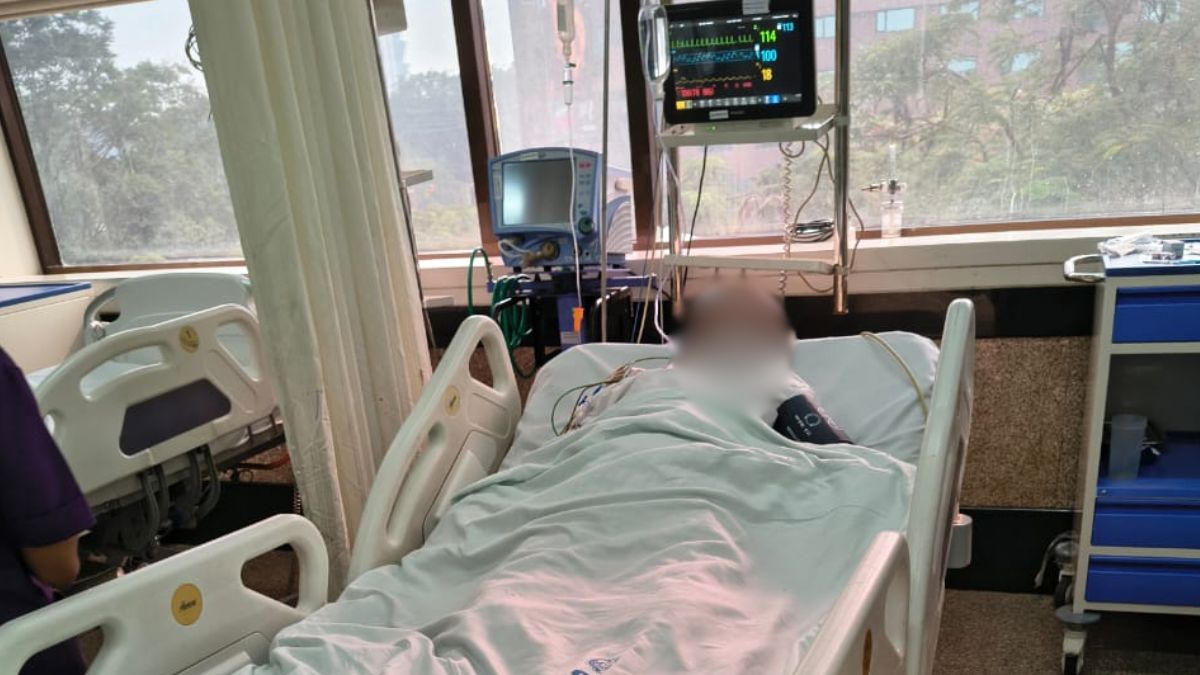
The report says that Parvati is on a ventilator, is undergoing dialysis due to kidney failure. A Nerve Conduction Study (NCS) was carried out at Alpha Brain Study Centre in Indore which found clear evidence of acute nerve injury. The results show reduced muscle response (CMAP) in both peroneal nerves, absent sensory nerve signals in both legs, absent late nerve responses and a pattern consistent with acute inflammatory nerve damage, not age-related degeneration.
A senior AIIMS neurologist said, "This is an acute process. This does not happen slowly over the years. It is often triggered by infections, toxins or immune reactions. In the context of a water contamination outbreak, this is medically significant and deeply concerning."
Despite the medical evidence, the state health administration is denying any confirmed link. Dr Hasnani said, "GBS is a neurological disease caused by various factors, including viruses. A single test is not enough. It is a clinical diagnosis. We have not received any such report officially. We are monitoring all patients daily."
What causes Guillain-Barre Syndrome?
The exact cause of Guillain-Barre Syndrome is not known. The symptoms of the neurological disorder usually appear days or weeks after a respiratory or digestive tract infection. In very rare cases, a recent surgery or vaccination can lead to the condition. Here are some of the common causes that can trigger Guillain-Barre syndrome.
- An infection with campylobacter, a type of bacteria often found in undercooked poultry.
- Influenza virus
- Cytomegalovirus
- Epstein-Barr virus
- Zika virus
- Hepatitis A, B, C and E
- HIV, the virus that causes AIDS
- Mycoplasma pneumonia
- Surgery
- Trauma
- Hodgkin lymphoma
- COVID-19 virus
Also Read: Indore Contaminated Water Crisis: What Is Tanker Water And Is It Safe For Drinking?
Symptoms of Guillain-Barre Syndrome
It usually starts with tingling and weakness in the feet and legs, and then spreads to the upper body and arms. When the condition progresses, the muscle weakness can also turn into paralysis. Other symptoms of the neurological disorder include:
- Pins and needles feeling in the fingers, toes, ankles or wrists
- Weakness in the legs that spreads to the upper body
- Unsteady walk or not being able to walk
- Trouble with facial movements
- Double vision or inability to move eyes
- Severe pain
- Trouble with bladder control or bowel function
- Rapid heart rate
- Low or high blood pressure
- Trouble breathing
Complications of Guillain-Barre Syndrome
Since the condition affects your nerves, it affects movement and other body functions. Here are some of the complications caused by Guillain-Barre Syndrome.
- Breathing issues: Muscle weakness or paralysis can spread to the muscles that control your breathing. And this can turn out to be fatal. A majority of people affected with the condition need help from a machine to breathe.
- Residual numbness: People with the condition usually recover completely. However, in some cases, people might have residual weakness, numbness or tingling.
- Heart issues: Guillain-Barre Syndrome causes blood pressure issues, which can eventually impact your heart by causing irregular heart rhythms.
- Pain: A majority of individuals suffer from nerve pain. Doctors prescribe medicines to ease the pain.
- Bowel and bladder function: Individuals might have trouble with bowel function and urine retention.
- Blood clots: People who cannot move due to Guillain-Barre syndrome have a high risk of developing blood clots. Until they're able to walk by themselves, they may be prescribed blood thinners to improve blood flow.
- Pressure sores: There's a risk of another complication for people who cannot move. They might develop bedsores, also known as pressure sores. Changing positions can help avert this issue.
Read More: Contaminated Water Can Be Hazardous: 5 Water Purification Methods To Try At Home
Disclaimer: This content including advice provides generic information only. It is in no way a substitute for a qualified medical opinion. Always consult a specialist or your own doctor for more information. NDTV does not claim responsibility for this information.